
A bridge rehabilitation contractor with 25 workers is drafting a site-specific Emergency Action Plan under 29 CFR 1926.35 before mobilizing. Which element must the written plan include to ensure everyone is accounted for after an evacuation?
Select an answer to reveal the explanation.
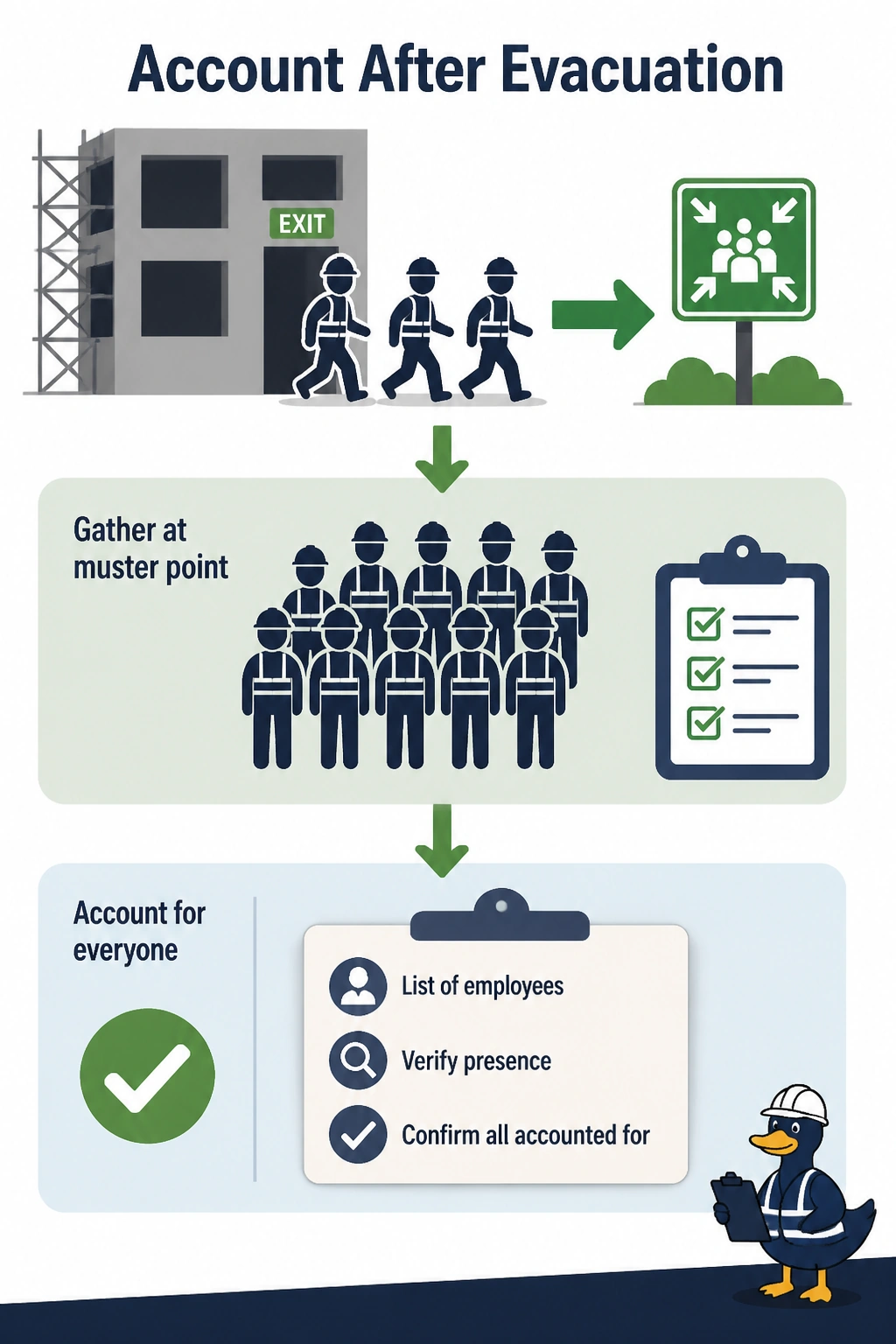
Short Explanation
During a site evacuation, your first job at the assembly area is knowing whether anyone is still trapped inside. The trap here is picking administrative paperwork or logistics that belong in other plans rather than headcount procedures. Make sure your emergency plan spells out exactly how every worker is accounted for.
Full Explanation
OSHA 29 CFR 1926.35 mandates that a written construction emergency action plan include Procedures to account for all employees after emergency evacuation has been completed. Having a clear headcount method, such as designated assembly areas and roll-call rosters, lets emergency responders know immediately if someone is missing or needs rescue. Maintaining A schedule for monthly third-party inspections of temporary shoring relates to structural and excavation safety rather than emergency evacuation accountability. Collecting Signed consent forms allowing supervisors to administer prescription medicine is neither an OSHA emergency plan requirement nor an appropriate medical practice for construction supervisors. Maintain a list of urgent-care clinics within thirty minutes and file it in the post-evacuation section of the plan addresses access to medical treatment rather than the required procedure for accounting for personnel after evacuation. As a caveat, subcontractors and site visitors must also be included in the sign-in log so the headcount reflects everyone on the project. For an operational check, conduct an unannounced evacuation drill and time how long it takes the site superintendent to reconcile the daily sign-in roster at the designated muster point.
Prefer to study offline? Printable PDF study book + test engine ($7.50, unofficial). These questions stay free here.