
During a two-day confined space entry course, an instructor wants to catch trainee misunderstandings about atmospheric testing and permit cancellation early enough to reteach them before the final exam. Which instructional practice best serves this goal?
Select an answer to reveal the explanation.
Short Explanation
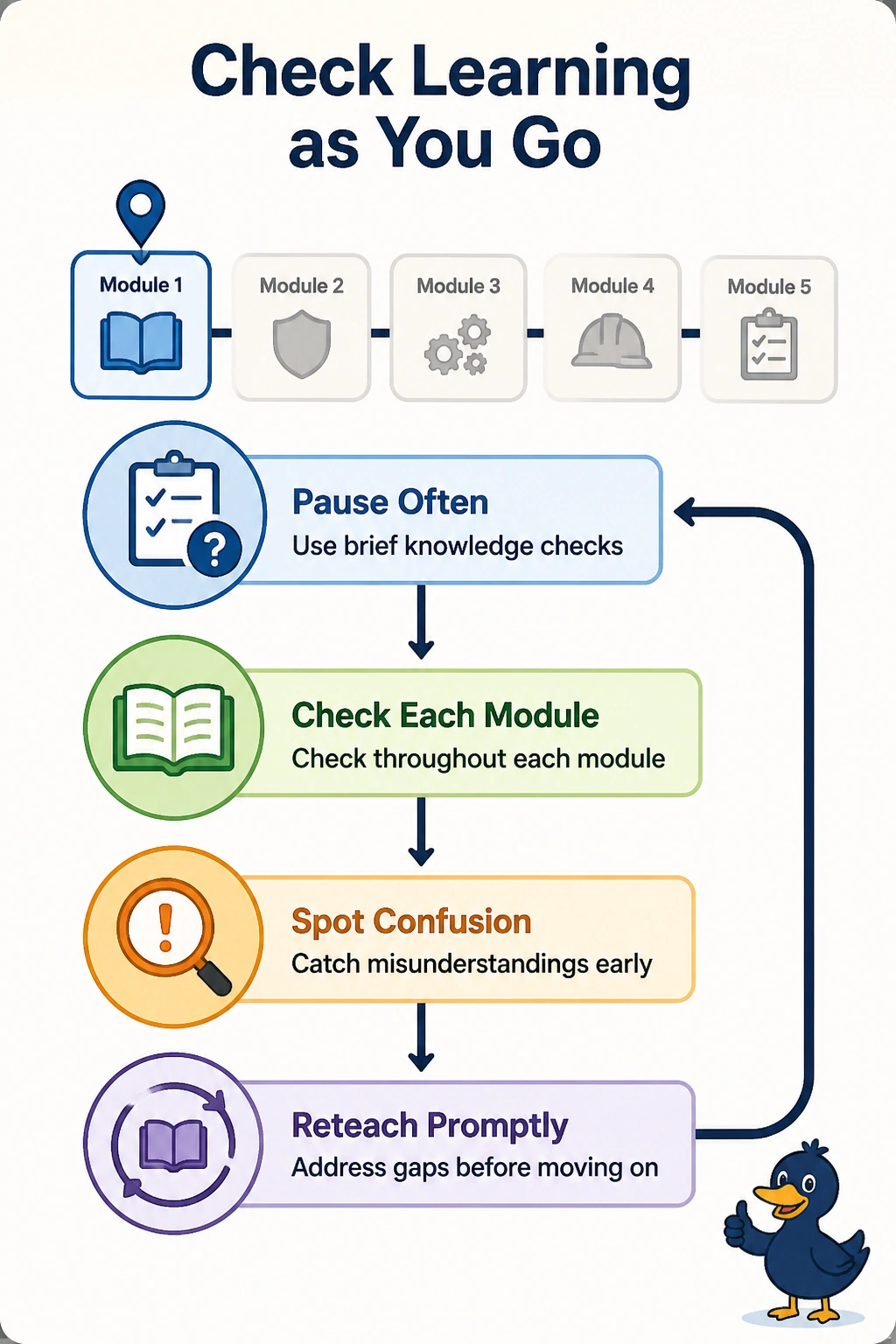
Waiting until the final exam to find out your trainees missed a critical concept is like checking the parachute after you jump. When you weave quick formative checks into each module, you spot confusion right away and fix it before bad habits stick.
Full Explanation
Effective safety instruction monitors learner comprehension while teaching is still underway rather than waiting until the course ends. To catch gaps early, the instructor should Conduct brief formative knowledge checks throughout each module—such as short scenario questions, hands-on meter demonstrations, or group debriefs—and adjust instruction immediately when misconceptions appear. Choosing to Rely solely on a single summative written exam after all lectures measures final retention only after teaching time has ended, leaving no opportunity to remediate errors during class. Opting to Distribute a course satisfaction survey at the end of day two measures trainee reaction (Kirkpatrick Level 1) rather than technical comprehension. Likewise, deciding to Collect signed attendance rosters at the start of each morning only documents physical presence and provides zero evidence of learning. As a caveat, formative checks work best when they are low-stakes and interactive so learners feel comfortable asking questions without fear of embarrassment. For an operational check, build at least one practical or scenario-based check into every major objective before advancing to the next topic.
Prefer to study offline? Printable PDF study book + test engine ($7.50, unofficial). These questions stay free here.