
A logistics company acquires a regional cold-storage facility and inherits 60 warehouse technicians whose previous safety records show inconsistent training histories across ammonia awareness, forklift operation, and lockout/tagout. What should the safety manager conduct first to determine exactly who needs which courses?
Select an answer to reveal the explanation.
Short Explanation
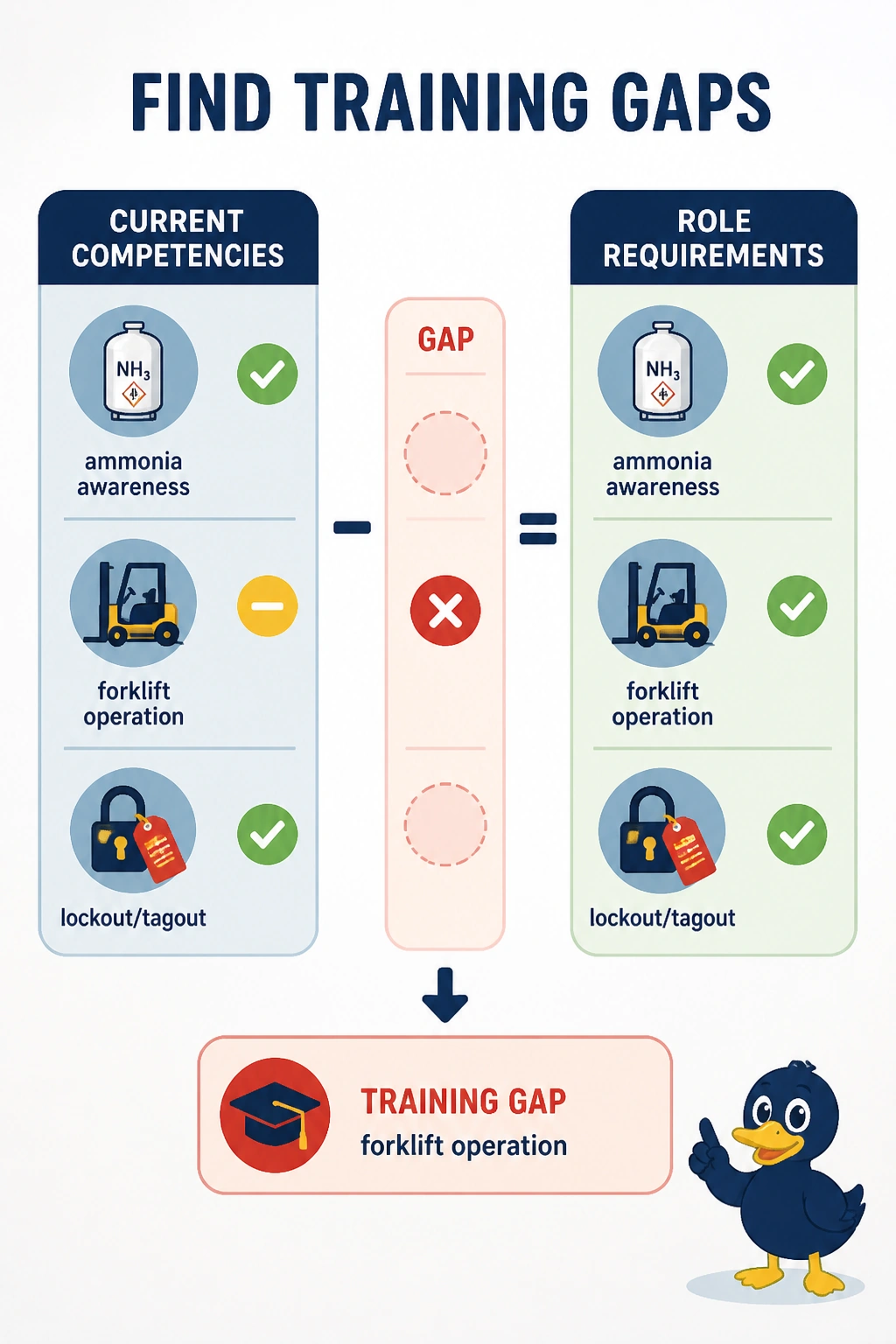
After an acquisition, you would not prescribe the same medicine to every patient before checking their charts. A training gap analysis shows you exactly which technicians already meet the standard and where real skill deficits exist. The trap is forcing everyone through redundant classes or relying on preference surveys instead of role-based requirements.
Full Explanation
Performing a training gap analysis comparing current worker competencies to role requirements systematically maps each technician's verified records and hands-on capabilities against the specific hazards and regulatory duties of their assigned job. This identifies missing qualifications, expired evaluations, and site-specific ammonia or lockout differences without wasting production time on redundant modules. Scheduling every technician to repeat all corporate onboarding modules regardless of prior mastery frustrates experienced workers and wastes training resources on skills already verified. Distributing an anonymous employee satisfaction survey asking which topics technicians prefer measures learner preferences rather than objective regulatory or operational compliance gaps. Waiting until the next annual OSHA compliance audit to identify any missing training certificates leaves untrained workers exposed to hazardous energy, powered industrial trucks, and refrigerant risks for months. As a caveat, paper certificates from a previous employer do not guarantee proficiency on new equipment, so site-specific practical evaluations remain necessary for tasks like forklift operation. As an operational check, build a role-based training matrix from the gap analysis results and prioritize high-hazard tasks such as lockout/tagout and ammonia emergency response first.
Prefer to study offline? Printable PDF study book + test engine ($7.50, unofficial). These questions stay free here.