
A roofing contractor must train newly hired laborers on inspecting, donning, and adjusting full-body fall arrest harnesses before they work near leading edges. Which instructional method best builds reliable psychomotor proficiency?
Select an answer to reveal the explanation.
Short Explanation
You cannot learn to tie your boots or fit a fall harness properly just by watching a video—your hands need muscle memory with real buckles and D-rings. The trap is treating a passive quiz or quick pocket card as proof that a new laborer can actually wear life-saving gear correctly.
Full Explanation
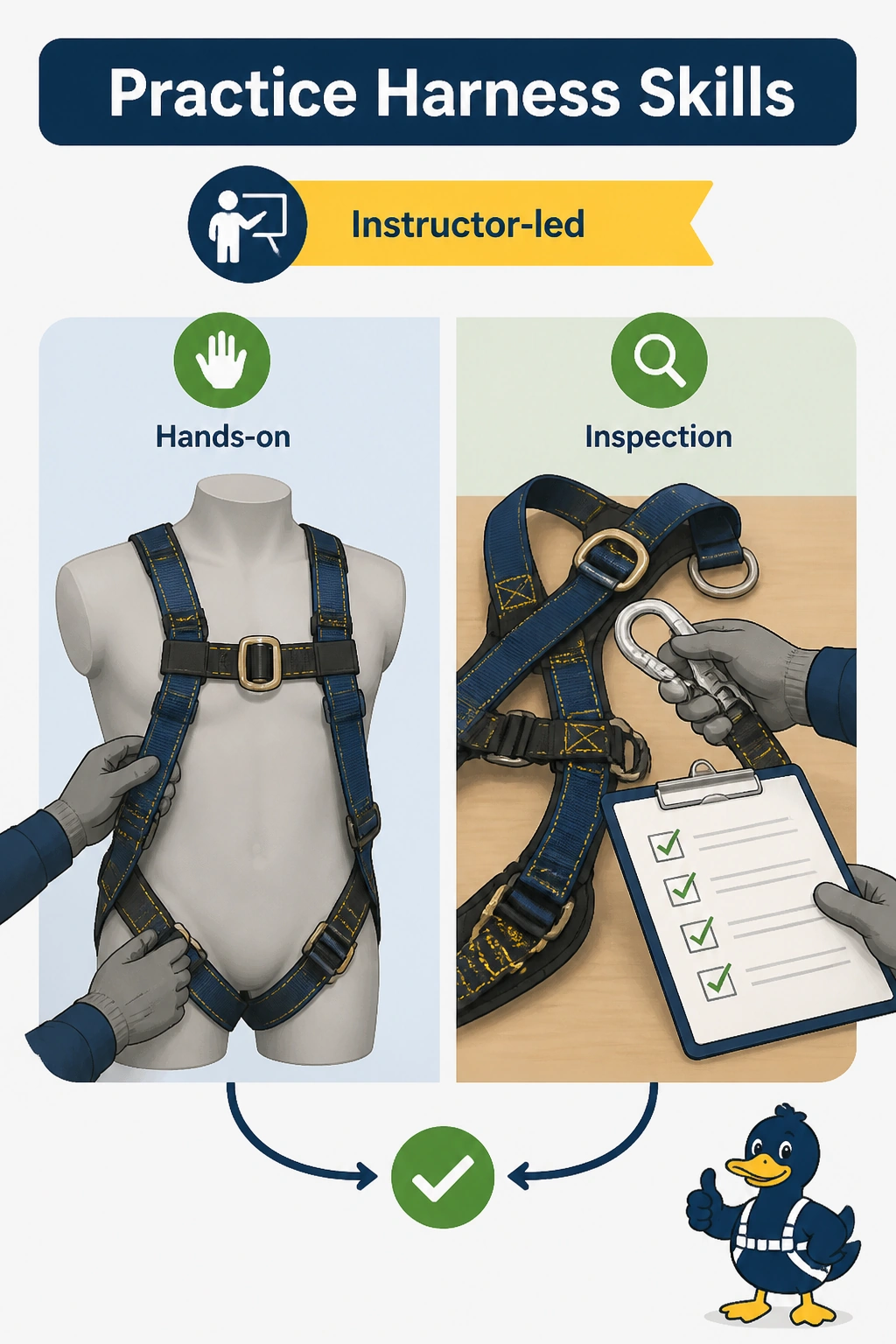
Conduct instructor-led hands-on practice with physical harness fitting and inspection directly trains the psychomotor skills required to spot frayed webbing, position the dorsal D-ring between the shoulder blades, and snug leg and chest straps without creating suspension trauma hazards. Because fall arrest hardware only protects a worker if fitted and inspected correctly, physical demonstration with immediate coaching closes the gap between knowing a rule and executing it under field conditions. Deliver a self-paced 30-minute e-learning video with a ten-question multiple-choice quiz measures cognitive recall but cannot verify whether a trainee can adjust straps or identify damaged stitching. Distribute a laminated pocket card summarizing fall clearance formulas during morning roll call serves as a useful job aid after training, not a substitute for initial skill acquisition. Hold a five-minute toolbox talk where the foreman reads the written fall protection policy delivers passive awareness without hands-on verification. As a caveat, instructors must inspect training harnesses for wear and keep dedicated demonstration gear separate from active fall-arrest inventory if damaged components are used for defect-spotting drills. Operationally, require each laborer to pass a hands-on harness inspection and fit check observed by a competent person before stepping onto an elevated roof.
Prefer to study offline? Printable PDF study book + test engine ($7.50, unofficial). These questions stay free here.