
A construction firm's safety policy states that workers have stop-work authority, yet foremen routinely pressure crews to finish pours before inspecting scaffold tie-ins, and workers stay silent. Which cultural factor most directly undermines the effectiveness of this stop-work policy?
Select an answer to reveal the explanation.
Short Explanation
Workers watch what supervisors reward far more closely than what a handbook promises! The trap is blaming training materials or pocket cards when unspoken production pressure tells your crew that stopping work will cost them.
Full Explanation
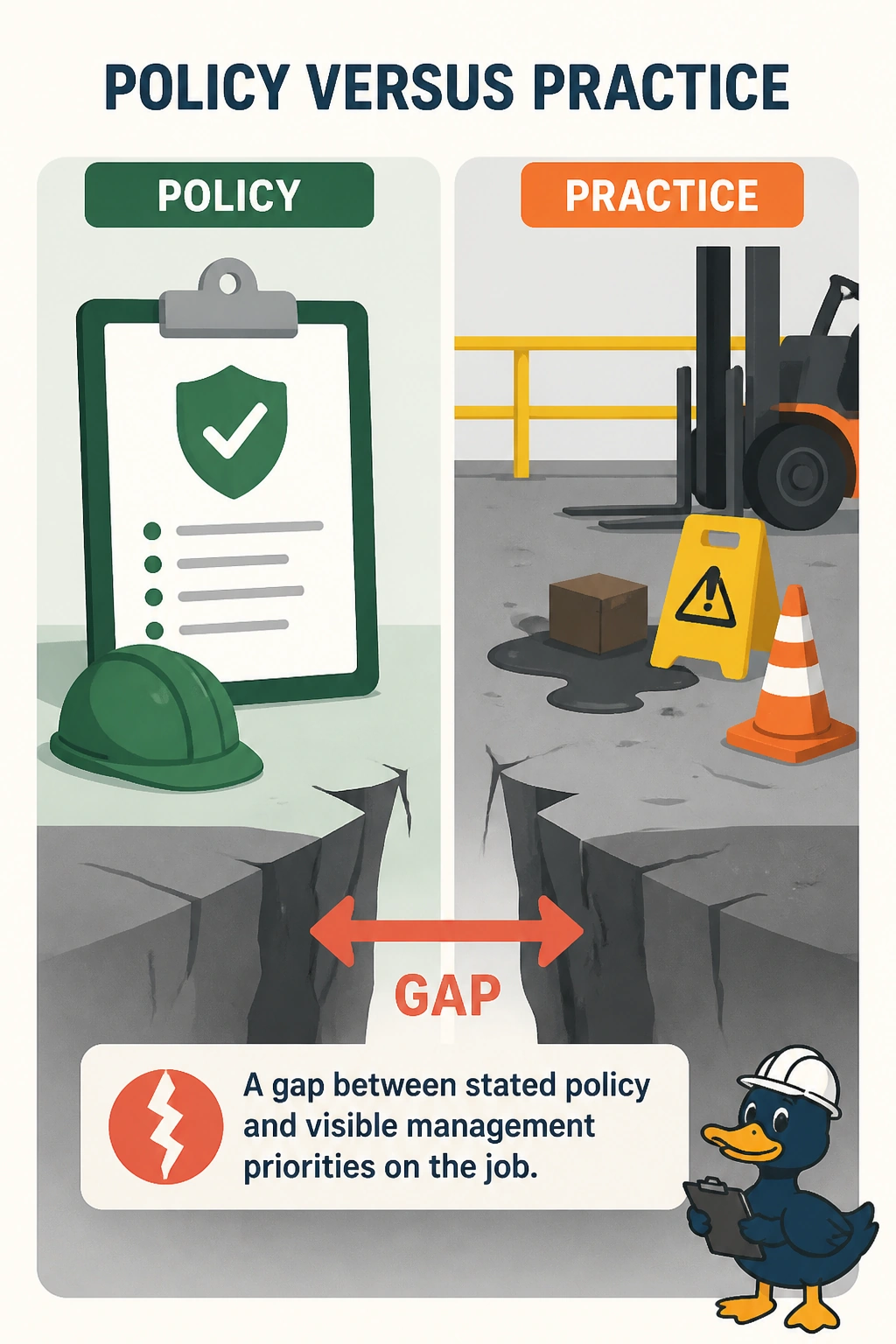
Safety culture is shaped by the real-world behaviors supervisors reinforce every day, not by written policies alone. When foremen push crews to meet pour schedules ahead of scaffold tie-in inspections, "A gap between stated policy and visible management priorities on the job" signals that production outranks safety and makes workers reluctant to speak up. Selecting "Insufficient classroom hours spent reviewing written safety manuals during onboarding" misses the root issue, because workers already know the policy exists but fear pushback for using it. Choosing "Lack of laminated pocket cards reminding workers of emergency phone numbers" addresses emergency contact logistics rather than the psychological safety needed to halt unsafe work. Selecting "Overreliance on experienced crew leads rather than third-party safety auditors" overlooks that internal field leaders—not outside auditors—set daily crew norms and expectations. As a caveat, even well-meaning supervisors can unintentionally create schedule pressure if project incentives reward speed without tracking safety-inspection completion. For an operational check, visibly recognize workers who exercise stop-work authority in pre-shift huddles and track whether reported hazards are resolved without retaliation.
Prefer to study offline? Printable PDF study book + test engine ($7.50, unofficial). These questions stay free here.