
A metal stamping facility trains press operators on a new die-setting lockout procedure and wants to evaluate Kirkpatrick Level 3 (Behavior) one month after the class. Which evaluation method directly measures this level?
Select an answer to reveal the explanation.
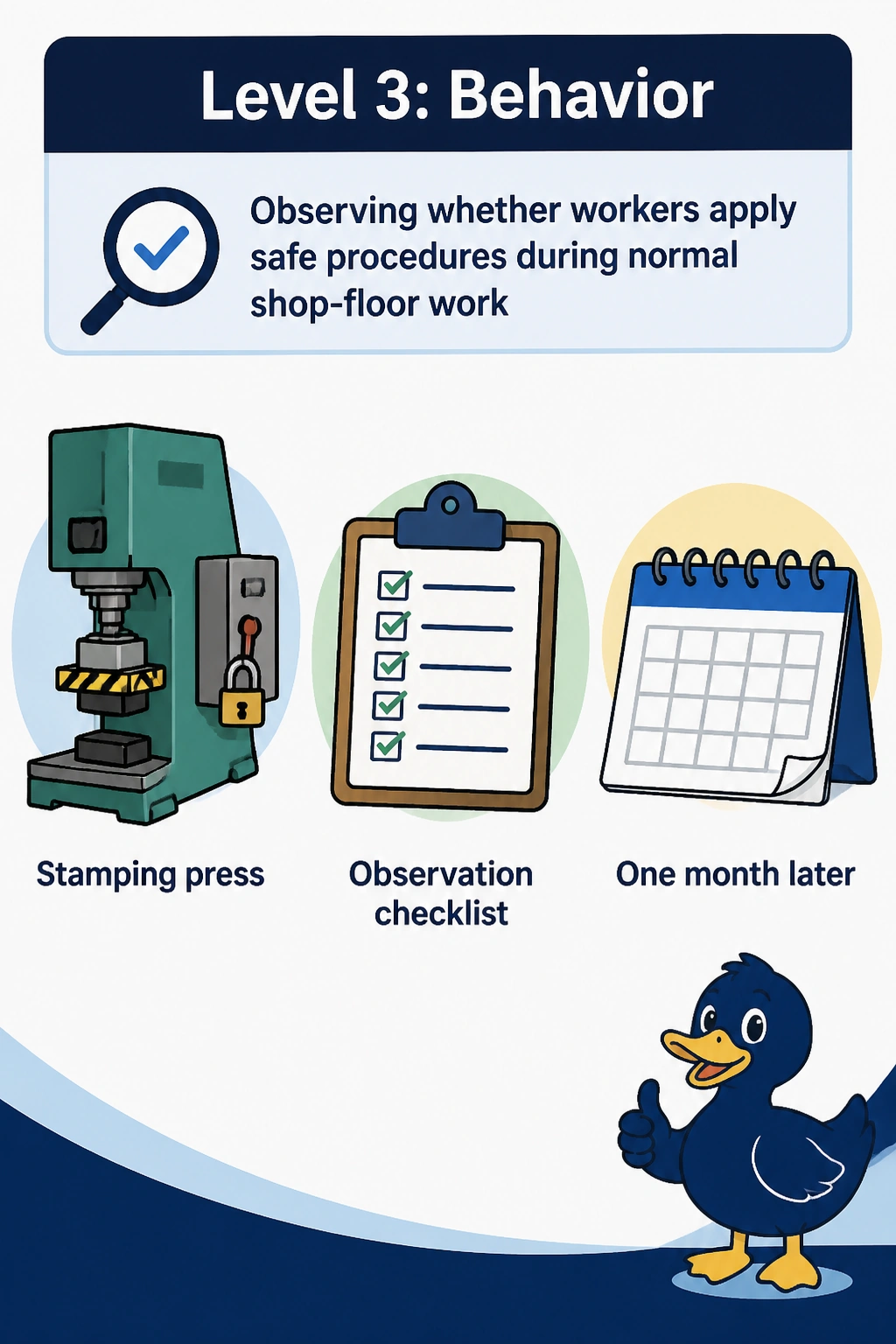
Short Explanation
Knowing the rules in a classroom and actually using them when production pressure heats up are two very different things. To test Kirkpatrick Level 3 behavior, you need to watch how your crew performs on the real shop floor weeks later. The trap is mistaking a written quiz or a happiness survey for proof that habits changed.
Full Explanation
Kirkpatrick Level 3 evaluates on-the-job behavior transfer—whether trainees consistently apply newly learned skills once they return to routine production pressures. Observing whether workers apply safe procedures during normal shop-floor work directly measures whether the lockout steps taught in class are actually executed at the presses. Relying on Administering a multiple-choice written exam immediately after the session fails because written tests measure Level 2 learning (knowledge recall in the classroom), not sustained workplace behavior. Using Distributing anonymous end-of-course satisfaction surveys to all attendees fails because feedback forms measure Level 1 reaction—how well participants liked the instructor or materials. Tracking Comparing annual workers' compensation claim totals from before and after the class fails because claim costs and injury rates represent Level 4 organizational results, which lag behind behavior changes and are influenced by many outside factors. An important caveat is that workers who know a supervisor is watching may temporarily perform steps by the book (the Hawthorne effect), so unannounced routine observations give truer data. For an operational check, pair a standardized lockout observation checklist with brief coaching conversations to confirm both compliance and any physical barriers slowing down die changes.
Prefer to study offline? Printable PDF study book + test engine ($7.50, unofficial). These questions stay free here.