
A regional utility hires experienced line mechanics from several contractors and needs to verify their actual proficiency before allowing them to energize switchgear independently. Which training step establishes this baseline competency?
Select an answer to reveal the explanation.
Short Explanation
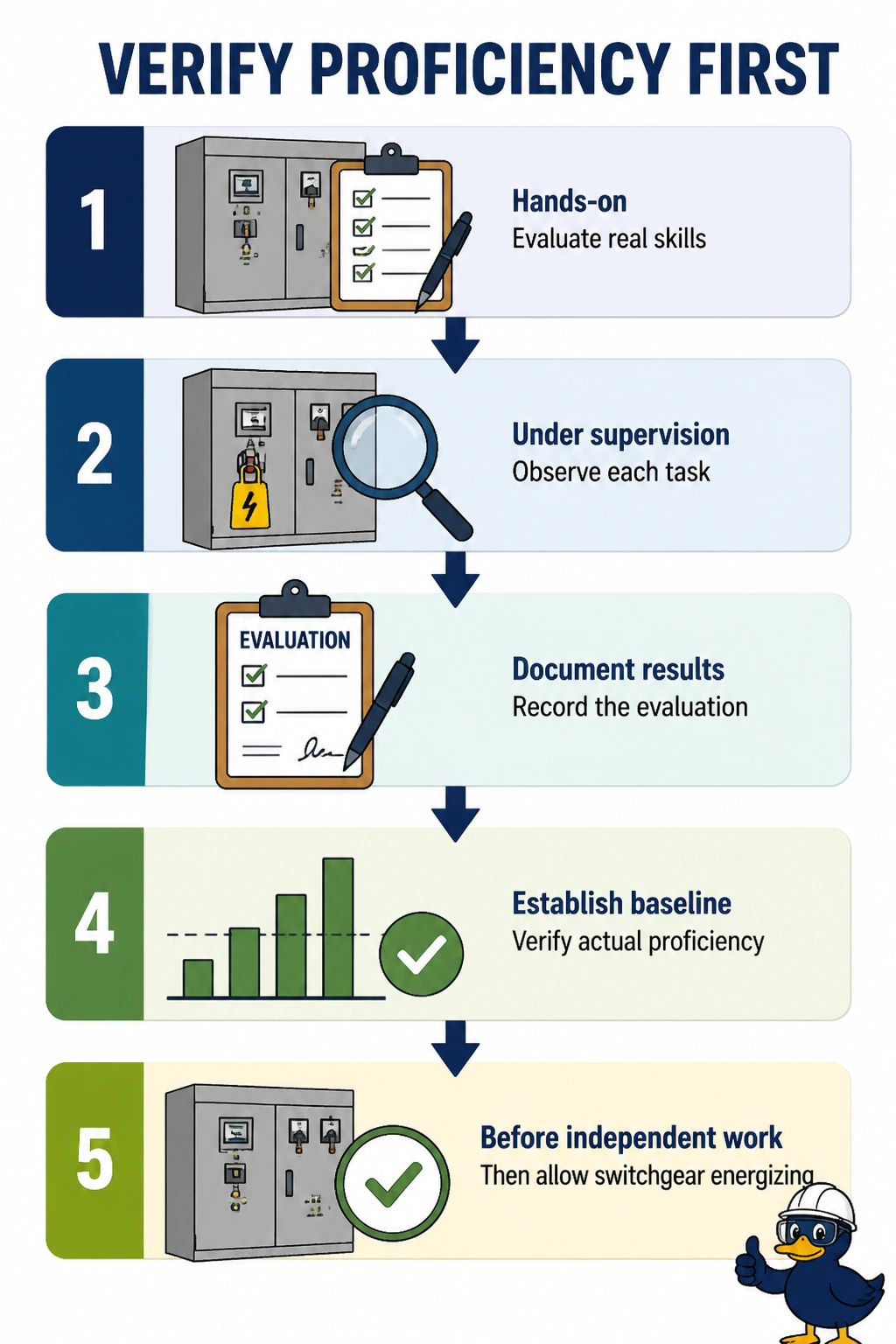
Hiring veteran mechanics does not mean you can skip verifying what they actually do with tools in hand. The trap is mistaking paper attendance or polite feedback for real-world readiness. Always test critical skills under supervision before turning anyone loose on energized gear.
Full Explanation
Conducting a documented hands-on skills evaluation under supervision establishes true baseline competency because it measures whether a worker can apply procedures safely in a realistic work setting rather than merely recalling rules on paper. When experienced hires come from different contractors, their habits, tool familiarity, and terminology often vary, making direct observation essential before independent authorization. Administering a post-course satisfaction survey after orientation only captures whether trainees liked the session, not whether they can perform the task safely. Reviewing signed attendance sheets from the safety briefing proves physical presence in a room, which offers no evidence of skill mastery or comprehension. Distributing written standard operating procedures to each hire communicates expectations, yet handing out documents cannot verify that a worker can execute switching sequences without error. Caveat: even seasoned mechanics with strong resumes may carry unsafe shortcuts from prior employers, so baseline checks must apply uniformly to all new hires. As an operational check, pair each new mechanic with a qualified evaluator using a standardized practical checklist before granting independent switching privileges.
Prefer to study offline? Printable PDF study book + test engine ($7.50, unofficial). These questions stay free here.