
A commercial greenhouse hires seasonal workers whose primary language is Spanish and plans to deliver mandatory pesticide safety training using only an English slide deck with technical chemical terms. What must the safety coordinator do to meet OSHA training effectiveness expectations?
Select an answer to reveal the explanation.
Short Explanation
Handing out technical English slides to a multilingual crew is a compliance illusion you want to avoid. The trap is confusing documented attendance with actual comprehension when workers cannot decode the hazard terms.
Full Explanation
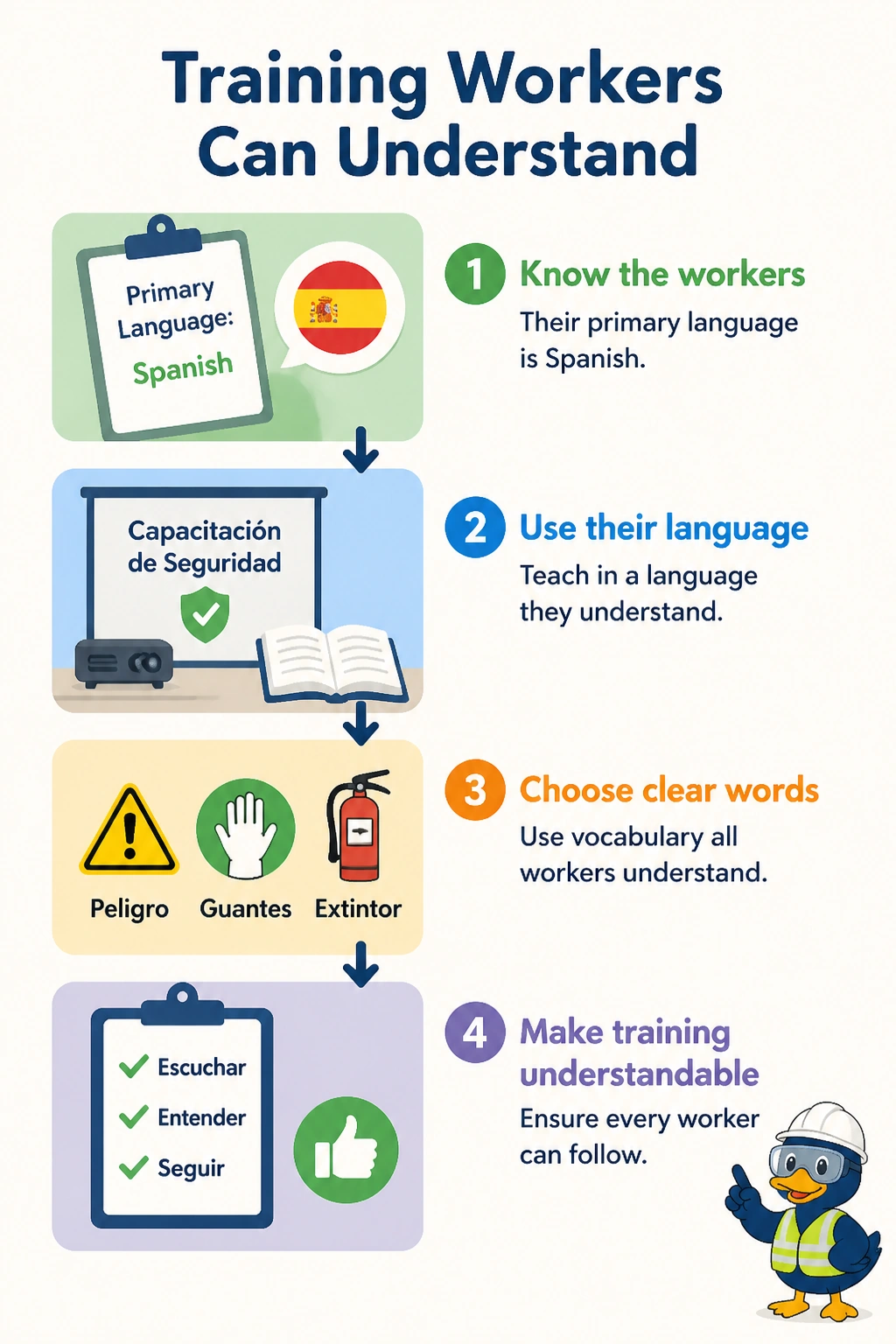
Effective hazard communication requires that the employer "Deliver the training in a language and vocabulary that all workers can understand". Under OSHA training policy and adult learning principles, safety instruction only changes behavior when workers can comprehend the hazards, protective controls, and emergency steps without guessing at technical jargon. Choosing to "Distribute the English slide deck in advance so workers can translate it independently" shifts the employer's legal duty onto employees and risks dangerous mistranslations. Choosing to "Require workers to pass a written English vocabulary quiz before entering the greenhouse" tests English literacy rather than job safety competency. Choosing to "Post laminated Safety Data Sheets in the breakroom alongside an English sign-off sheet" provides passive reference documents instead of interactive, comprehensible instruction. As a caveat, even translated materials fail if written at an overly academic reading level. For an operational check, use a qualified bilingual trainer, visual demonstrations, and verbal or hands-on skill checks in the workers' primary language to verify comprehension.
Prefer to study offline? Printable PDF study book + test engine ($7.50, unofficial). These questions stay free here.