
A manufacturing plant is redesigning its annual lockout/tagout training for veteran maintenance technicians who complain that lecture slides feel disconnected from their daily work. Which instructional approach best applies adult learning principles to improve engagement?
Select an answer to reveal the explanation.
Short Explanation
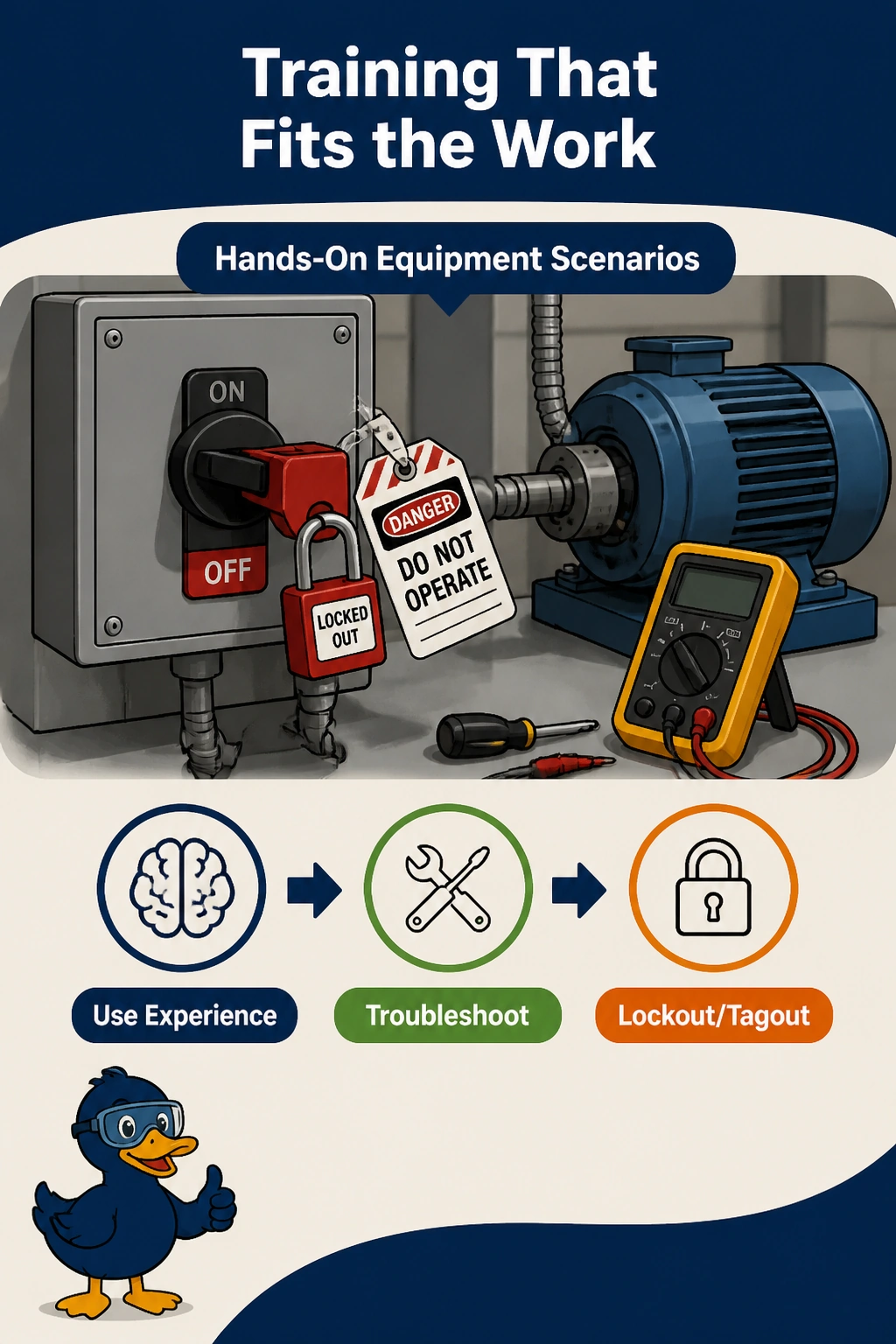
You learn best when training helps you solve real problems, not sit through another dry slide deck. Hands-on scenarios connect lockout steps to equipment you already troubleshoot, making the training more engaging and relevant to your work.
Full Explanation
Adult learners are self-directed, problem-centered, and learn most effectively when new material connects to their existing knowledge. Hands-on equipment scenarios that draw on technicians’ troubleshooting experience apply those principles by letting veteran workers practice energy isolation on realistic machinery problems they actually face. A standardized slide presentation with a mandatory multiple-choice exam treats seasoned workers as passive listeners and measures recall rather than field competence. Printed lockout procedures for technicians to read independently and sign during lunch breaks turn required instruction into an unverified paperwork exercise and reduce engagement. Longer classroom lectures covering every regulatory citation in 29 CFR 1910.147 add legal detail without showing how to isolate valves or verify zero energy on the plant floor. Caveat: even experienced technicians still need periodic retraining whenever equipment changes or an inspection reveals a deviation from proper procedures. Practical check: observe technicians performing a simulated lockout on plant equipment and verify that they isolate and test every energy source correctly.
Prefer to study offline? Printable PDF study book + test engine ($7.50, unofficial). These questions stay free here.