
A logistics warehouse introduces a near-miss reporting program, but six months later, associates submit almost zero reports because supervisors automatically issue written reprimands to anyone involved in a close call. How does this disciplinary approach affect the organization's safety culture?
Select an answer to reveal the explanation.
Short Explanation
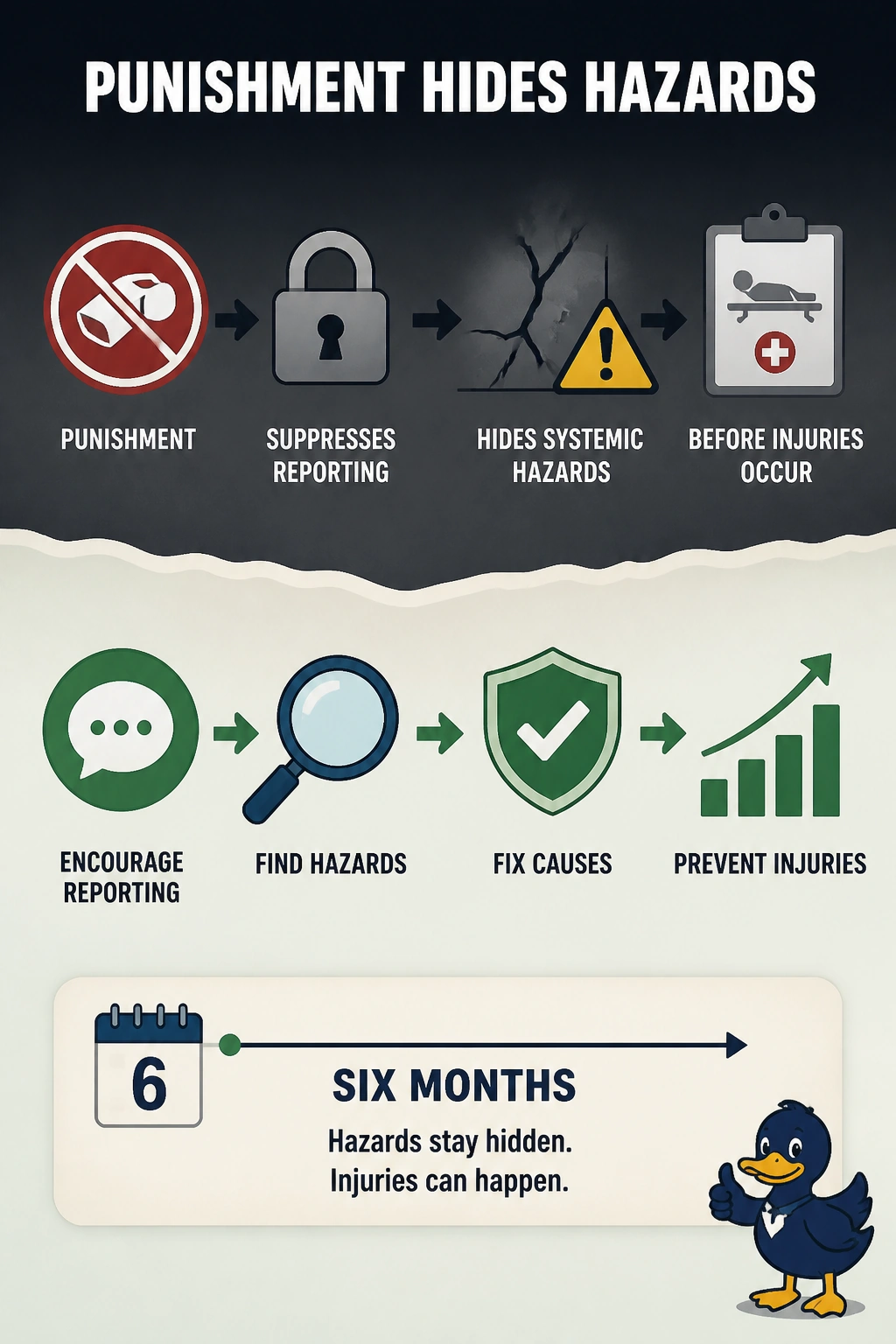
Punishing someone for reporting a close call is the fastest way to make every hazard go underground. The trap is thinking automatic reprimands teach discipline, when they actually blind your safety program by hiding the exact warning signs that prevent the next serious injury.
Full Explanation
Near-miss reporting depends on psychological safety and a just culture; when supervisors punish workers for close calls, It suppresses reporting and hides systemic hazards before injuries occur. Associates quickly learn that speaking up brings personal penalties, so broken dock plates, blind corners, and rushed workflows remain invisible until a severe injury forces an investigation. The belief that It strengthens hazard visibility by deterring employees from repeating minor errors confuses fear-based compliance with learning; deterrence does not fix underlying equipment or process flaws and actively reduces visibility. The idea that It eliminates the need for supervisors to conduct routine workplace safety inspections is false because near-miss programs supplement rather than replace physical inspections. Likewise, the notion that It satisfies OSHA recordkeeping rules by keeping incident logs completely empty is incorrect: near-misses are not OSHA-recordable cases, and discouraging reporting of actual injuries can violate anti-retaliation provisions under 29 CFR 1904.35. Caveat: a non-punitive reporting culture still holds individuals accountable for intentional reckless behavior or deliberate sabotage, while treating honest errors as system learning opportunities. Operational check: track near-miss submission trends alongside corrective-action closure rates and survey workers anonymously on reporting trust.
Prefer to study offline? Printable PDF study book + test engine ($7.50, unofficial). These questions stay free here.