
Six months after rolling out a new ergonomic lifting course, a manufacturing plant's safety director evaluates whether the program actually lowered workers' compensation claim costs and reduced back-strain injury rates. Which level of Kirkpatrick's training evaluation model is the director measuring?
Select an answer to reveal the explanation.
Short Explanation
Smile sheets and quiz scores tell you how the class went, but leadership wants to know if your training actually moved the needle on injuries and costs. Keep the four Kirkpatrick levels straight so you don't confuse on-the-floor habits with bottom-line organizational impact.
Full Explanation
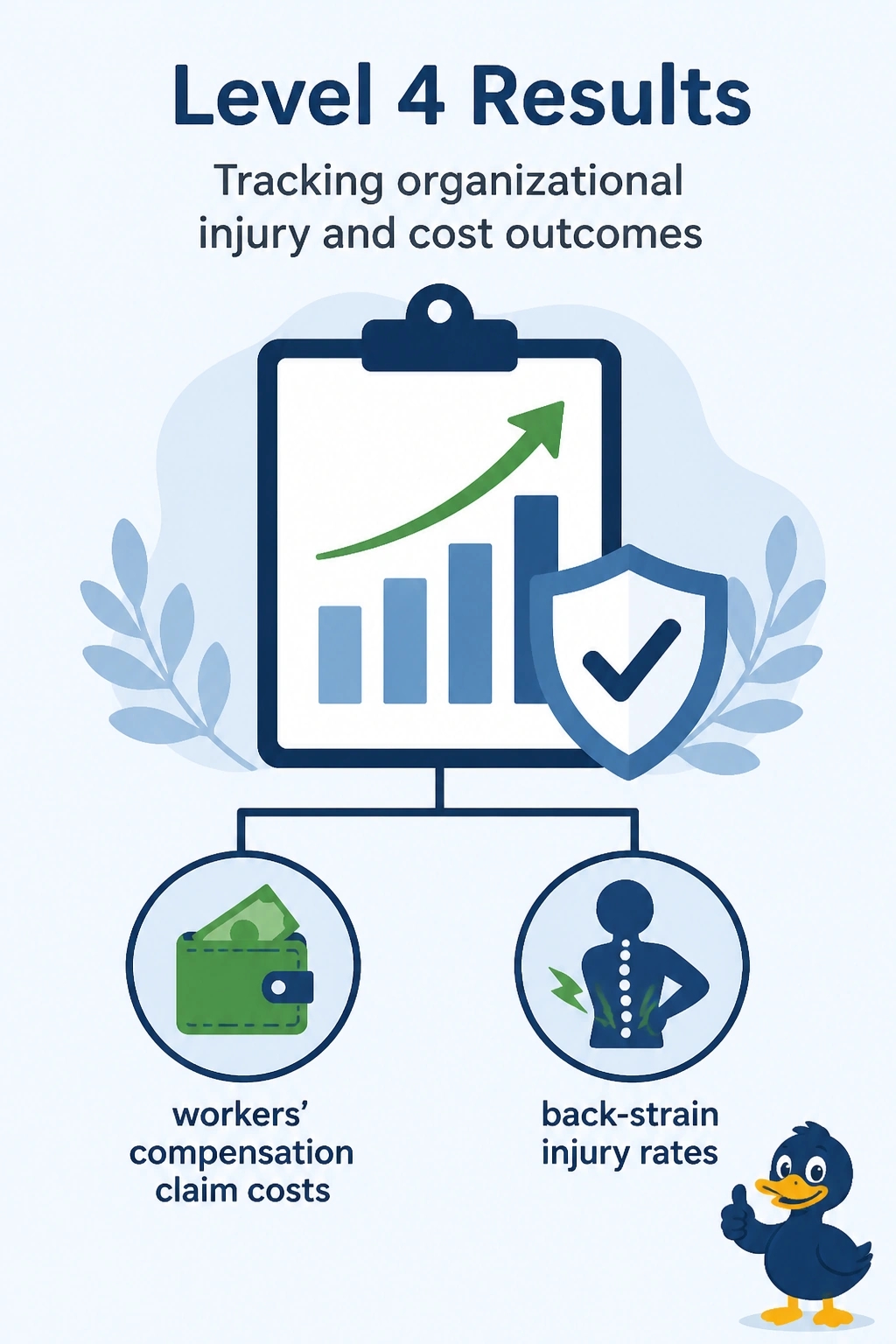
Measuring workers' compensation claim costs and back-strain injury rates six months after training corresponds to Level 4 Results tracking organizational injury and cost outcomes. In Kirkpatrick's four-level model, Level 4 evaluates whether the training achieved its broader business and safety objectives across the facility. Level 1 Reaction based on immediate trainee satisfaction surveys fails because it only captures how engaging or relevant participants felt the session was right after it ended. Level 2 Learning measured through written post-course knowledge tests is incorrect because it assesses whether trainees acquired the intended facts or skills during the class, not whether injury rates fell months later. Level 3 Behavior observed through supervisor floor audits of lifting is wrong because it measures whether workers apply new techniques on the job, which sits one step below organizational outcome metrics. As an exam caveat, isolating training as the sole cause of Level 4 improvements can be challenging when engineering controls or staffing levels also change. For an operational check, pair Level 4 lagging metrics like claim costs with Level 3 floor observations so you can verify that safer lifting habits actually drove the reduction.
Prefer to study offline? Printable PDF study book + test engine ($7.50, unofficial). These questions stay free here.