
A precision metal-parts manufacturer currently cleans machined components in an open vat of trichloroethylene, a toxic solvent known to be a human carcinogen, because the cleaning step itself cannot be eliminated from production. Applying the hierarchy of controls, which option represents the highest-priority feasible control?
Select an answer to reveal the explanation.
Short Explanation
When you cannot remove a hazardous step from production, the next strongest move is swapping out the dangerous chemical for a safer one. Putting workers in respirators or rotating shifts still leaves toxic vapors in the room. The trap is jumping straight to PPE or warning signs instead of replacing the hazard itself.
Full Explanation
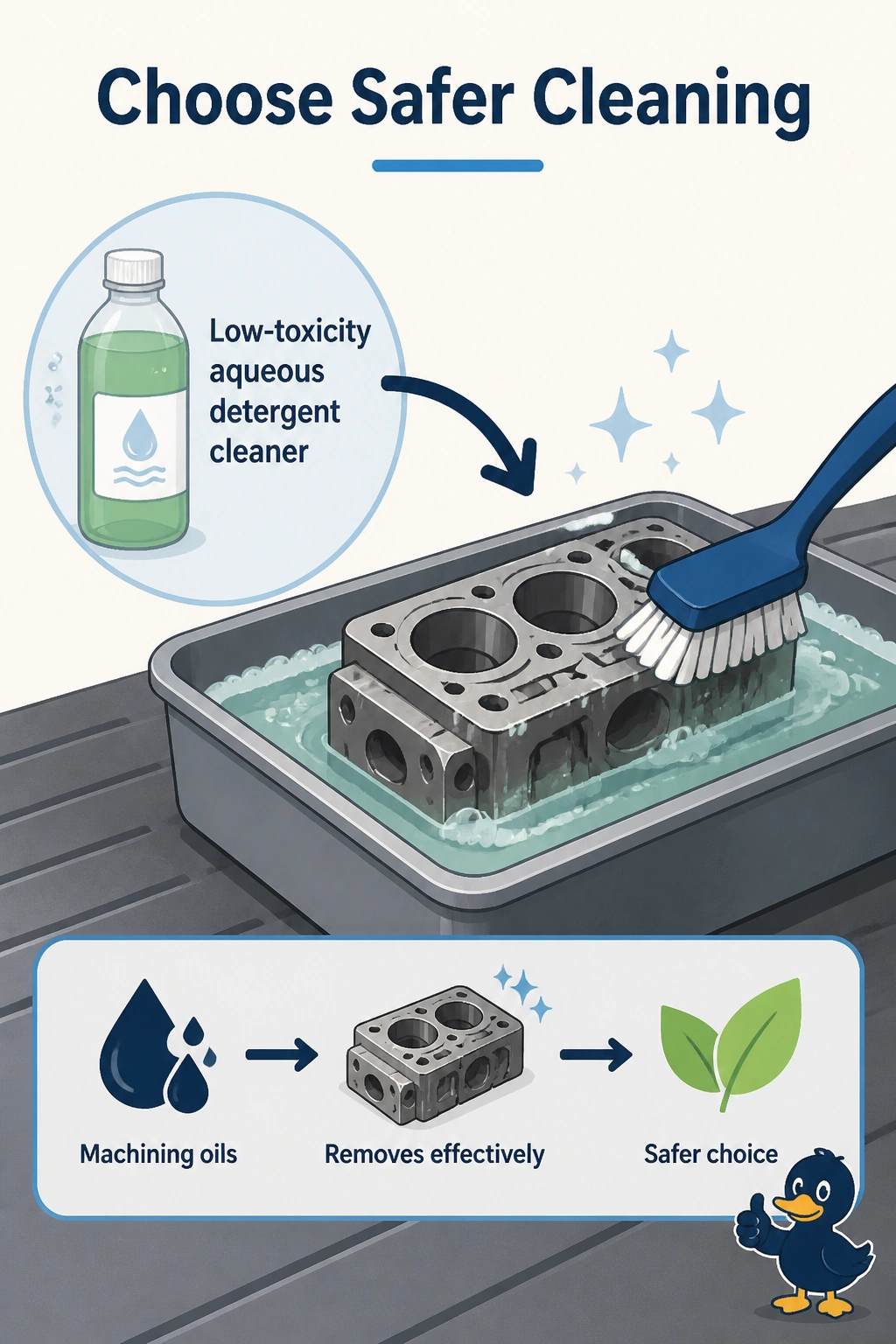
In the occupational safety hierarchy of controls, once elimination is ruled out as infeasible, substitution sits directly beneath it as the highest-priority feasible control because it reduces or removes the inherent chemical hazard. Substituting a low-toxicity aqueous detergent cleaner that removes machining oils effectively lowers inhalation and systemic toxicity risks for everyone in the facility without relying on human compliance. Issuing organic-vapor half-mask respirators and chemical-resistant aprons to all cleaning operators places the burden on personal protective equipment, the lowest tier in the hierarchy, which fails if fit or cartridge maintenance lapses. Rotating operators out of the solvent cleaning room every two hours to reduce daily exposure time is an administrative control that spreads a carcinogenic exposure across more workers rather than controlling the source. Posting caution signs above the vat reminding operators not to lean over the liquid surface is also a weak administrative measure that does not capture rising solvent vapors. As a caveat, verify that any substitute cleaner does not introduce new hazards such as extreme alkalinity, slip risks, or incompatible wastewater discharges. As an operational check, review the substitute's Safety Data Sheet and run a small-batch quality trial before decommissioning the solvent vat.
Prefer to study offline? Printable PDF study book + test engine ($7.50, unofficial). These questions stay free here.