
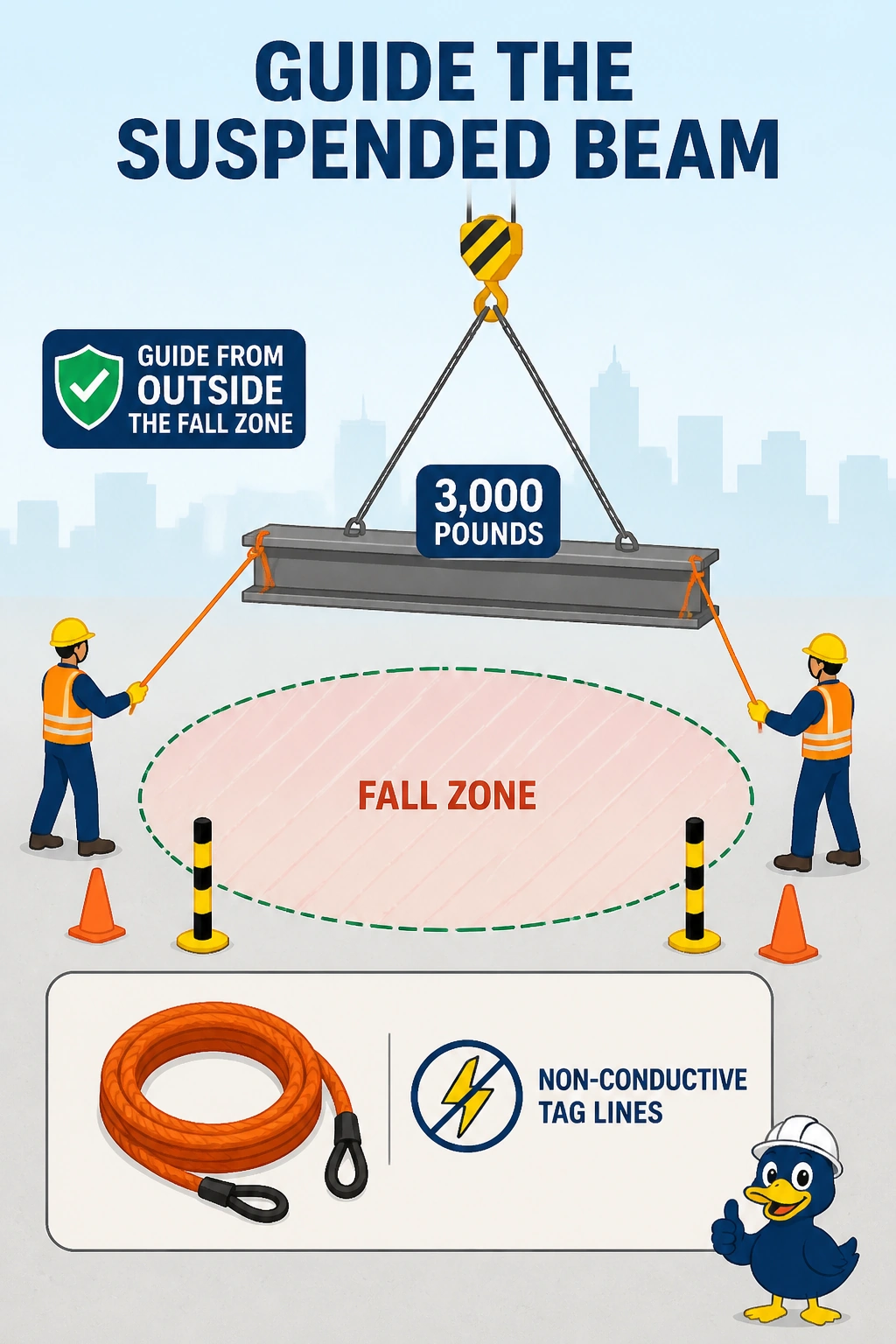
During an outdoor steel-yard lift, a mobile crane hoists a 3,000-pound structural beam in a moderate crosswind while riggers prepare to guide it onto cribbing. Which work practice safely controls the load without exposing workers to struck-by or crushing hazards?
Select an answer to reveal the explanation.
Short Explanation
A 3,000-pound beam in a crosswind swings like a pendulum, so you want control from a safe distance rather than putting your body near the steel. The trap is thinking bare hands or raising the load higher makes it safe to step inside the drop zone.
Full Explanation
Crosswinds can spin or swing a suspended 3,000-pound steel beam unexpectedly, so the crew should attach non-conductive tag lines to guide the beam from outside the fall zone. Tag lines give riggers directional control at a safe standoff distance, keeping hands, feet, and bodies clear of the load path and nearby pinch points while also reducing electrical shock risk near overhead lines. Choosing to walk directly beneath the raised beam to steady both ends by hand places workers inside the fatal drop zone if a sling, shackle, or brake fails. Deciding to hoist the beam ten feet higher so workers can pass underneath safely still violates fundamental crane safety because no worker should ever walk or stand under a suspended load at any elevation. Attempting to push against the steel flange with bare hands once it clears the truck puts workers close to pinch points, sharp edges, and sudden lateral swings. As a caveat, tag lines must be kept free of knots and never wrapped around a rigger's wrist or waist where a sudden gust could drag the worker. As an operational check, inspect tag lines for fraying and verify during pre-lift briefings that every crew member knows the swing radius and exclusion boundary.
Prefer to study offline? Printable PDF study book + test engine ($7.50, unofficial). These questions stay free here.