
A facility safety coordinator needs to determine the OSHA Permissible Exposure Limit and required chemical-resistant glove material for a newly purchased degreasing solvent. Which section of the Safety Data Sheet under 29 CFR 1910.1200 provides this information?
Select an answer to reveal the explanation.
Short Explanation
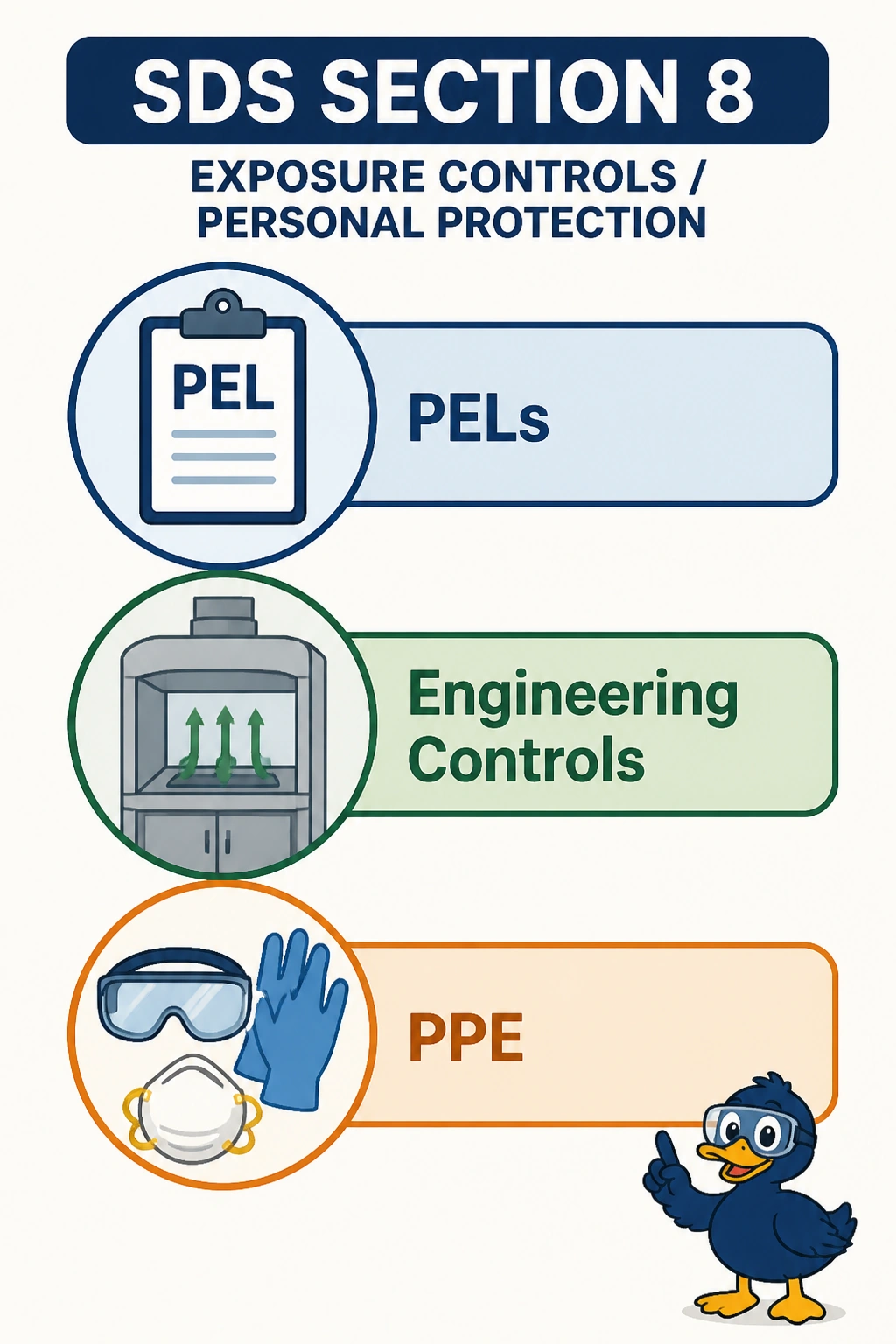
When workers handle a new chemical, you want the exact gear and air limits fast without flipping through every page. The trap is grabbing storage or physical data sections that tell you what the liquid does, not what protects your crew. Under 29 CFR 1910.1200, Section 8 gives you exposure limits, ventilation controls, and PPE in one place.
Full Explanation
Under OSHA's Hazard Communication Standard (29 CFR 1910.1200 Appendix D), Safety Data Sheets follow a standardized 16-section format so safety professionals can locate protective requirements consistently. Selecting Section 8: Exposure Controls/Personal Protection, which lists PELs, engineering controls, and PPE is correct because that section consolidates occupational exposure limits such as OSHA PELs, recommended ventilation or enclosure controls, and specific glove, eye, or respiratory protection. Choosing Section 4: First-Aid Measures, which details acute exposure symptoms fails because Section 4 addresses emergency treatment after an exposure has already occurred rather than preventive controls. Choosing Section 7: Handling and Storage, which covers safe transfer practices fails because Section 7 focuses on container compatibility, temperature limits, and spill avoidance rather than exposure limits or respirator criteria. Choosing Section 9: Physical and Chemical Properties, which lists flash point fails because Section 9 reports laboratory properties such as boiling point, vapor pressure, and odor rather than protective gear. As an operational caveat, always verify whether the employer's internal chemical-hazard assessment requires stricter PPE than the baseline listed in Section 8. For an operational check, pull the current SDS before introducing a solvent and confirm that stocked glove materials and local exhaust rates match Section 8.
Prefer to study offline? Printable PDF study book + test engine ($7.50, unofficial). These questions stay free here.