
A food processing plant upgrades an old packaging line by replacing knife switches with modern circuit breakers that accept padlocks, and a supervisor suggests continuing to use only paper warning tags to save time during sanitation shifts. Under OSHA 29 CFR 1910.147, what must the plant do?
Select an answer to reveal the explanation.
Short Explanation
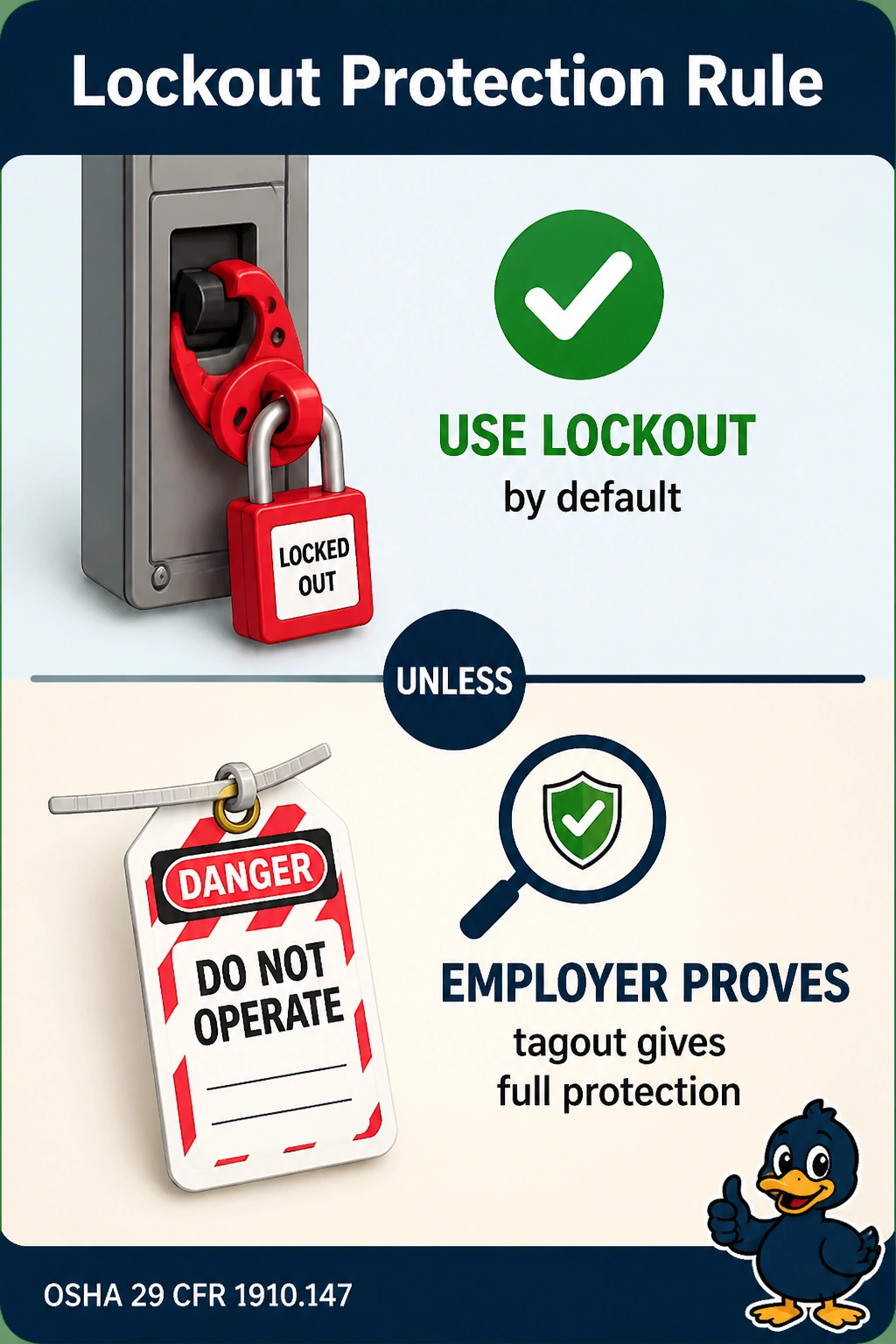
Think of a tag as a polite warning sign, whereas a padlock is a physical wall that stops someone from flipping a switch. The trap is assuming tags remain acceptable once equipment is upgraded to accept locks. Under OSHA rules, if you can lock it out, you must lock it out unless you prove tags match that protection.
Full Explanation
Under OSHA 29 CFR 1910.147, physical energy isolation takes priority over administrative warnings, so the plant must Use lockout devices unless the employer proves tagout gives full protection. A padlock physically prevents re-energization, whereas a tag only warns workers and can be overlooked or bypassed during shift changes. Choosing to Continue using tags alone if workers sign a daily shift log violates the standard because paperwork does not match the physical barrier of a lock when breakers are lockable. The option to Apply tags on electrical breakers and locks only on steam valves is incorrect because every lockable energy-isolating device, including electrical disconnects, requires a lockout device. Trying to Allow tagout alone whenever two technicians work together as a pair still leaves the circuit physically capable of being energized by mistake. Proving equivalent protection requires additional measures such as removing an isolating circuit element or blocking a controlling switch, plus periodic audits and strict training. For an operational check, inspect every newly installed breaker panel during lockout audits to confirm hasps and padlocks fit properly and are stocked at the point of use.
Prefer to study offline? Printable PDF study book + test engine ($7.50, unofficial). These questions stay free here.