
A maintenance technician is installing an exhaust fan near an unprotected 18-foot-high roof edge and must select an anchorage point for a personal fall arrest system. Under OSHA 29 CFR 1910.140, which anchorage meets the minimum strength requirement for one attached worker?
Select an answer to reveal the explanation.
Short Explanation
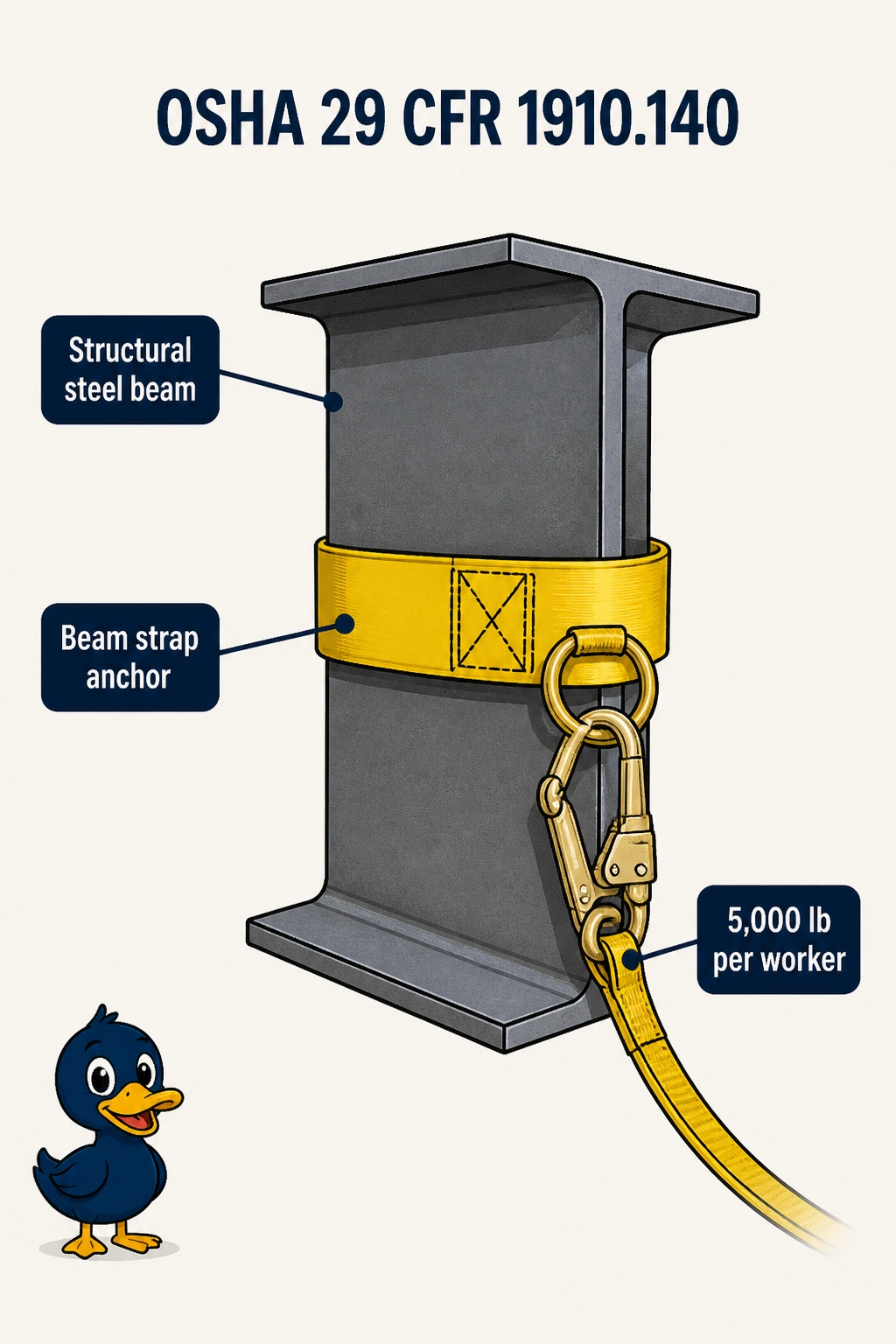
When a fall arrest lanyard snaps tight, dynamic shock multiplies the force on your anchor far beyond your body weight. Under OSHA rules, you need an anchor rated for 5,000 pounds per attached worker—or one engineered for twice the maximum arrest force. The trap is tying off to convenience items like conduit, ducts, or guardrails that will tear away instantly.
Full Explanation
Under OSHA 29 CFR 1910.140, personal fall arrest anchorages must be independent of any anchorage used to support platforms and must support at least 5,000 pounds per attached employee (or be designed by a qualified person with a safety factor of at least two). Selecting A structural steel beam rated to support 5,000 pounds per attached worker (paired with a proper beam strap or certified anchor) provides the strength needed to withstand dynamic arrest loads. Tying off to An electrical conduit hanger rated for 500 pounds of static load fails because conduit supports are light-duty building services that collapse under arrest forces and create electrical hazards. Attaching to A standard wooden guardrail top rail designed for 200 pounds of force fails because guardrails are rated for only 200 pounds of outward/downward push, nowhere near the 5,000-pound arrest standard. Using An uninspected roof-mounted HVAC sheet-metal duct seam near the parapet edge fails because thin sheet-metal ductwork tears apart immediately under fall loads and lacks verified structural capacity. A practical caveat is that sharp structural beam edges can slice webbing lanyards during a fall unless an abrasion pad or beam-wrap anchor is used. For an operational check, inspect the anchor tag or structural drawing, confirm only one worker is attached per 5,000-pound point, and verify total fall clearance below the roof edge.
Prefer to study offline? Printable PDF study book + test engine ($7.50, unofficial). These questions stay free here.