
During a maintenance shop inspection, a safety specialist checks a bench-mounted abrasive wheel grinder used for sharpening chisels. Under OSHA's Abrasive Wheel Machinery standard (29 CFR 1910.215), what is the maximum gap permitted between the work rest and the grinding wheel face?
Select an answer to reveal the explanation.
Short Explanation
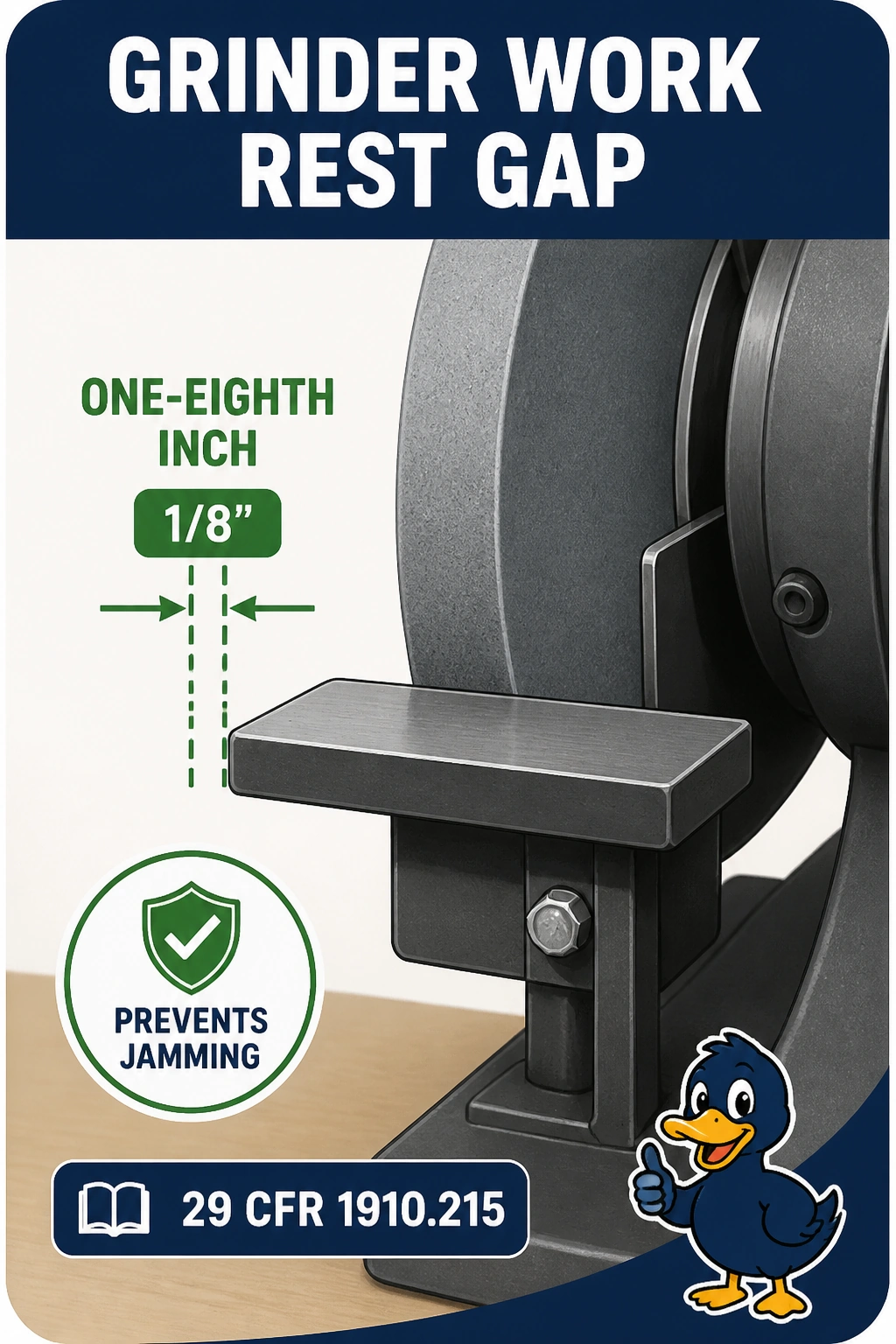
You want the work rest close to the wheel so a chisel cannot catch and cause the wheel to shatter. Remember the one-eighth-inch work-rest limit; the one-quarter-inch clearance applies to the tongue guard, not the work rest.
Full Explanation
Under OSHA’s Abrasive Wheel Machinery standard (29 CFR 1910.215), the work rest on an offhand grinding machine must be kept close to the wheel, with a maximum gap of one-eighth inch. A wider clearance can let small workpieces such as chisels or drill bits wedge between the rest and the spinning wheel, creating a pinch point that can fracture the wheel violently or pull your fingers into it. The one-quarter-inch gap proposed to allow coolant flow confuses the work-rest limit with the maximum clearance for the upper tongue guard; dry bench grinders do not need a larger work-rest gap for coolant. The one-half-inch gap proposed to clear beveled tool edges and the three-eighths-inch gap proposed to prevent wheel glazing are both large enough to catch metal stock and cause catastrophic wheel breakage, violating the standard. As a wheel wears, the gap can widen, so routine inspection matters. Caveat: never adjust the work rest while the wheel is moving, and make sure it is clamped securely before restarting the grinder. Practical check: keep one-eighth-inch and one-quarter-inch go/no-go gauges beside shop grinders so you can verify both clearances before use and after wheel dressing.
Prefer to study offline? Printable PDF study book + test engine ($7.50, unofficial). These questions stay free here.