
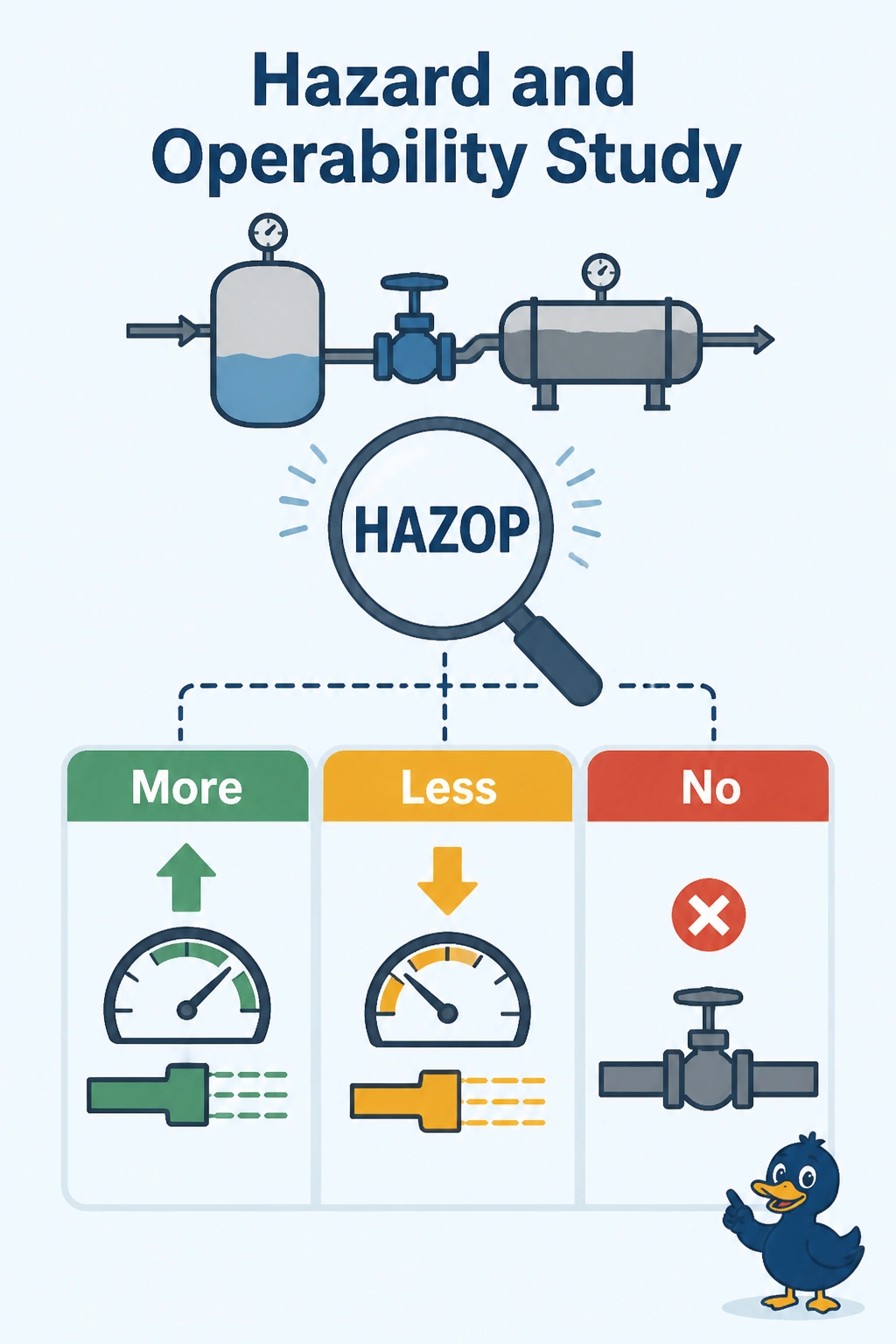
A chemical processing facility is commissioning a new continuous-flow reactor and wants a structured team method that applies guide words such as "More," "Less," and "No" to piping-and-instrumentation parameters to uncover process deviations. Which hazard analysis technique fits this need?
Select an answer to reveal the explanation.
Short Explanation
When you hear guide words paired with flow, pressure, or temperature on a piping diagram, your mental alarm should ring immediately. The trap is confusing this node-by-node process review with task-level job breakdowns or component reliability tables.
Full Explanation
A Hazard and Operability Study is a structured, multidisciplinary team review that divides a process into nodes on piping-and-instrumentation diagrams and pairs process parameters with guide words such as More, Less, No, and Reverse to identify deviations, causes, and safeguards. Job Safety Analysis for task steps is designed to break down individual worker job sequences into steps, hazards, and controls rather than analyzing continuous chemical process deviations across piping nodes. Fault Tree Analysis using logic gates works top-down from a single defined catastrophic top event using Boolean AND and OR gates to map failure combinations rather than systematically walking through process parameters with guide words. Failure Mode and Effects Analysis works bottom-up by listing individual hardware components and their failure modes rather than examining how process variables deviate from design intent. Caveat: a Hazard and Operability Study requires accurate, up-to-date piping-and-instrumentation diagrams and experienced operations, engineering, and safety participants to avoid blind spots. Operational check: verify that every identified deviation with inadequate safeguards receives an assigned action item, owner, and target completion date before process startup.
Prefer to study offline? Printable PDF study book + test engine ($7.50, unofficial). These questions stay free here.