
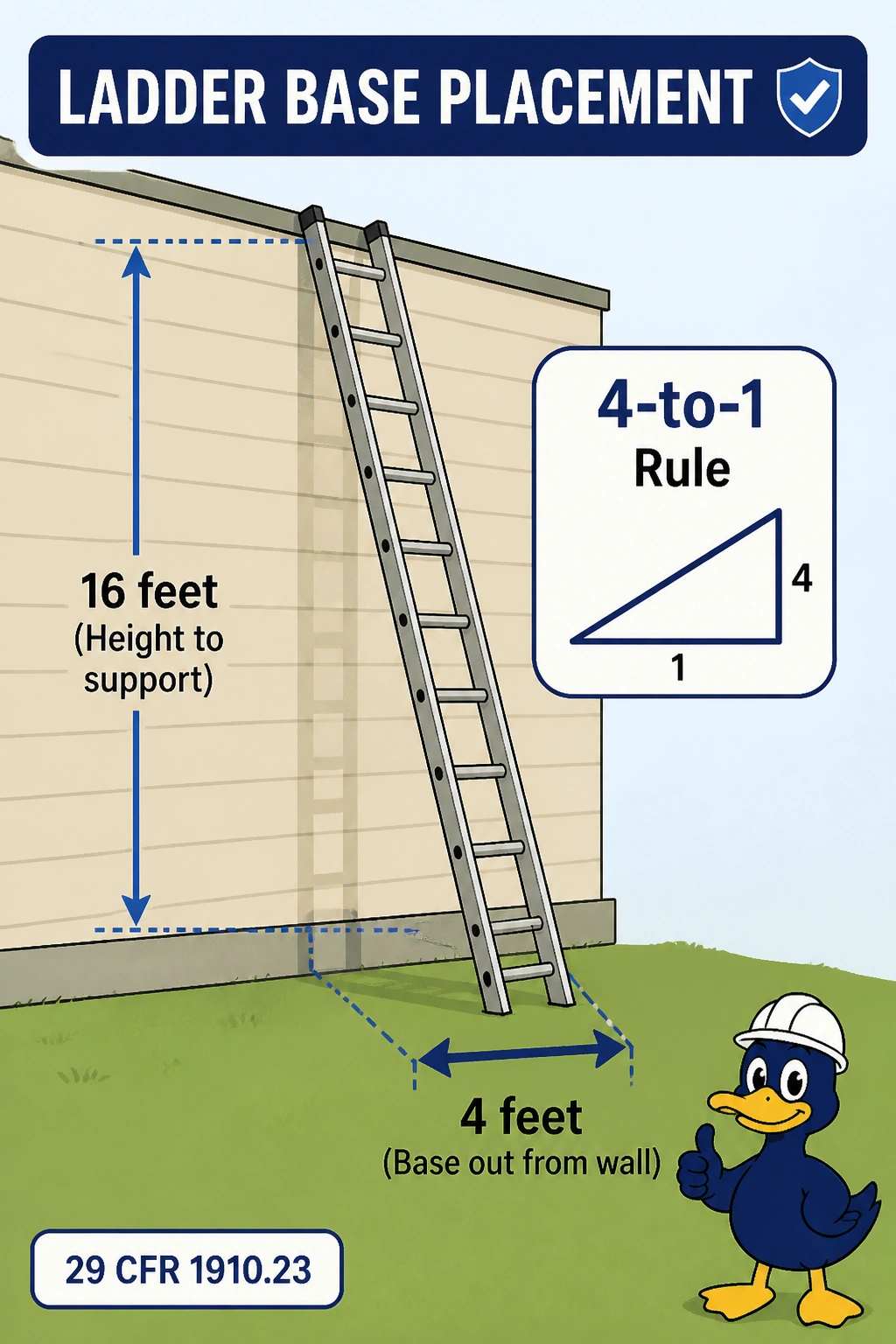
A facility maintenance technician needs to access a roof hatch using a fiberglass extension ladder with a working length of 16 feet from the ground to the top support. To position the ladder at OSHA's required 4-to-1 angle under 29 CFR 1910.23, how far from the vertical wall should the base of the ladder be placed?
Select an answer to reveal the explanation.
Short Explanation
A ladder pitched too steep can tip backward with you on it, while one pitched too shallow can kick out at the base. The easy trap is forgetting to divide the working length by four, which leaves your footing unstable before you even climb the first rung.
Full Explanation
Under OSHA's Walking-Working Surfaces standard (29 CFR 1910.23), non-self-supporting portable ladders must be positioned so the horizontal distance from the top support to the foot of the ladder is approximately one-quarter of the working length, making 4 feet out from the base of the wall the correct setback for a 16-foot working length (16 divided by 4 equals 4). Placing the base 2 feet out from the base of the wall creates an overly steep 8-to-1 angle that shifts the climber's center of gravity backward and increases the risk of the ladder tipping away from the wall. Setting the base 6 feet out from the base of the wall creates too shallow an angle, increasing horizontal shear force at the feet and raising the chance of the bottom sliding out. Positioning the ladder 8 feet out from the base of the vertical wall produces a 2-to-1 pitch that places excessive bending stress on the side rails and greatly increases slip-out risk. As a caveat, when accessing a roof or upper landing, the side rails must also extend at least 3 feet above the upper landing surface unless the ladder is secured and a grasping device is provided. Operationally, verify the 4-to-1 angle with a quick field check—standing with toes against the ladder feet and extending arms straight forward so palms touch the rung at shoulder height—and secure the top before climbing.
Prefer to study offline? Printable PDF study book + test engine ($7.50, unofficial). These questions stay free here.