
A chemical manufacturing facility operates a covered process containing threshold quantities of anhydrous ammonia and completed its initial Process Hazard Analysis (PHA) four years ago with no major process changes since then. Under OSHA's Process Safety Management standard (29 CFR 1910.119), when must the facility update and revalidate the PHA?
Select an answer to reveal the explanation.
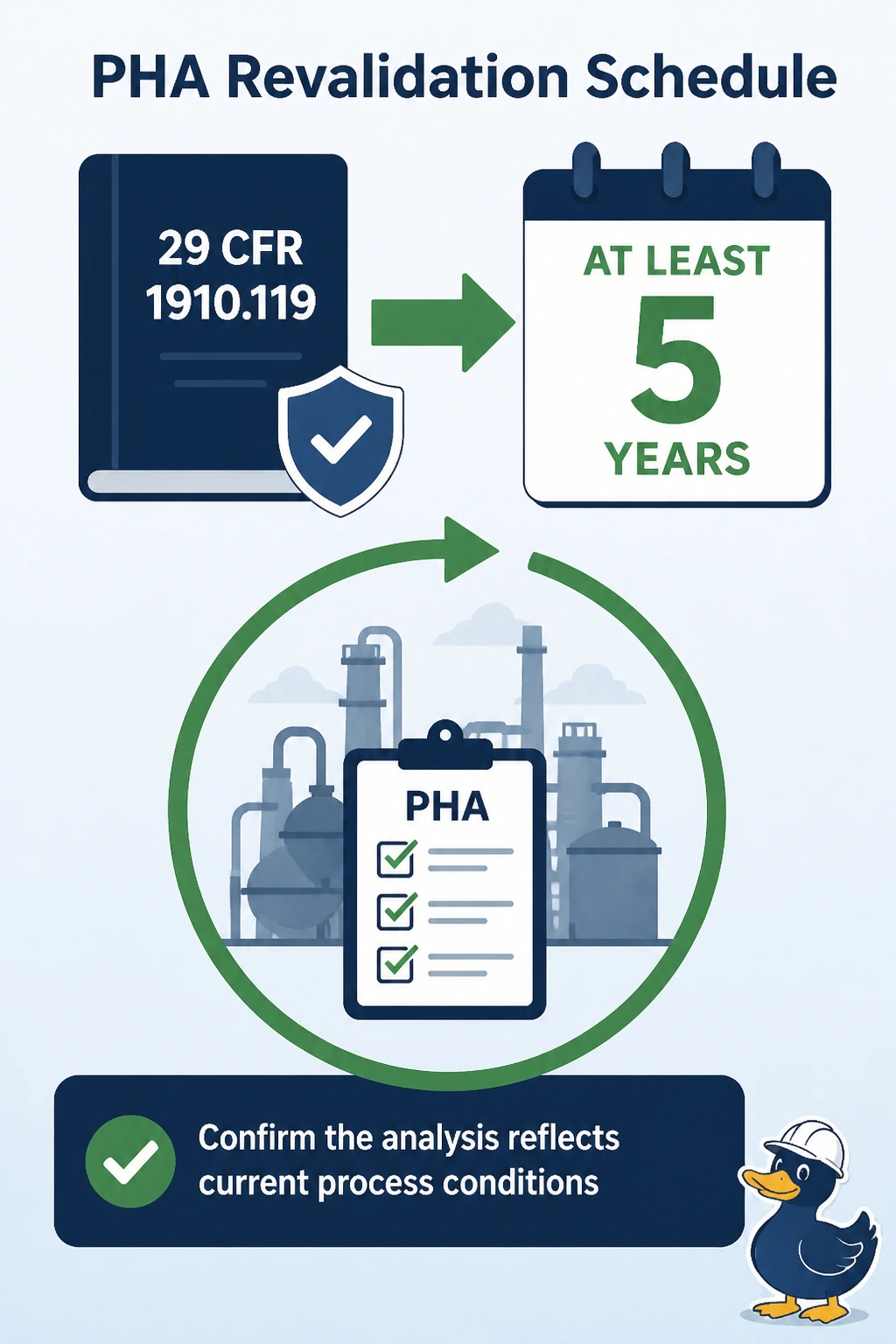
Short Explanation
Think of a Process Hazard Analysis like a passport—even if your plant looks unchanged, it still expires on a fixed clock. The common trap is assuming you only revisit a PHA after an incident or a major equipment swap, when OSHA requires a scheduled five-year checkup.
Full Explanation
Under OSHA's Process Safety Management standard (29 CFR 1910.119), an employer must update and revalidate a Process Hazard Analysis At least every five years to confirm the analysis reflects current process conditions. Even without major equipment modifications, minor operational drift, accumulated maintenance changes, and updated industry lessons can alter process risks over time. Waiting to act Only after a catastrophic release or an OSHA-recordable injury occurs in the ammonia unit is reactive and violates PSM's core goal of preventing catastrophic releases before they happen. Scheduling revalidation Every ten years unless a Management of Change review alters the process piping layout exceeds the five-year statutory interval and allows hazard assumptions to grow stale. Redoing a full PHA Annually during the facility's emergency action plan drill and written program review confuses the annual review of operating procedures and emergency plans with the five-year PHA revalidation cycle. As a caveat, a Management of Change review is still required immediately whenever a non-replacement-in-kind change occurs between five-year cycles. Operationally, track PHA revalidation due dates in the plant compliance calendar and assemble a multidisciplinary team six months ahead of the deadline.
Prefer to study offline? Printable PDF study book + test engine ($7.50, unofficial). These questions stay free here.