
A three-shift beverage warehouse operates electric sit-down forklifts continuously around the clock. Under OSHA's Powered Industrial Trucks standard (29 CFR 1910.178), how often must operators or maintenance personnel inspect each forklift for safety defects?
Select an answer to reveal the explanation.
Short Explanation
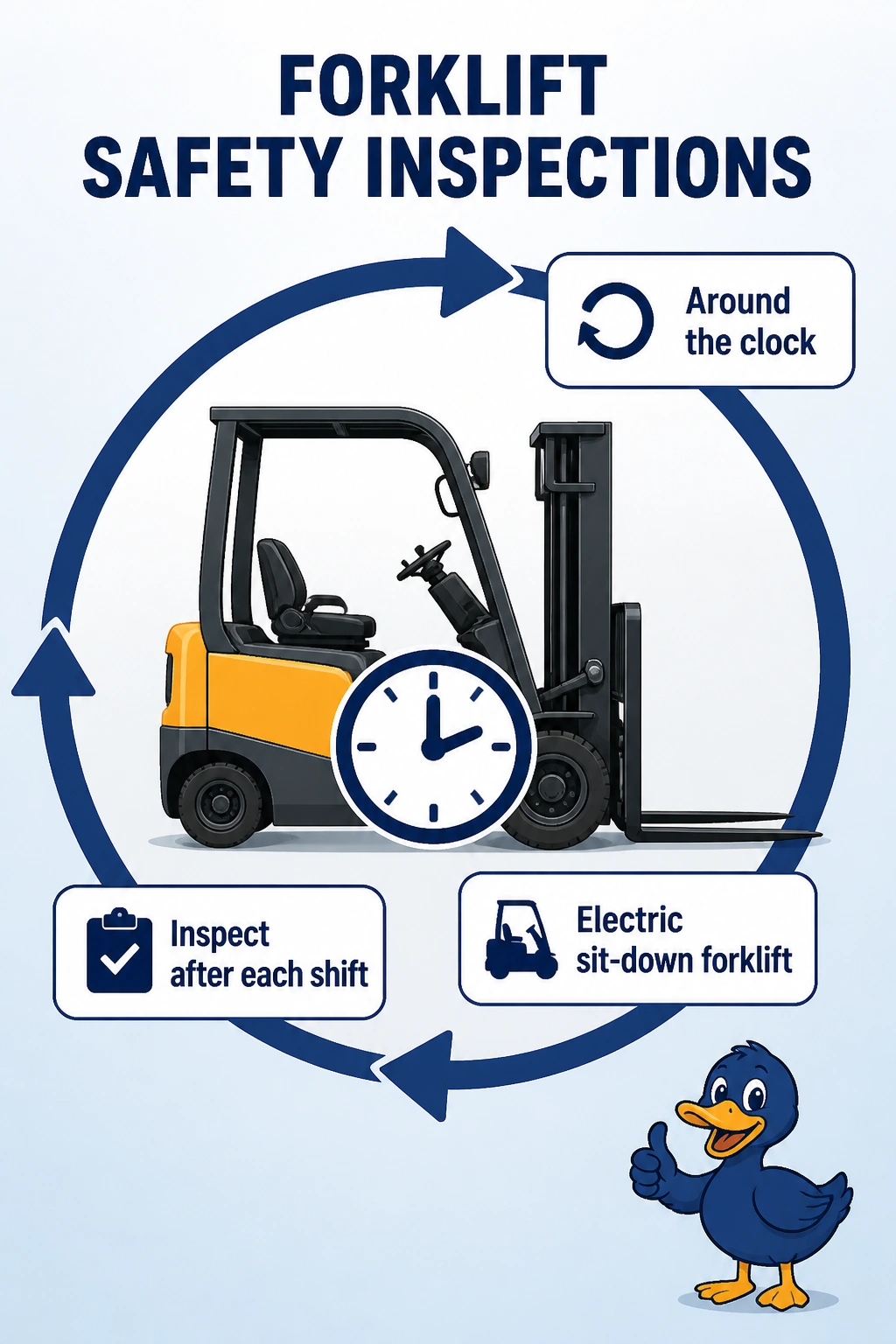
If a forklift never sleeps, your inspection schedule cannot sleep either. The trap is assuming a weekly maintenance check or a monthly safety walk is enough for a 24-hour floor; when trucks run round the clock, you must inspect them before each shift.
Full Explanation
Under OSHA 29 CFR 1910.178(q)(7), powered industrial trucks must be examined at least daily before being placed in service, and after each shift when the forklift is operated around the clock. Checking brakes, steering, horn, lights, forks, and fluid or battery connections at every shift change ensures that a defect created on second shift is caught before third shift drives the truck onto a loading dock. Waiting to inspect once per week during scheduled preventive maintenance by a certified mechanic leaves days of uninspected operation where hydraulic leaks or worn tires could cause a tip-over. Inspecting once per month when the warehouse safety committee conducts its facility walk fails to catch daily wear on safety-critical components. Checking only after an operator reports a mechanical failure or a near-miss collision is purely reactive and violates the mandatory pre-use examination rule. As a caveat, any forklift found to have a safety defect must be tagged out and removed from service immediately until repaired. Audit the forklift inspection logs at the start of third shift to confirm each active truck has a signed pre-shift checklist.
Prefer to study offline? Printable PDF study book + test engine ($7.50, unofficial). These questions stay free here.