
A facility maintenance crew fabricates a permanent steel guardrail system along an elevated mezzanine walkway in a manufacturing plant. Under OSHA's general industry Fall Protection Systems standard (29 CFR 1910.29), what vertical height above the walking-working surface must the top edge of the top rail meet?
Select an answer to reveal the explanation.
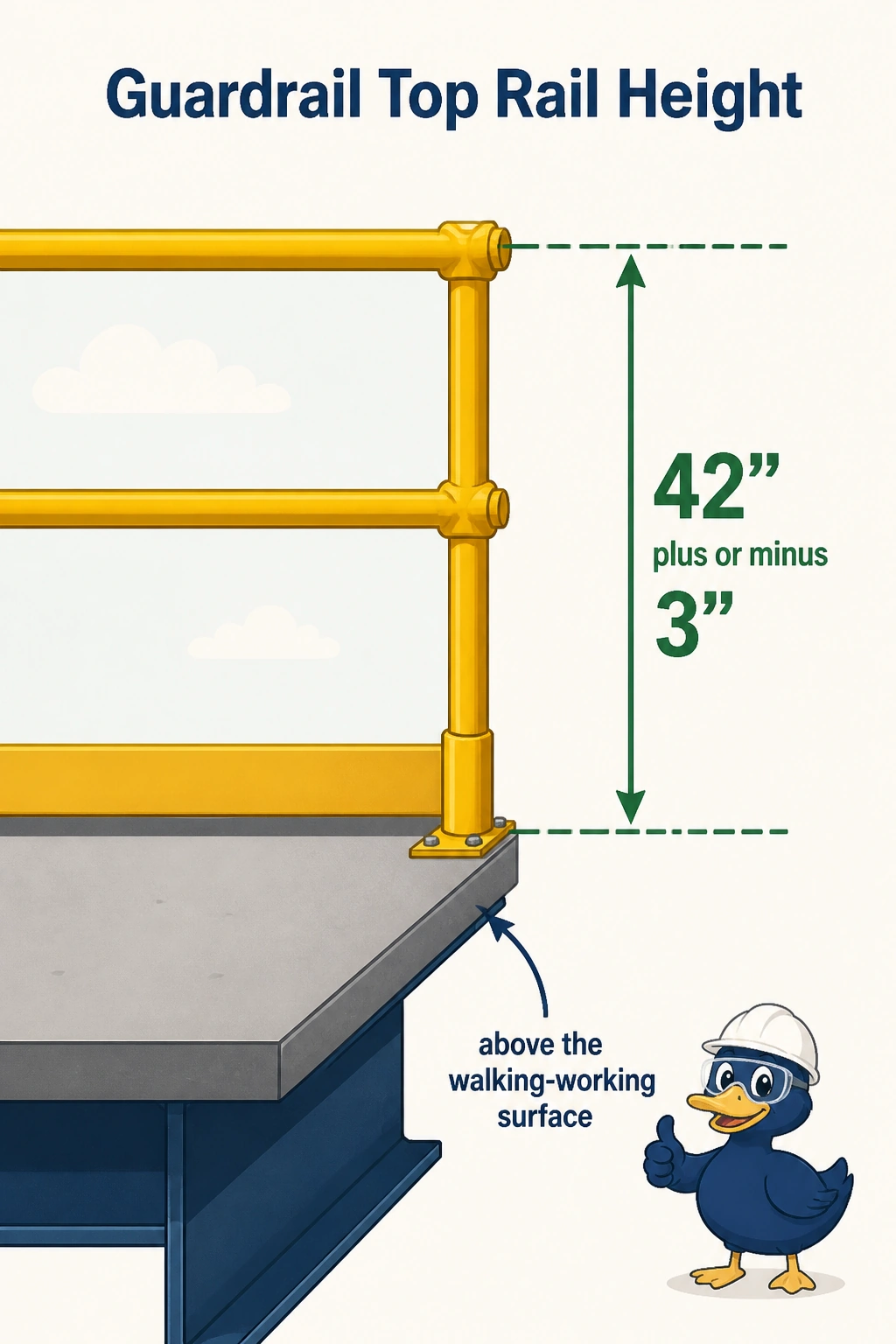
Short Explanation
A guardrail has to sit above your waist so you do not tip right over it if you stumble on a mezzanine. The trap is guessing 36 inches from residential stair codes; general industry guardrails require 42 inches, plus or minus 3 inches, above the walking surface.
Full Explanation
Under 29 CFR 1910.29, the top edge height of top rails in a general industry guardrail system must be 42 inches, plus or minus 3 inches, above the walking-working surface. That 39-to-45-inch band places the barrier near or above the average worker's center of gravity to prevent a person from toppling over the rail. Choosing 36 inches, plus or minus 3 inches, to match standard residential stair handrails confuses stair handrail heights (30 to 38 inches under 1910.29(f)) with level-edge guardrail protection. A nominal 48-inch rail is not the specified height. Height above 45 inches is still allowed when the other guardrail criteria are met; it is not a hard cap. Picking 30 inches, plus or minus 2 inches, provided a midrail is installed halfway down sets the rail far too low to restrain a standing adult, even with a midrail. As a caveat, top rails must also withstand at least 200 pounds of outward or downward force without failing, and midrails are required halfway between the top edge and the surface when no wall is present. Before opening the mezzanine to traffic, measure the top-rail height at several posts with a tape measure and verify the midrail and toeboard clearances.
Prefer to study offline? Printable PDF study book + test engine ($7.50, unofficial). These questions stay free here.