
A municipal water crew is excavating a 6-foot-deep trench in cohesive clay soil and piles the excavated dirt directly along the top edge of the trench wall to save space on a narrow street. Which OSHA excavation requirement does this practice violate?
Select an answer to reveal the explanation.
Short Explanation
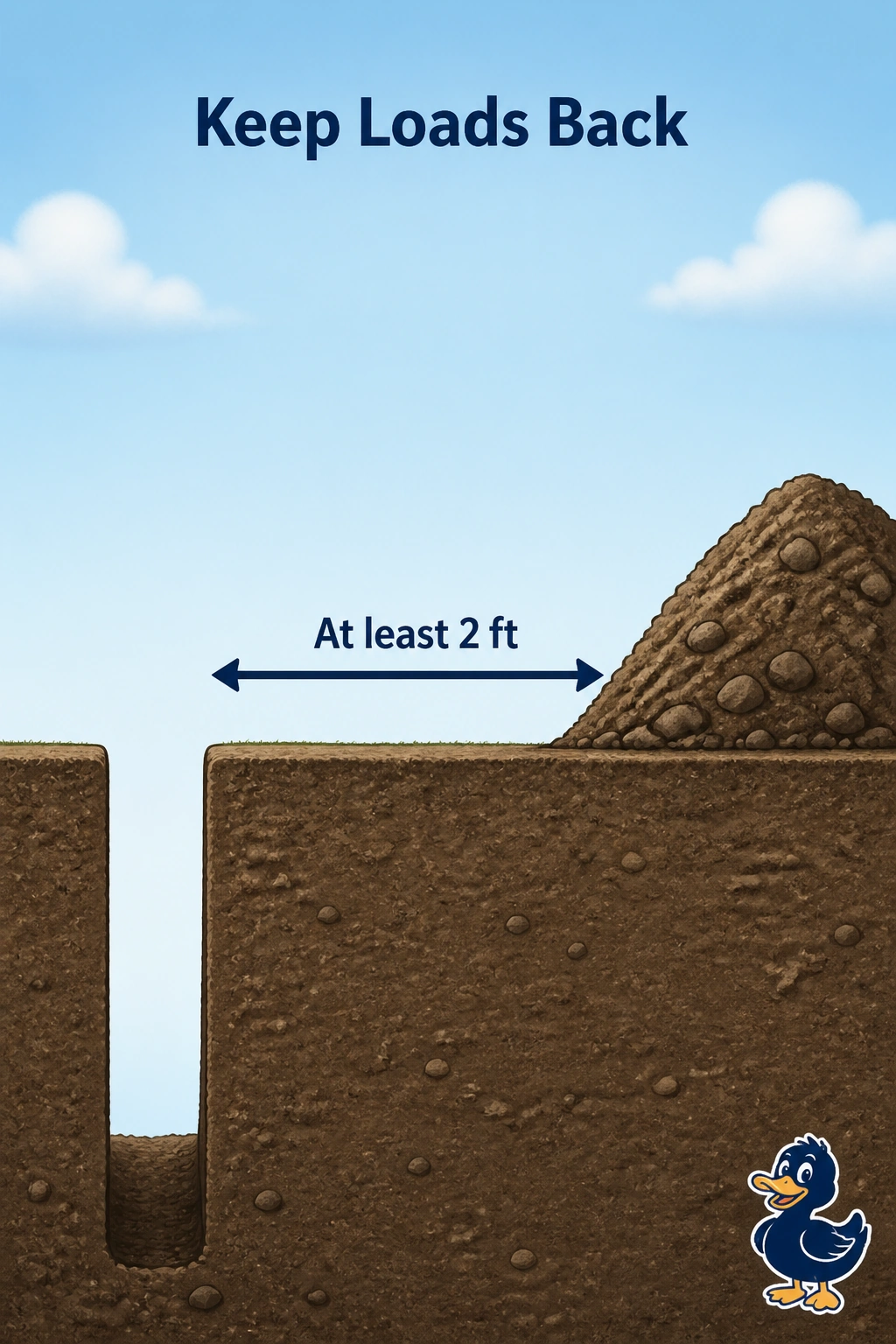
Think of a trench wall like a retaining dam: pile extra weight right on the lip, and you invite the whole bank to slide inward. The trap is assuming stiff clay can hold that surcharge without sloughing; always keep your spoil piles at least 2 feet back from the edge.
Full Explanation
Under OSHA 29 CFR 1926.651(j)(2), employers must protect workers from loose rock or soil that could fall or roll from an excavation face by keeping excavated spoil piles and heavy equipment at least 2 feet back from the trench edge, or by using retaining devices. Placing dirt directly on the lip adds surcharge weight that increases lateral soil pressure and can trigger a sudden cave-in or dislodge clods onto workers below. Providing a ladder within 25 feet of lateral travel for every worker inside the trench is an egress rule under 29 CFR 1926.651 for trenches 4 feet or deeper, not a spoil-placement rule. Testing the trench bottom for oxygen deficiency before workers enter the excavation applies when hazardous atmospheres are reasonably expected, such as near landfills or sewer lines. Installing warning vests on all crew members working adjacent to moving street traffic protects workers from vehicle struck-by hazards rather than trench wall collapse. As a caveat, even a 2-foot setback does not replace sloping, shoring, or shielding in trenches 5 feet or deeper. During your daily trench inspection, measure the clear distance from the trench edge to the toe of the spoil pile and verify that no tools or soil sit within that 2-foot buffer.
Prefer to study offline? Printable PDF study book + test engine ($7.50, unofficial). These questions stay free here.