
During an incident investigation after a warehouse worker slips on hydraulic fluid near a dock leveler, the supervisor writes "employee failed to watch where they were walking" as the root cause and closes the report. Why does this conclusion undermine effective incident investigation?
Select an answer to reveal the explanation.
Short Explanation
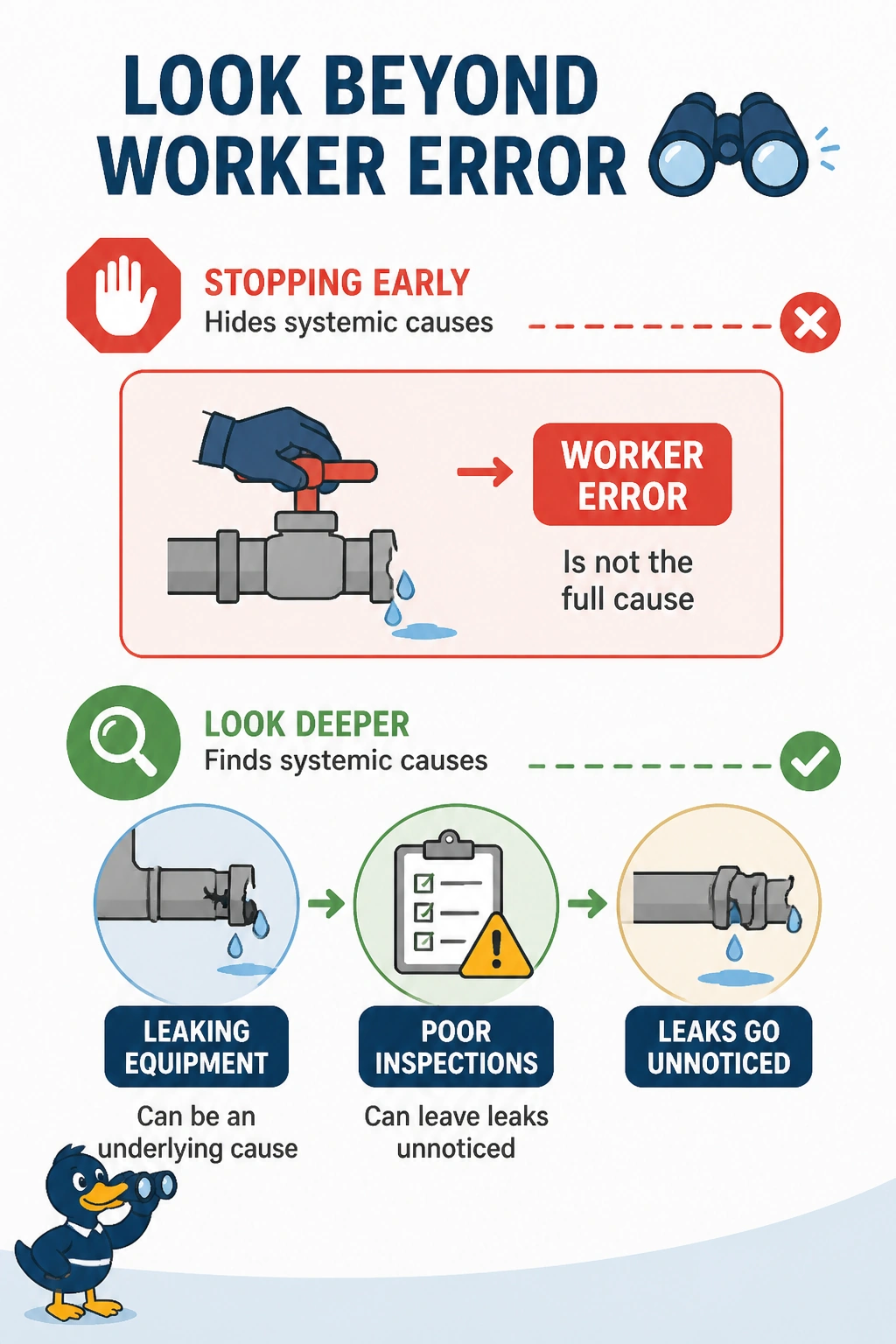
Blaming a worker for a slip is like mopping up a roof leak without ever patching the shingles! The trap is treating human inattention as the root cause, when your investigation needs to uncover the equipment failure and inspection gaps that put the hazard on the floor.
Full Explanation
Effective incident investigations treat human action as a symptom and look upstream for organizational, equipment, and process failures. "Stopping at worker error overlooks systemic causes like leaking equipment and poor inspection routines" captures the core mechanism: closing the file after blaming the employee leaves the hydraulic leak, housekeeping lapse, and preventive maintenance gap intact for the next shift. "OSHA recordkeeping rules require listing at least three contributing factors on Form 301 for every slip" is incorrect because 29 CFR 1904 sets no minimum quota of contributing factors on Form 301, which documents factual injury and illness details. "Assigning blame to an individual employee automatically triggers a mandatory OSHA willful citation review" is wrong because OSHA willful classifications depend on an employer's intentional disregard or plain indifference to requirements, not on internal blame statements. "Supervisors are prohibited from interviewing injured workers until an external consultant arrives on site" is also false, since trained internal staff routinely conduct prompt, non-punitive interviews once medical care is addressed. As a caveat, corrective actions must prioritize engineering or maintenance controls over generic reminders to watch one's step. As an operational check, audit closed incident reports monthly and return any investigation that cites worker inattention without identifying systemic controls.
Prefer to study offline? Printable PDF study book + test engine ($7.50, unofficial). These questions stay free here.