
A municipal water utility inspects a dry underground valve vault that is large enough for a worker to enter, has a single manhole ladder for entry and exit, and is not designed for continuous occupancy, but contains only clean water pipes with no hazardous atmosphere, engulfment, or configuration hazards. How should the safety coordinator classify this vault under 29 CFR 1910.146?
Select an answer to reveal the explanation.
Short Explanation
Just because a space has a manhole cover does not automatically make it a permit-required space. The trap is assuming limited entry alone triggers a permit program, when you must look for an actual internal hazard like toxic gas or engulfment.
Full Explanation
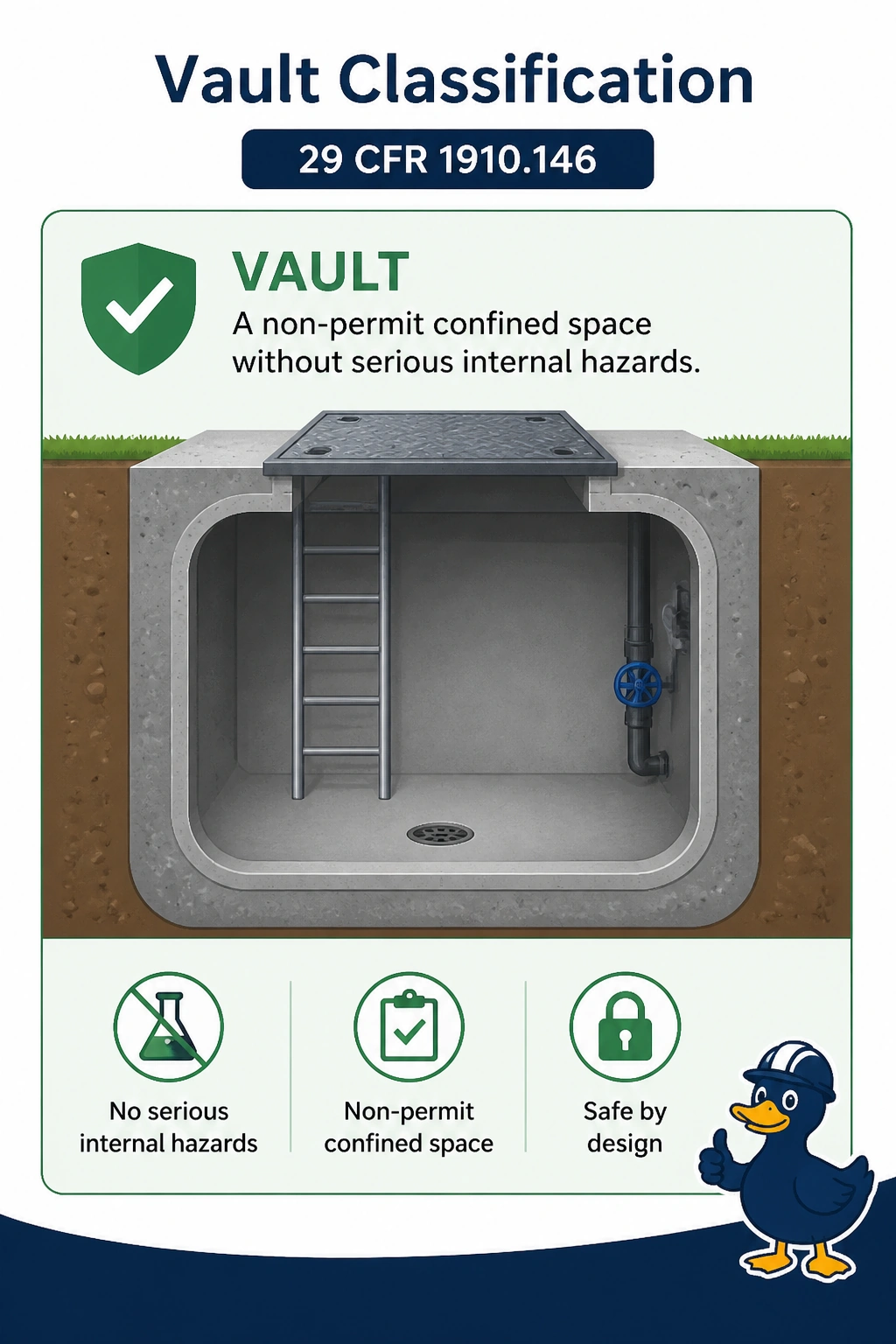
Under 29 CFR 1910.146, a space with enough room to enter, restricted entry or exit, and no design for continuous occupancy qualifies as a confined space, and without atmospheric, engulfment, entrapment, or other serious hazards it is classified as a non-permit confined space without serious internal hazards. An immediately dangerous confined space needing full rescue standby applies only when life-threatening atmospheric or physical hazards exist inside the enclosure. A standard walking-working surface exempt from space assessment is wrong because the vault still meets all three baseline criteria of a confined space and must be evaluated and re-evaluated if conditions change. A permit-required confined space solely due to limited egress confuses the baseline definition of a confined space with the additional hazard triggers required for permit status. A key caveat is that introducing welding, solvents, or a leaking valve during maintenance can immediately convert a non-permit space into a permit-required space. As an operational check, document the initial hazard evaluation and inspect the vault before each entry to confirm that no new hazards have developed.
Prefer to study offline? Printable PDF study book + test engine ($7.50, unofficial). These questions stay free here.