
During a pre-lift check at a structural steel fabrication shop, a rigger notices several broken wires in one strand of a wire-rope sling and a kinked section near the eye splice. Under OSHA's Slings standard (29 CFR 1910.184), what action is required?
Select an answer to reveal the explanation.
Short Explanation
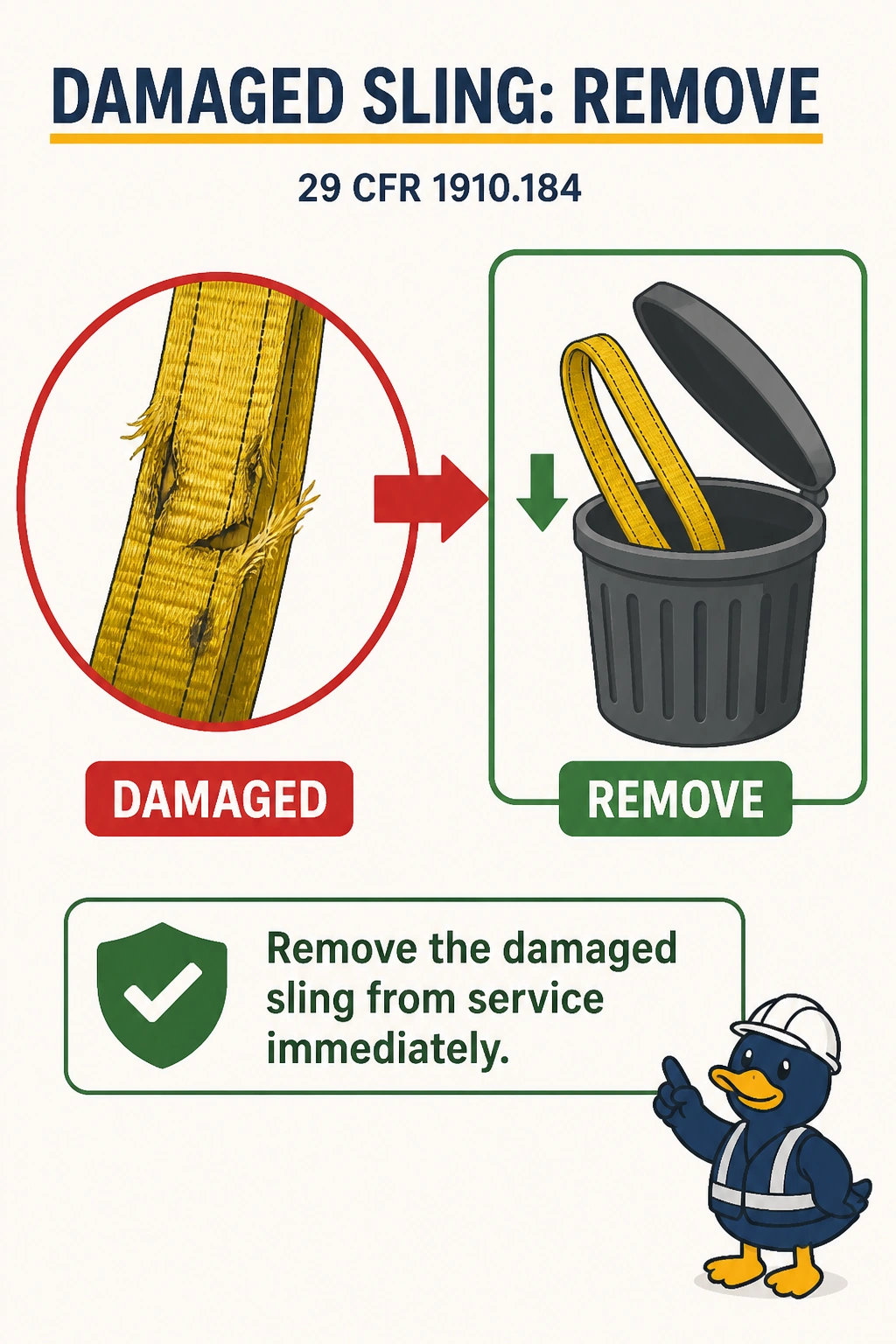
A kink and broken wires can compromise the sling’s strength, even on a light lift. Remove it from service immediately; reducing its load limit or covering the damage does not make it safe.
Full Explanation
Under 29 CFR 1910.184, a wire-rope sling with broken wires and a kink must be removed from service immediately, because the damage can compromise its strength and make its capacity unreliable. Derating the sling working load limit by half for light lifts is unsafe: the damaged rope may fail unpredictably, particularly under shock or dynamic loading. Wrapping the kinked section with protective sleeve tape may conceal the defect from the next rigger, but it does not restore the tensile capacity of bent or fractured wires. Scheduling the sling for annual shop inspection next month leaves a known defective component available for use in the meantime. The exam caveat is that setting a damaged sling aside temporarily is not sufficient if it can be returned to service or selected for another lift; it must remain out of service. As a practical check, inspect slings before use, document defects, and verify that a sling showing this kind of damage is not used for lifting. A reduced load limit, a protective covering, or a later inspection does not replace the required immediate removal.
Prefer to study offline? Printable PDF study book + test engine ($7.50, unofficial). These questions stay free here.