
A maintenance technician shuts off and locks out the main electrical disconnect on a vertical hydraulic press before changing a die, yet the upper platen can still drift downward under gravity and trapped fluid pressure. Under 29 CFR 1910.147, what must the technician do before placing hands between the dies?
Select an answer to reveal the explanation.
Short Explanation
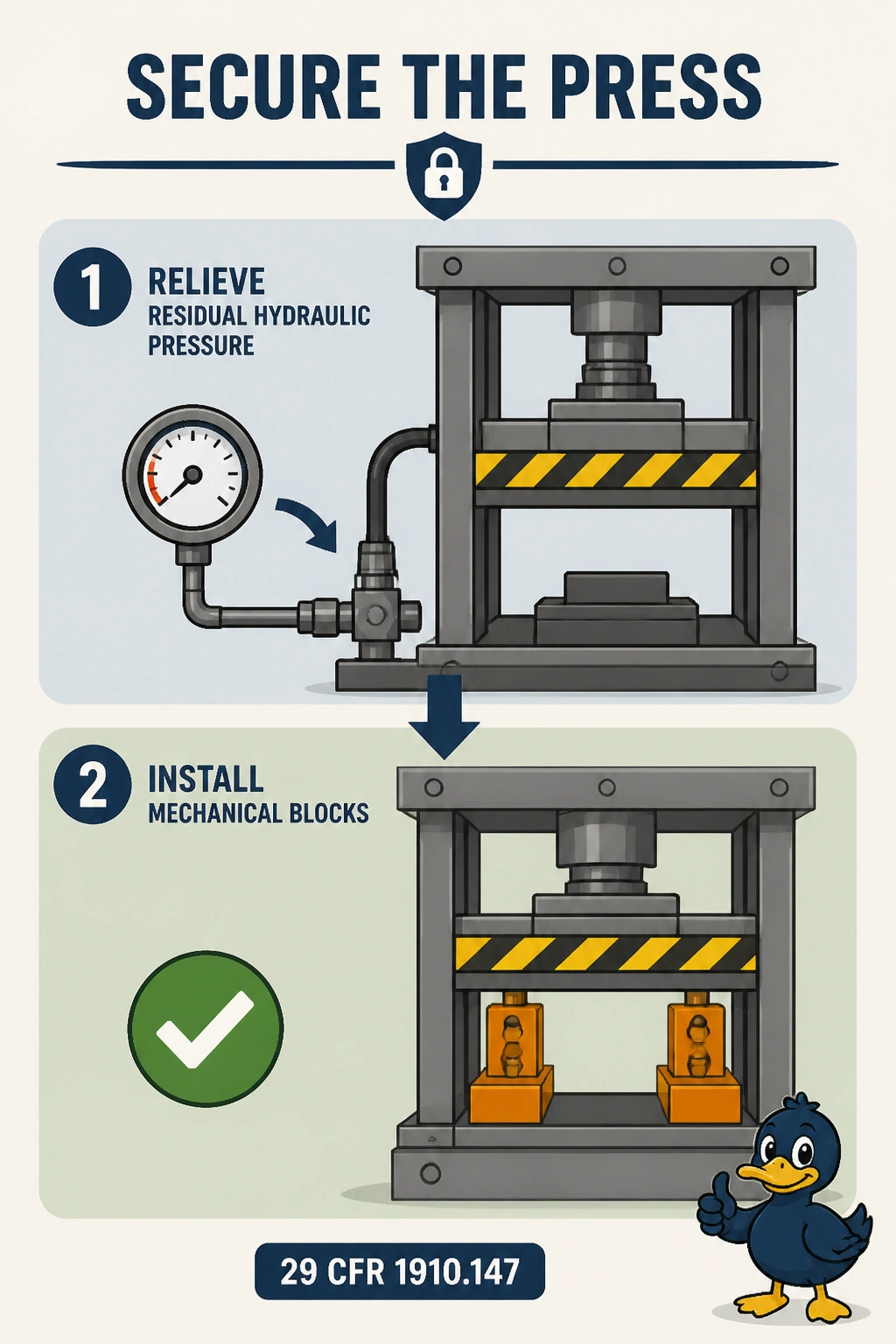
You’ve stopped the pump, but gravity and trapped hydraulic pressure can still move the platen despite your electrical lockout. Before reaching between the dies, relieve the residual pressure and install mechanical blocks to prevent a crush injury.
Full Explanation
Under 29 CFR 1910.147, locking out the electrical supply is not enough when stored hydraulic pressure and gravity can still move the platen. Before placing your hands between the dies, relieve residual hydraulic pressure and install mechanical blocks to restrain the platen against unexpected descent. Attaching a warning tag to the hydraulic reservoir gauge gives visual notice, but does not dissipate pressurized fluid or physically support the platen. Placing the machine selector switch in manual jog mode relies on control-circuit operation rather than positive energy isolation and restraint. Verifying that the main electrical disconnect handle is locked confirms electrical isolation only; it does not remove trapped hydraulic pressure or gravitational energy. A key caveat is that the mechanical blocks must be rated to support the full platen weight and accounted for before the press is re-energized. As a practical check, confirm that pressure gauges read zero, seat the rated blocks securely, and perform a brief try-out test before reaching into the point of operation.
Prefer to study offline? Printable PDF study book + test engine ($7.50, unofficial). These questions stay free here.