
While two technicians weld inside a permit-required tank at a food-grade oil refinery, one entrant suddenly collapses near the far bulkhead. What action must the designated confined space attendant take under 29 CFR 1910.146?
Select an answer to reveal the explanation.
Short Explanation
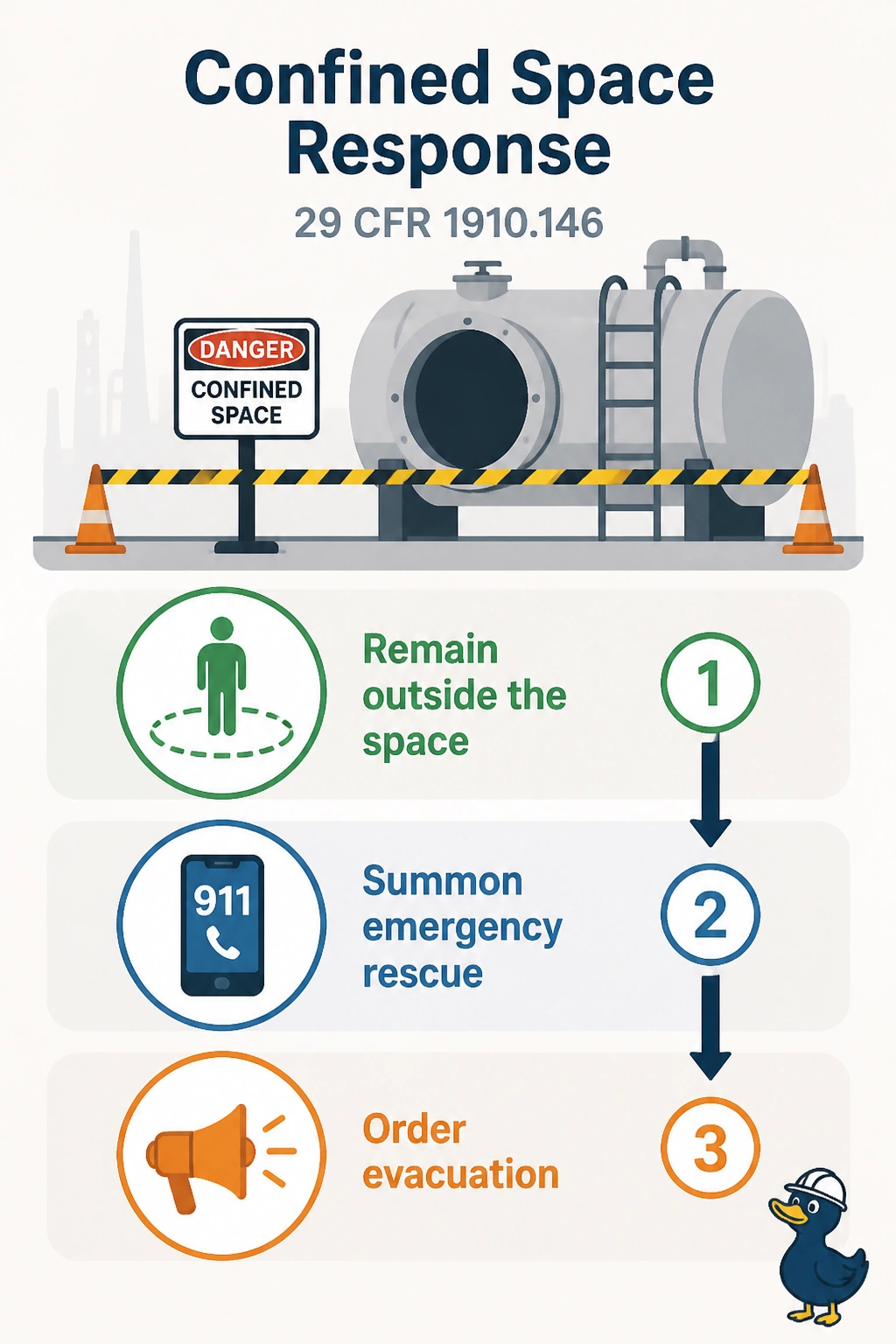
When a coworker collapses inside a tank, your instinct may be to rush in, but an unplanned rescue can turn one casualty into two. As the attendant, stay outside, summon emergency rescue, and order the other entrant to evacuate.
Full Explanation
Under 29 CFR 1910.146(i), when an entrant shows signs of exposure or a prohibited condition develops, you must remain outside the space, summon emergency rescue, and order evacuation. Staying outside preserves communication, avoids exposing you to the same atmospheric hazard, and lets trained rescuers arrive with appropriate breathing apparatus and retrieval gear. Entering the tank immediately to pull the worker to fresh air is not your default response; rescue entry is permitted only if you are trained and equipped for it and another qualified attendant takes over your duties. Shutting off the ventilation blower to keep fumes from spreading can worsen toxic or oxygen-deficient conditions for the entrant still inside. Leaving the entry portal to find the plant manager in person abandons your station and delays rescue; use established communication methods to summon help. One caveat: non-entry retrieval, such as using a tripod and harness from outside, should be used whenever feasible. Before entry begins, verify that you have a tested two-way radio or alarm at the portal and know the exact rescue-team activation protocol.
Prefer to study offline? Printable PDF study book + test engine ($7.50, unofficial). These questions stay free here.