
A food processing plant completes internal safety audits and discovers recurring machine-guarding deficiencies across three packaging lines. Within the Plan-Do-Check-Act (PDCA) safety management cycle, which phase focuses on implementing corrective actions to address those audit findings?
Select an answer to reveal the explanation.
Short Explanation
Think of PDCA like tuning an engine: finding a knock is only half the job until you actually adjust the timing. The trap is confusing the audit itself with the fix, so make sure you assign corrective actions to the Act phase.
Full Explanation
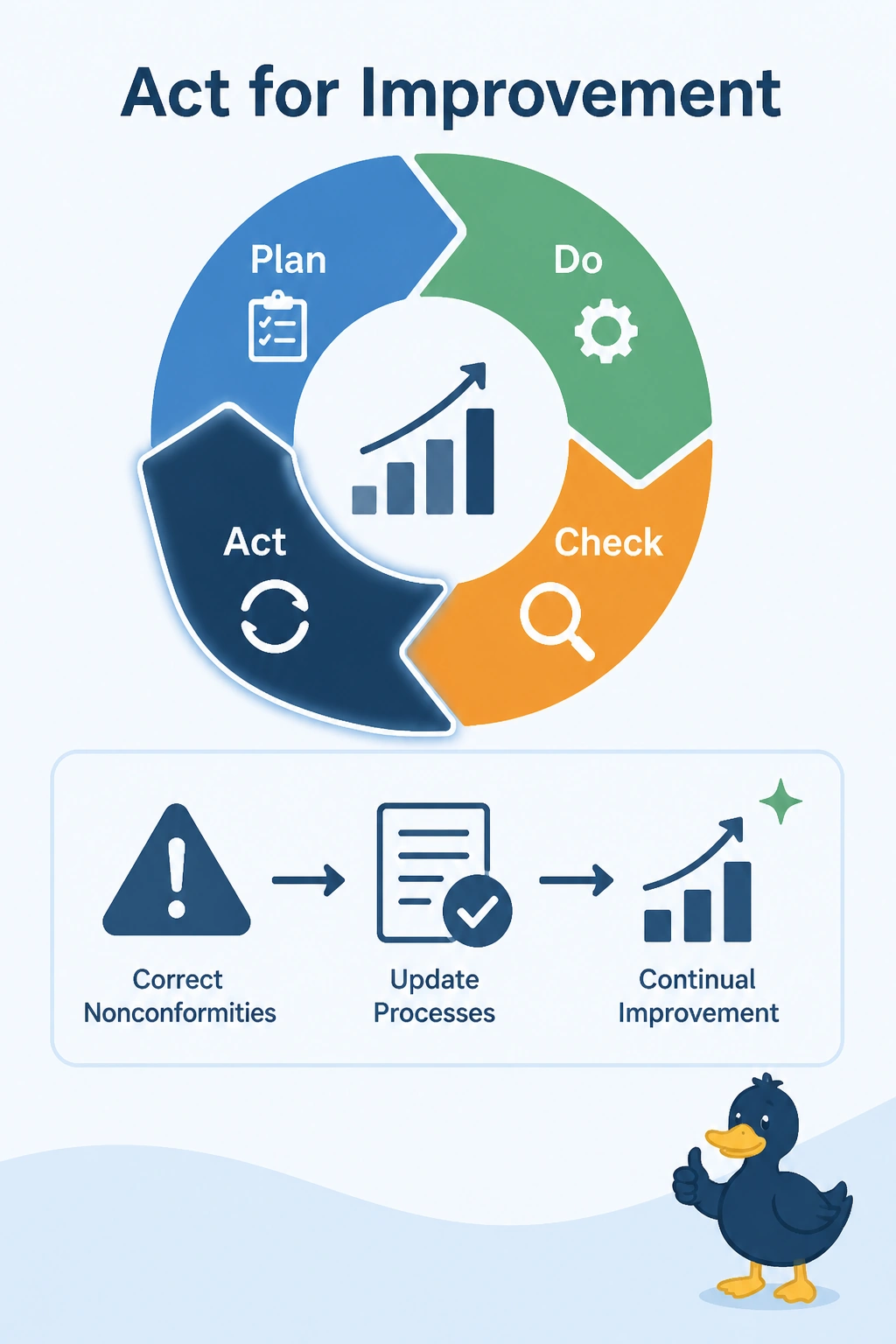
In a Plan-Do-Check-Act safety management system, each stage has a distinct function in closing the loop on workplace hazards. The Act phase, where management corrects nonconformities and updates processes for continual improvement is the step triggered after an audit uncovers recurring machine-guarding gaps, turning inspection findings into permanent engineering or procedural fixes. The Check phase, where auditors collect inspection data and compare it against safety targets is the evaluation step that discovered the guarding deficiencies in the first place, not the phase that resolves them. The Do phase, where supervisors initially roll out new operating procedures to production teams executes the original planned controls before performance is audited. The Plan phase, where leadership first defines safety policy goals and hazard control budgets establishes objectives and risk controls upfront rather than remediating post-audit nonconformities. Caveat: closing an audit finding in the Act phase should also trigger a follow-up check to confirm the new guards stay in place. Operational check: review the corrective action log to verify each packaging line deficiency has an assigned owner, a target completion date, and a post-fix verification inspection.
Prefer to study offline? Printable PDF study book + test engine ($7.50, unofficial). These questions stay free here.