
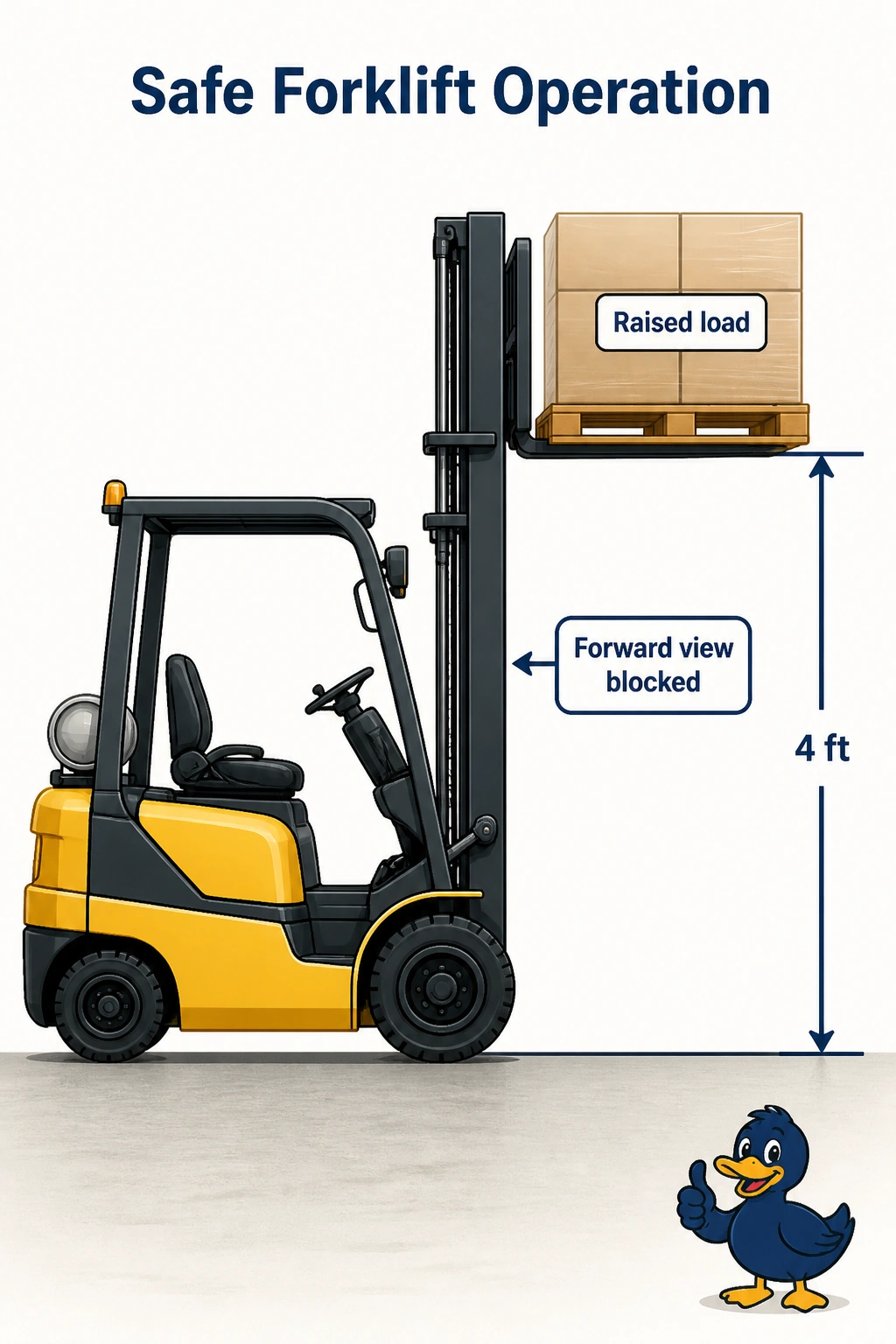
A distribution center supervisor observes a certified forklift operator driving down a main aisle with a pallet raised four feet above the floor, obstructing forward vision. Under OSHA's Powered Industrial Trucks standard, what must the employer do?
Select an answer to reveal the explanation.
Short Explanation
Seeing an experienced driver travel with a raised, blinding load is a classic wake-up call you cannot ignore. The trap is thinking a three-year certification shields an operator until the next scheduled renewal, when unsafe driving triggers immediate retraining.
Full Explanation
Under OSHA 29 CFR 1910.178(l)(4), observing an operator driving unsafely—such as traveling with an elevated load that blocks forward vision—legally requires the employer to "Provide refresher training and an evaluation before allowing continued operation". Refresher training targets the specific unsafe behavior and verifies through hands-on evaluation that the operator can travel safely with loads lowered. Choosing to "Wait until the operator completes the standard three-year triennial evaluation cycle" leaves a known hazard active on the warehouse floor. Choosing to "Issue a written disciplinary warning and require the operator to sign a policy acknowledgment" addresses paperwork rather than verifying practical skill. Choosing to "Assign a senior warehouse associate to ride along on the forklift for one full shift" violates safety rules on riderless industrial trucks and substitutes informal coaching for formal evaluation. As a caveat, refresher training is also triggered by near-misses, incidents, new truck types, or changed workplace conditions. For an operational check, pull the operator from service, complete documented retraining and a practical driving evaluation, and file the updated certification record.
Prefer to study offline? Printable PDF study book + test engine ($7.50, unofficial). These questions stay free here.