
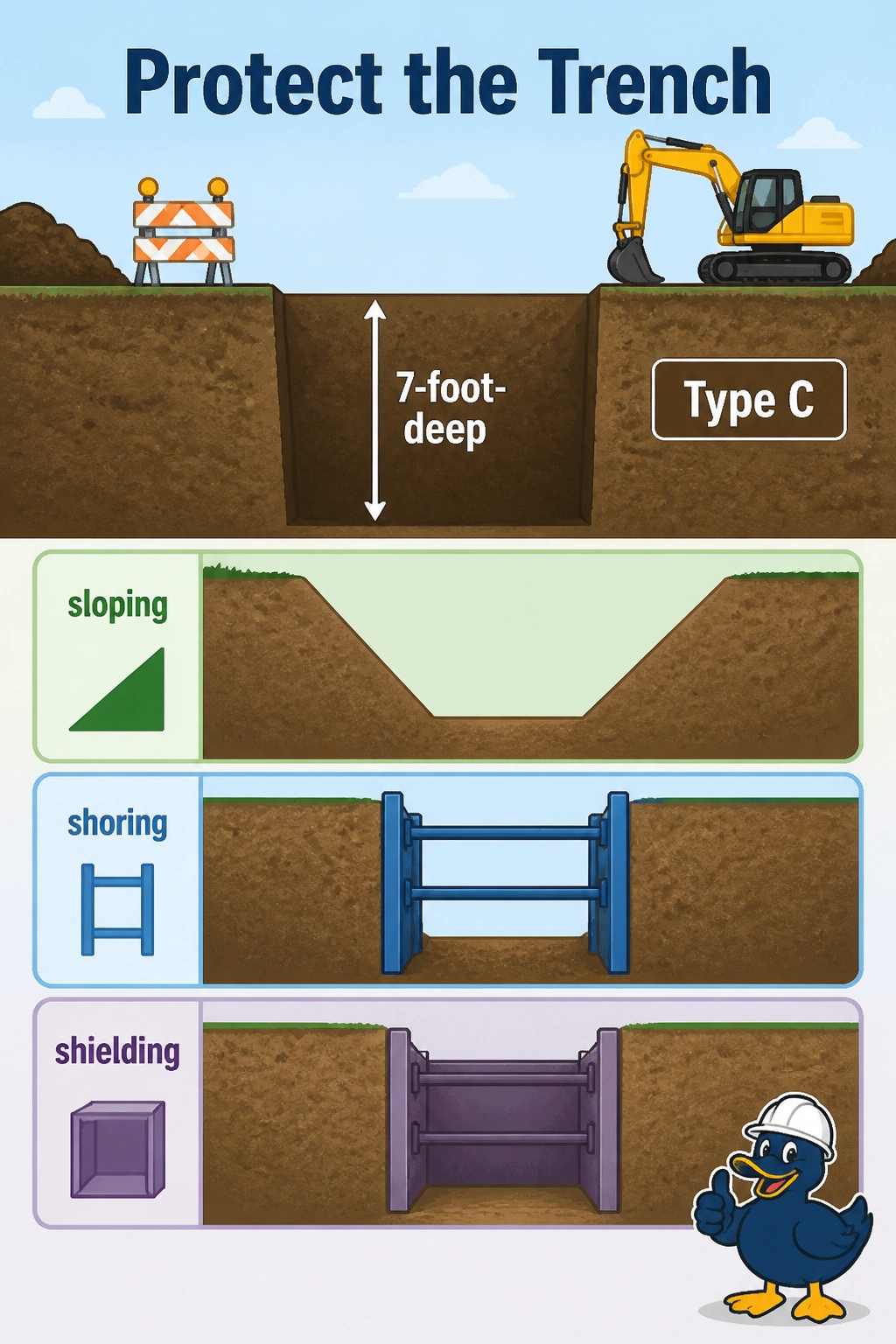
A utility crew is digging a 7-foot-deep trench in Type C sandy soil to repair a municipal water main, and no signs of water seepage are present. Under OSHA's excavation standard, what must be in place before workers enter the trench?
Select an answer to reveal the explanation.
Short Explanation
Once a trench reaches five feet deep, gravity does not wait for you to finish a quick water-main repair. The trap is treating an open 7-foot trench as a confined-space paperwork problem instead of a cave-in hazard.
Full Explanation
Under OSHA 29 CFR 1926.652, any trench 5 feet or deeper—unless cut entirely in stable rock—requires A cave-in protective system such as sloping, shoring, or shielding before workers enter. In Type C sandy soil, wall collapse can occur without warning, so physical earth-retention or trench-box shielding is mandatory to keep soil off workers. Relying on A continuous mechanical ventilation blower operating at the trench top addresses atmospheric hazards rather than soil wall stability. Completing A written permit-required confined space entry authorization form misapplies general-industry confined space paperwork, as excavations are governed by Subpart P unless specific confined-space hazards exist inside a vault or pipe. Requiring A full-time registered professional engineer stationed at the trench edge is unnecessary for standard depths under 20 feet, where a competent person can implement OSHA-tabulated shoring or sloping. As a caveat, trenches deeper than 20 feet do require a registered professional engineer's design. For an operational check, have the competent person inspect soil conditions daily and confirm a ladder is within 25 feet of lateral travel.
Prefer to study offline? Printable PDF study book + test engine ($7.50, unofficial). These questions stay free here.