
A commercial roofing contractor notices workers cutting fiber-cement siding on a saw horse, generating respirable crystalline silica dust. Before issuing N95 filtering facepiece respirators, which control strategy sits highest in the hierarchy of controls?
Select an answer to reveal the explanation.
Short Explanation
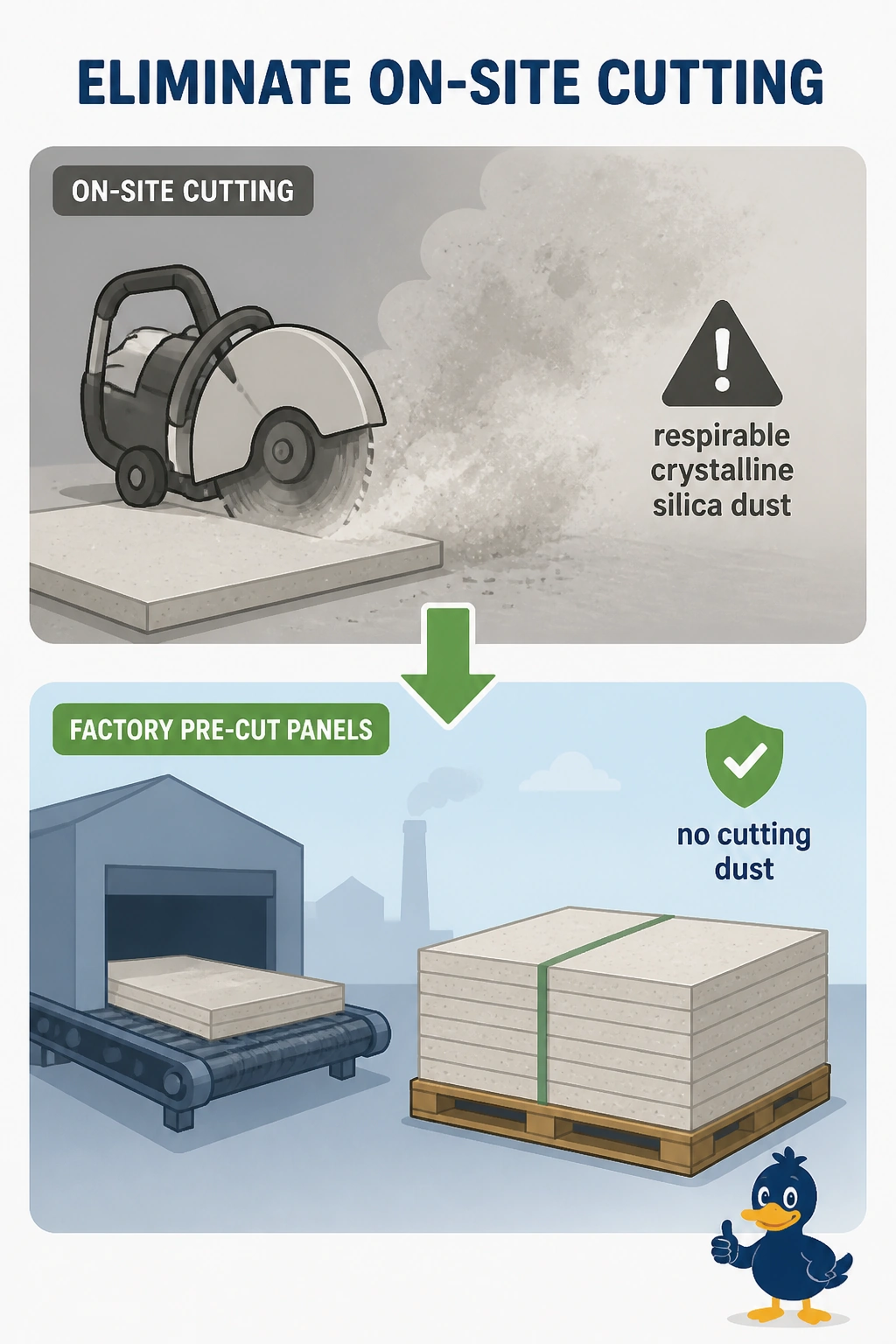
You’re right to look for a way to remove the silica dust source before relying on worker protections. Elimination through factory pre-cut panels prevents on-site cutting; rotating workers, posting warning signs, and requiring respirators leave the dust hazard in place.
Full Explanation
Elimination is highest in the hierarchy of controls because it removes the hazard from the workplace rather than relying on worker behavior or protective gear. Ordering factory pre-cut panels eliminates on-site cutting, so respirable crystalline silica dust is not generated on the roof. Rotating workers every two hours is an administrative control: it limits each worker’s exposure time but leaves the dust cloud intact and spreads exposure among employees. Posting silica danger signs around the cutting zone is also an administrative warning; it alerts workers and bystanders but does not reduce airborne dust at its source. Enforcing mandatory respiratory protection and annual fit testing relies on personal protective equipment, the lowest tier of the hierarchy, and protection can fail if a respirator seal leaks or equipment is misused. An exam caveat is that elimination applies only when factory pre-cut panels actually remove on-site cutting; any remaining field cutting means the dust hazard has not been fully eliminated. For a practical check, review material takeoffs before mobilization so standard panel sizes can be ordered pre-cut.
Prefer to study offline? Printable PDF study book + test engine ($7.50, unofficial). These questions stay free here.