
During a conveyor motor replacement at a bottling plant, a maintenance technician shuts off the main disconnect, applies a personal padlock, and attaches a warning tag. Before removing the motor housing, what step must the technician perform next under OSHA 29 CFR 1910.147?
Select an answer to reveal the explanation.
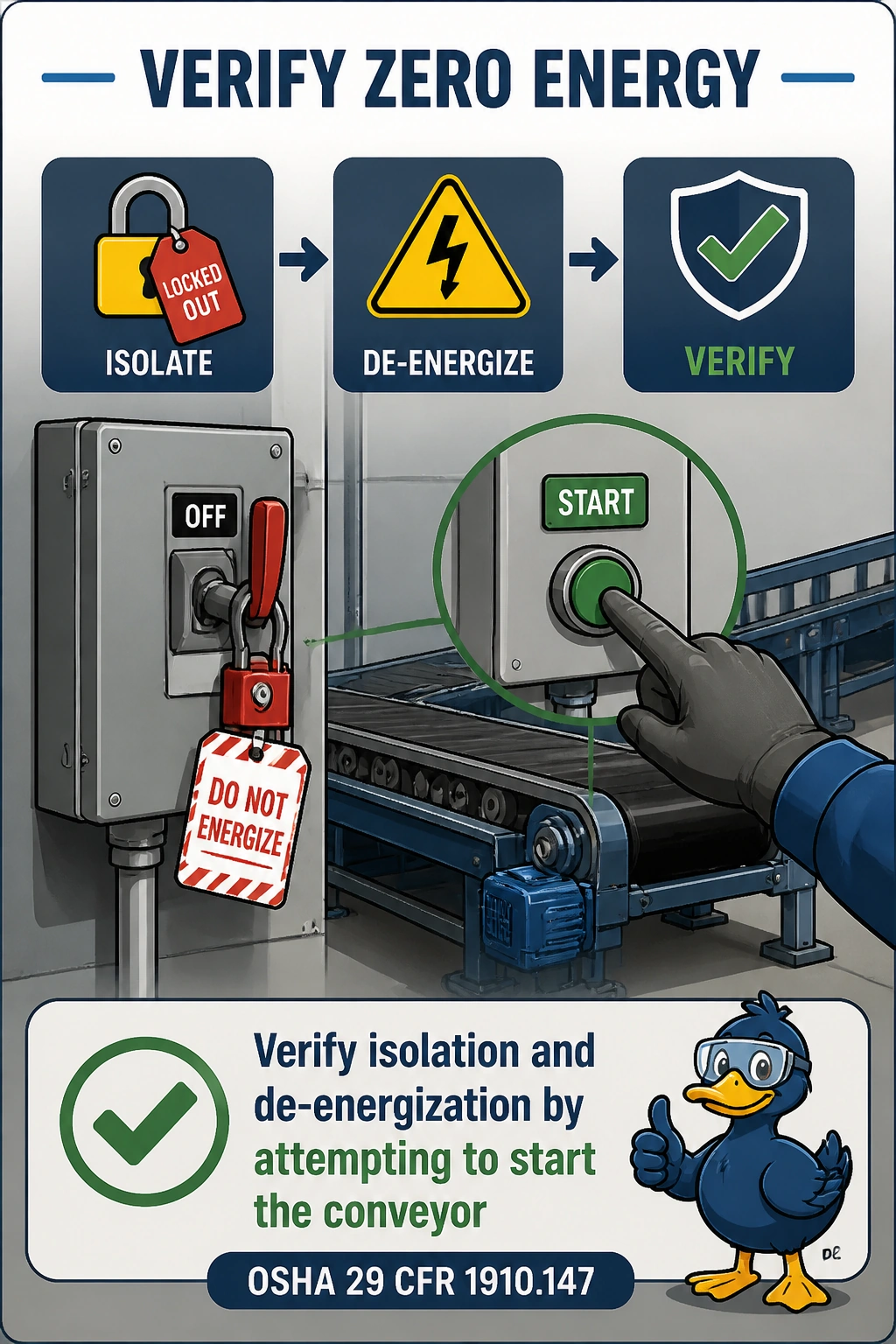
Short Explanation
Think of lockout/tagout like locking your front door and then giving the handle a firm jiggle to be sure it latched. You protect yourself by trying the start control to verify isolation and de-energization; a switch position alone may not reveal an unmarked secondary feed or a stuck contactor.
Full Explanation
Under OSHA 29 CFR 1910.147, applying a lock and tag is not enough; before removing the motor housing, you must verify isolation and de-energization by attempting to start the conveyor. This try-out helps confirm that the correct circuit was isolated and that the machine does not start; stored energy must also be addressed before servicing. Notifying affected operators in the adjacent packaging line that maintenance has ended is appropriate after servicing is finished and locks are removed, not a substitute for verifying the equipment before disassembly. Recording the padlock serial number in the plant maintenance logbook may support administrative tracking, but a paper entry does not prove that electrical or mechanical energy is absent. Asking a supervisor to apply a second padlock to the main disconnect confuses this individual servicing task with group lockout, which applies when multiple workers service the same equipment simultaneously. Caveat: after the start test, return the operating control to neutral or off so the equipment cannot restart unexpectedly when energy is restored. Practical check: observe the control panel, test the start button, and confirm zero energy with a calibrated voltage tester before removing the motor housing.
Prefer to study offline? Printable PDF study book + test engine ($7.50, unofficial). These questions stay free here.