
A logistics company wants to track proactive metrics that predict and prevent warehouse injuries before they occur. Which metric serves as a leading safety indicator?
Select an answer to reveal the explanation.
Short Explanation
Think of leading indicators as your car's oil-pressure gauge warning you before the engine seizes, while lagging indicators are the tow-truck bill afterward. The trap is mistaking injury rates or claim costs for proactive metrics when they only measure past harm.
Full Explanation
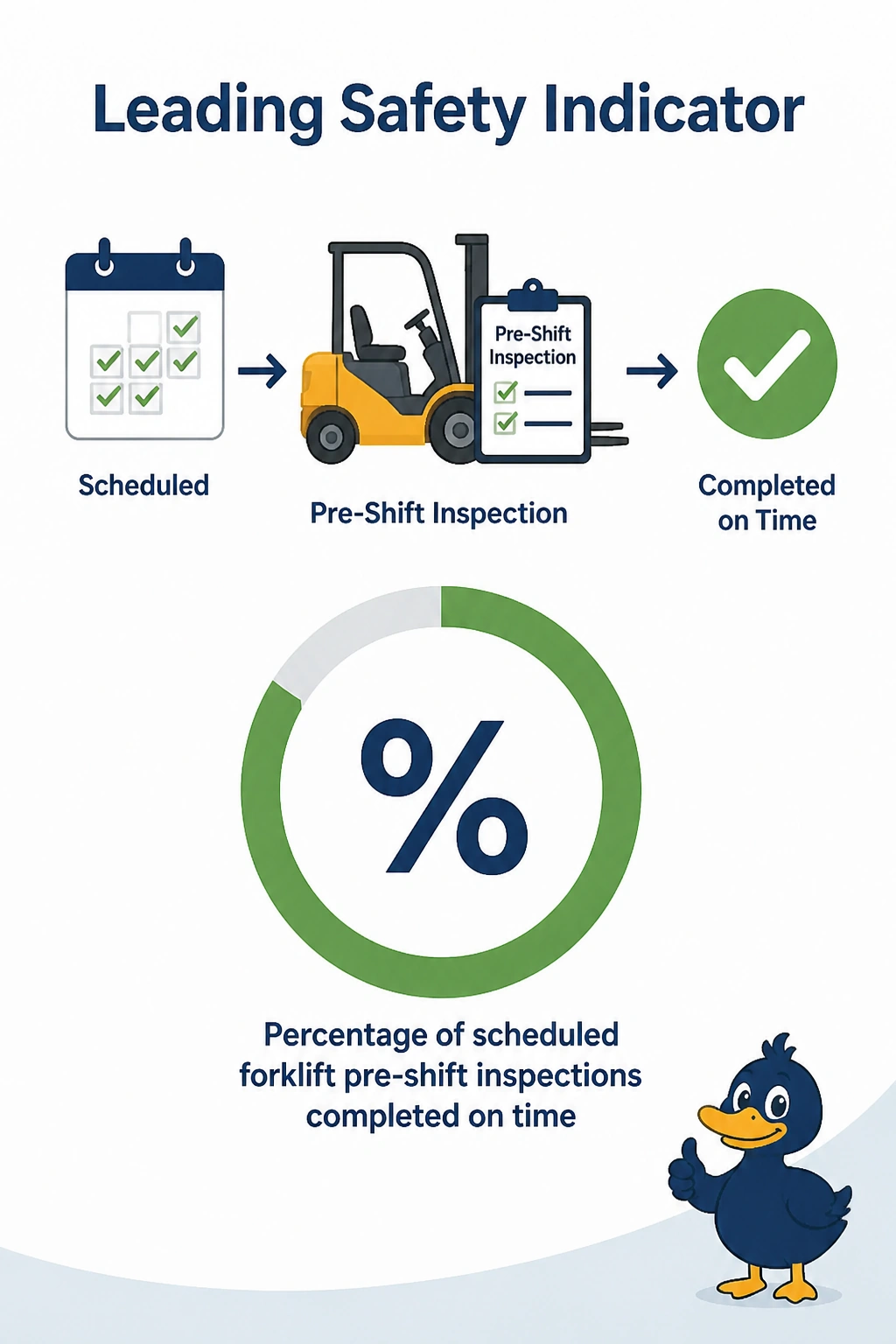
Tracking the Percentage of scheduled forklift pre-shift inspections completed on time is a leading indicator because it measures a proactive preventive activity before an incident happens. Leading indicators evaluate system health, hazard-control execution, and worker participation so managers can intervene early. Choosing Annual total of workers' compensation claim payouts measures financial losses after injuries have already occurred, making it a lagging indicator. Choosing Number of days away from work resulting from strains counts lost productivity following a musculoskeletal injury, which reflects past failure rather than prevention. Choosing Facility Days Away, Restricted, or Transferred rate tracks OSHA-recordable severity after incidents are logged, making it another classic lagging metric. Caveat: a leading indicator loses value if it becomes a box-checking quota where workers mark inspections complete without actually testing brakes, horns, and hydraulics. Operational check: audit completed inspection checklists against physical forklift condition during random floor walks to verify data integrity.
Prefer to study offline? Printable PDF study book + test engine ($7.50, unofficial). These questions stay free here.