
A specialty chemical plant plans to replace a stainless-steel transfer pump seal with a different elastomer material because the original part is backordered. Before installing the substitute seal, which safety program process must the facility complete?
Select an answer to reveal the explanation.
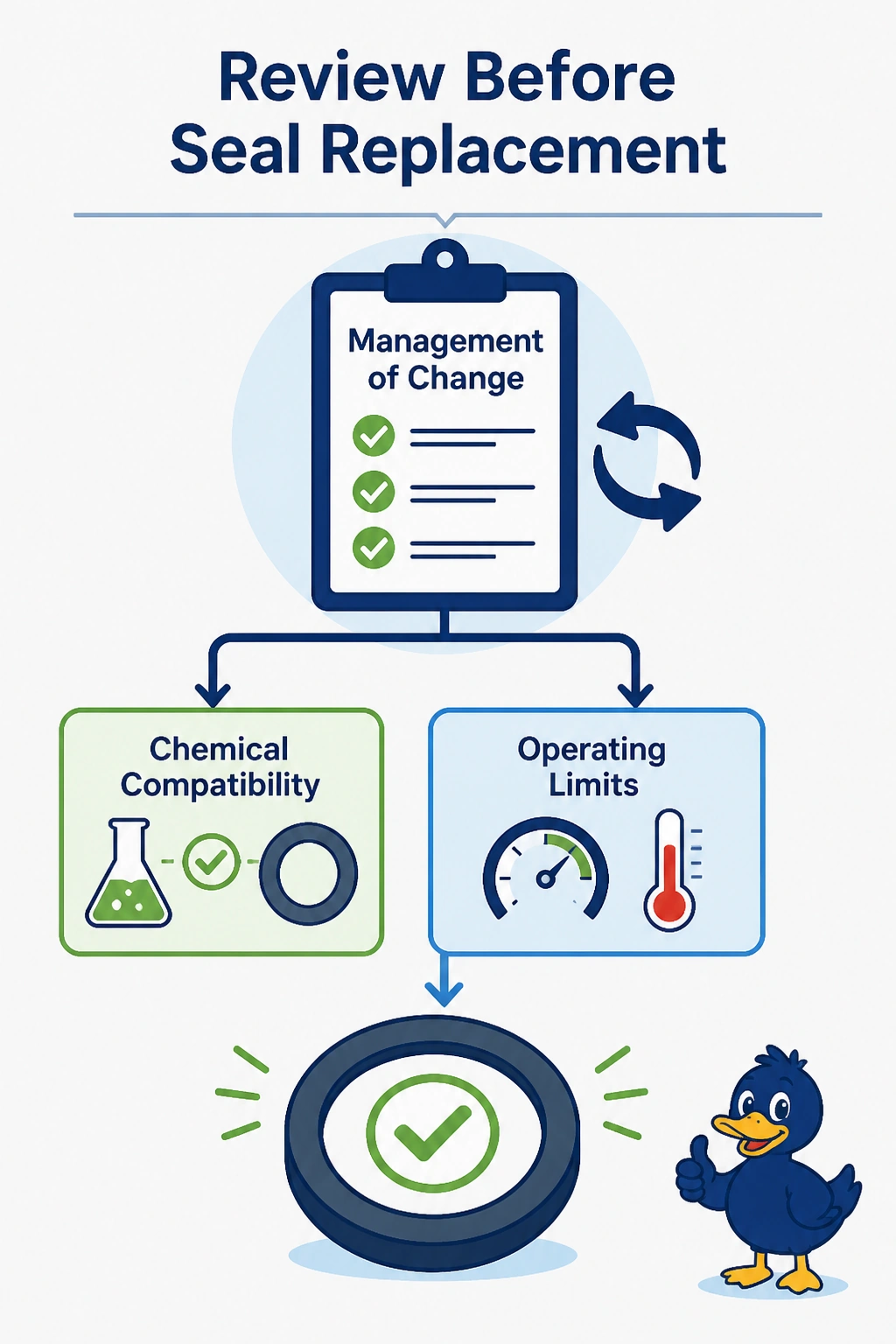
Short Explanation
Swapping a pump seal might look like a minor parts fix, until an incompatible elastomer melts in solvent and puts your crew at risk. The trap is treating a non-identical part swap as routine maintenance instead of reviewing the change first.
Full Explanation
Because the substitute seal uses a different elastomer material rather than a replacement-in-kind, it alters the process technology and equipment integrity. The facility must complete A Management of Change review evaluating chemical compatibility and operating limits before installation so engineers and operators verify that the new elastomer resists the process fluid, temperature, and pressure. Performing An annual OSHA 300A summary posting review with the plant maintenance supervisor only covers prior-year injury recordkeeping and provides zero pre-change hazard evaluation. Conducting A post-incident root cause investigation using a fault tree diagram is a reactive tool used after an event occurs rather than a proactive gate before startup. Running A routine workplace ergonomics assessment for the maintenance technicians installing it checks musculoskeletal strain during wrenching but ignores whether the seal will fail in service and cause a chemical release. As a caveat, true replacements-in-kind that meet exact original design specifications generally do not trigger a full Management of Change review. For an operational check, verify that updated piping specifications, maintenance procedures, and operator notifications are signed off before the maintenance work order is released.
Prefer to study offline? Printable PDF study book + test engine ($7.50, unofficial). These questions stay free here.