
A maintenance crew at a paper mill must replace an overhead steam valve for the first time in five years, a non-routine task involving thermal, fall, and pressure hazards. Which hazard analysis method breaks the job into sequential steps, identifies potential hazards at each step, and specifies controls before work begins?
Select an answer to reveal the explanation.
Short Explanation
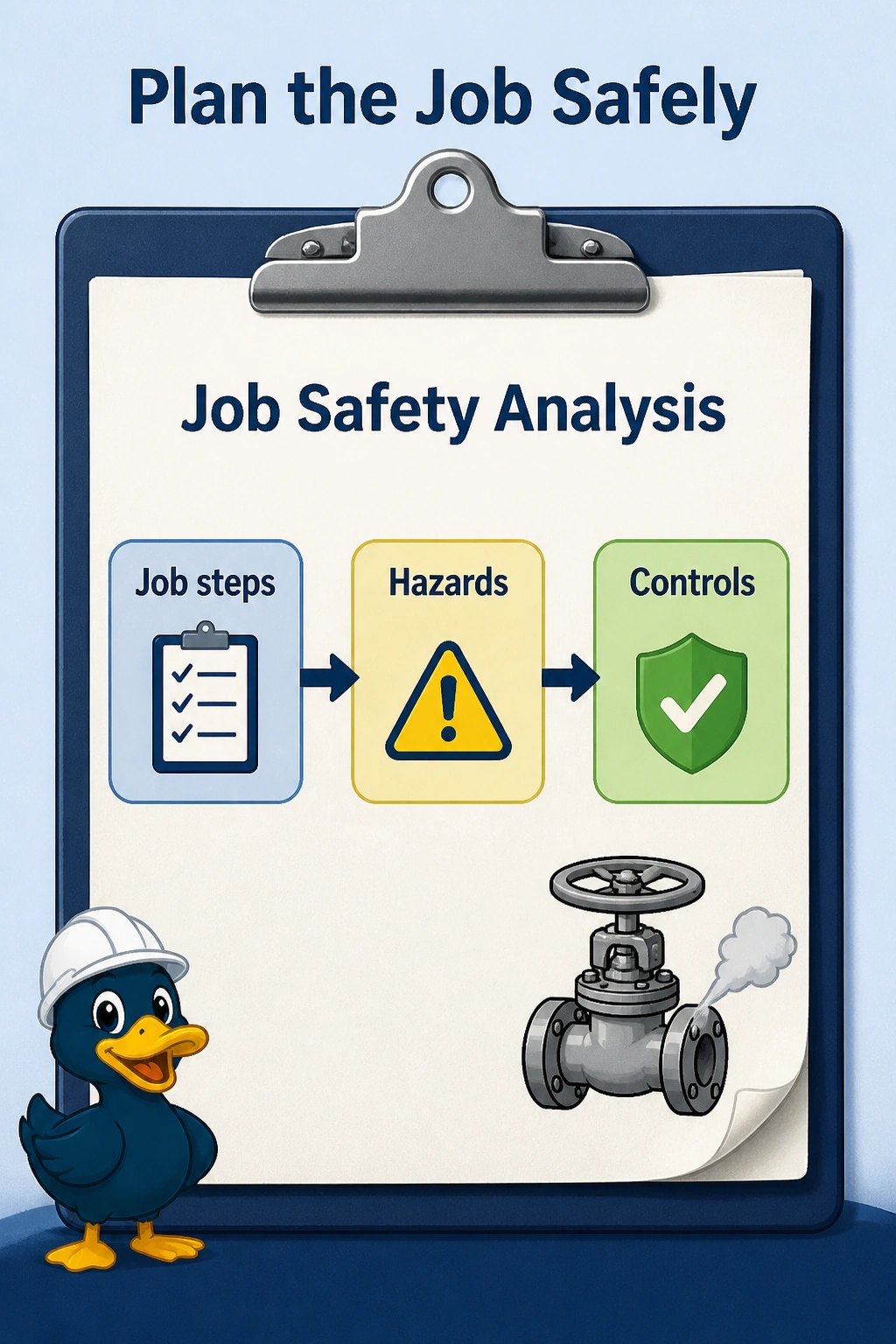
Before your crew climbs up to unbolt a hot steam line, you want a step-by-step playbook rather than a post-incident autopsy. The trap is picking a reactive investigation tool or a complex system probability model when a practical task-level review is needed.
Full Explanation
A Job Safety Analysis reviewing each task step before work starts is designed to break a specific job into sequential tasks, pinpoint hazards at every stage, and assign concrete controls prior to execution. It is especially effective for non-routine maintenance where crews lack daily muscle memory for the hazards. Root Cause Analysis using a five-whys diagram after equipment failure is a reactive method used after an incident or breakdown has already occurred, not a pre-task planning tool. Fault Tree Analysis modeling top-event failure probabilities with logic gates is a deductive, system-level engineering technique suited for complex process failures rather than step-by-step crew work instructions. Experience Modification Rate benchmarking against industry peers compares workers' compensation loss history and acts as a lagging financial metric without identifying task hazards. As a caveat, a JSA only works when the crew performing the job helps build and review it on site. Operationally, walk the work area with the technicians before starting and verify every listed control is in place.
Prefer to study offline? Printable PDF study book + test engine ($7.50, unofficial). These questions stay free here.