
During a safety audit of a sheet-metal shop, an auditor notices that operators feed aluminum strips into a hydraulic shear with an unguarded blade opening, relying only on a yellow warning line painted on the floor. What corrective action should the shop implement?
Select an answer to reveal the explanation.
Short Explanation
A painted line on the floor cannot stop your hand from slipping into a shear blade any more than a speed-limit sign can stop a rolling car. The trap is relying on gloves or warnings when OSHA requires a physical barrier or engineered safeguard at the point of operation.
Full Explanation
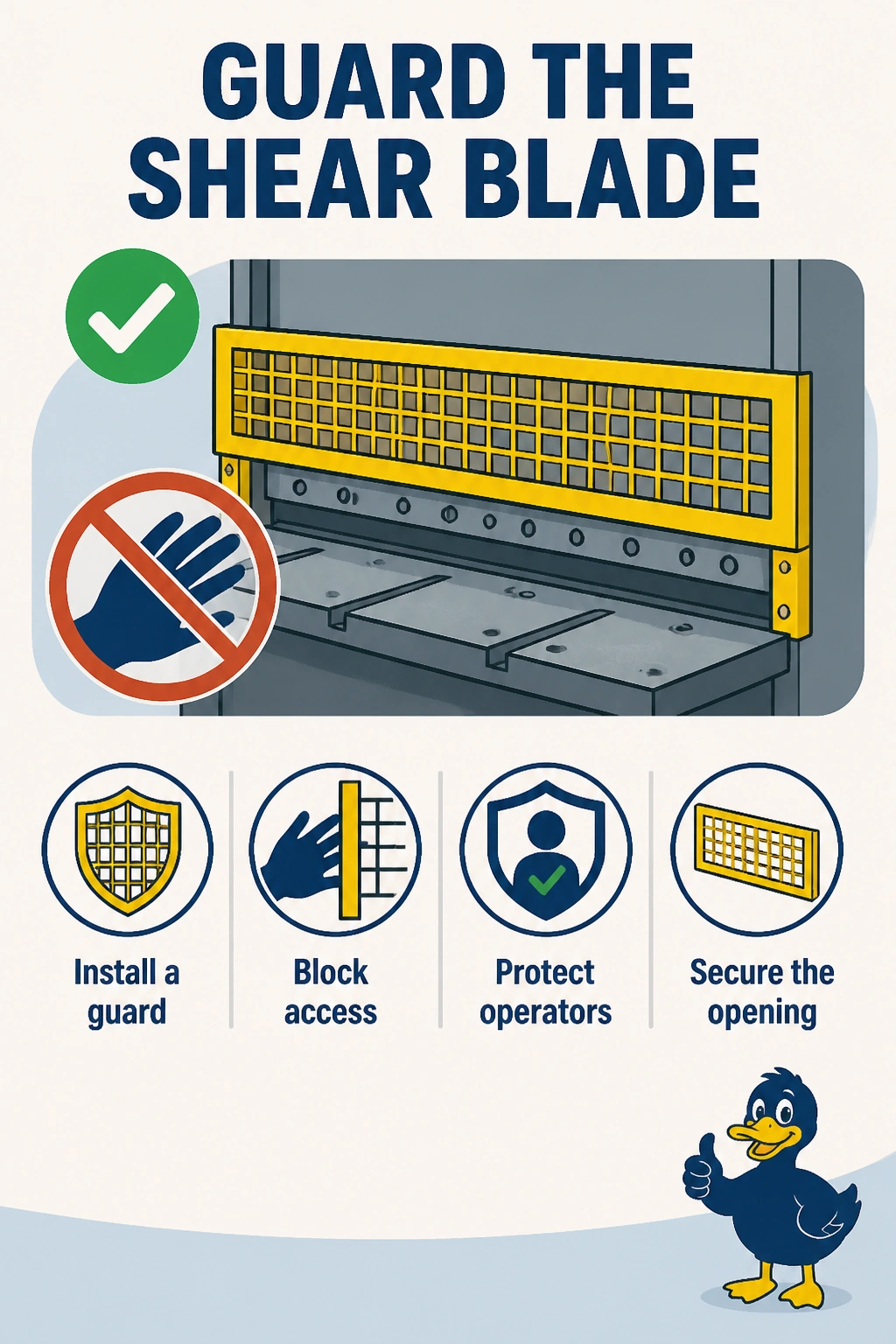
Under OSHA 29 CFR 1910.212, point-of-operation guarding must physically prevent the operator from having any part of their body in the danger zone during the operating cycle, so the shop should Install a physical barrier guard that prevents hands from reaching the blade. A properly sized fixed guard allows sheet stock to pass through the feed opening while blocking fingers from reaching the shear point. Choosing to Require operators to wear cut-resistant leather gloves while feeding aluminum strips provides zero protection against crushing or amputation forces from a hydraulic shear and can create an entanglement hazard near moving parts. Choosing to Add a flashing amber strobe light above the shear that activates during cycling offers only a visual cue and cannot physically block an operator's reach into the blade. Choosing to Instruct operators to keep both feet behind the yellow painted floor line is an administrative warning that fails the moment an operator stumbles or reaches forward to clear jammed stock. Caveat: the guard opening must be small enough relative to its distance from the blade that fingers cannot reach the hazard zone. Operational check: inspect the guard fasteners, measure the feed opening against safe-distance tables, and verify the guard cannot be easily bypassed.
Prefer to study offline? Printable PDF study book + test engine ($7.50, unofficial). These questions stay free here.