
A hospital hires a new phlebotomist whose daily duties involve drawing blood and handling potentially infectious specimens. Under OSHA's Bloodborne Pathogens standard (29 CFR 1910.1030), what must the employer offer regarding the Hepatitis B vaccination series?
Select an answer to reveal the explanation.
Short Explanation
When a new worker steps into a blood-exposure role, you need to put the Hepatitis B vaccine on the table right away rather than waiting for an incident. Watch out for the trap of thinking the employer can force the shot or wait until an annual checkup.
Full Explanation
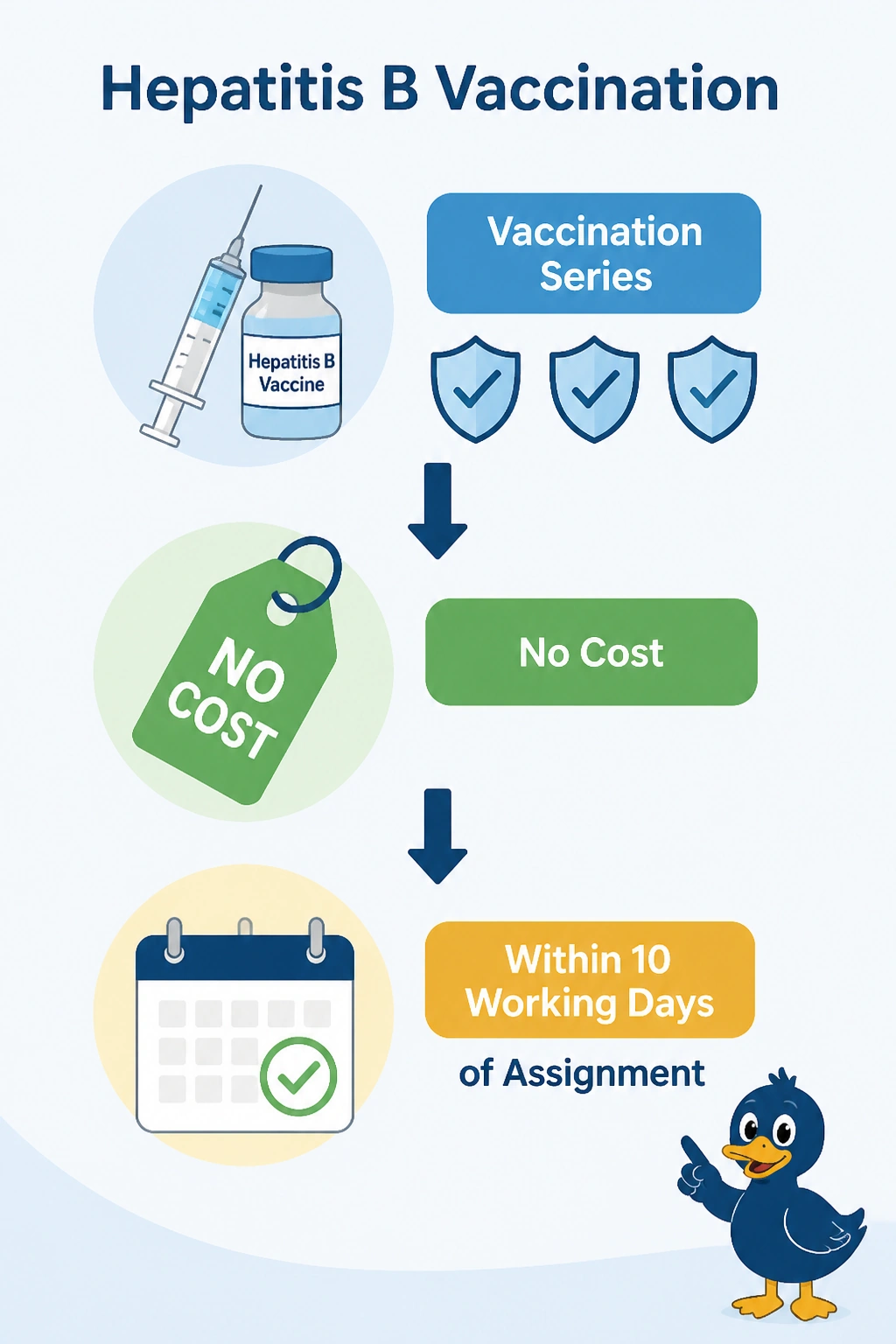
Under 29 CFR 1910.1030(f)(2)(i), an employer with employees who have occupational exposure to blood or other potentially infectious materials must Make the vaccination available at no cost within 10 working days of assignment, following completion of required bloodborne pathogens training. Offering it promptly at a reasonable time and place protects workers early in their tenure before a needlestick or splash occurs. Stating that the employer must Require mandatory vaccination before the employee completes their first-day orientation is incorrect because workers have the right to decline the vaccine by signing the mandatory declination form. Waiting to Offer reimbursement only if the employee contracts an illness after an exposure event violates the preventive mandate and shifts cost onto the worker. Delaying the series to Schedule the first dose during the employee's annual medical surveillance exam leaves the phlebotomist unprotected for months and breaches the 10-working-day deadline. As a caveat, employees who initially decline the series may still request and receive the vaccination at no cost later if they remain in an exposed role. For an operational check, audit onboarding records to confirm every exposed hire has either a documented vaccination start date or a signed declination form within 10 working days.
Prefer to study offline? Printable PDF study book + test engine ($7.50, unofficial). These questions stay free here.