
Laboratory technicians at a chemical plant wear standard nitrile gloves while handling methylene chloride, yet several workers develop skin irritation because the solvent passes rapidly through the glove material. Which property should the industrial hygienist evaluate when selecting replacement gloves?
Select an answer to reveal the explanation.
Short Explanation
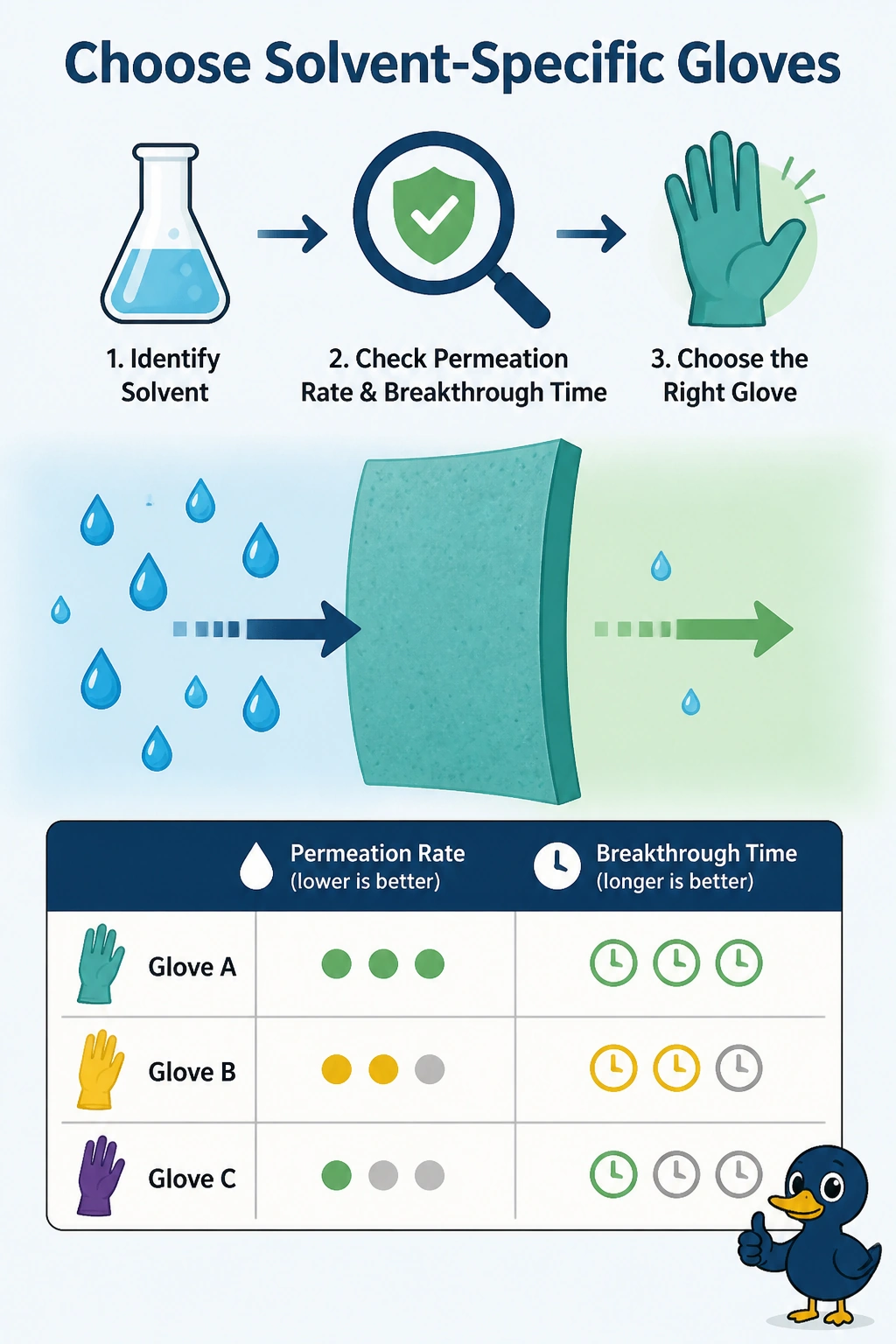
You’re right to look beyond the glove’s appearance: methylene chloride can pass through standard nitrile without visible damage. Match the glove material to the solvent by checking its permeation rate and breakthrough time, not just its thickness or mechanical strength.
Full Explanation
A glove may look intact while a solvent diffuses through it at the molecular level, a process called permeation. Checking the chemical permeation rate and breakthrough time for the specific solvent helps the industrial hygienist select a material, such as PVA or laminate film for methylene chloride, that resists passage long enough for the task. The tensile tear strength and puncture resistance rating of the glove cuff describes mechanical durability against snags and abrasions, not chemical diffusion. The solvent’s flash point and vapor pressure on its Safety Data Sheet help assess fire and inhalation hazards, not how quickly it penetrates a polymer barrier. The thickness of the cotton liner worn under the outer chemical glove affects comfort and sweat absorption, but does not stop permeation; cotton can wick and hold solvent against the skin after breakthrough. As an exam caveat, published breakthrough times are measured under controlled laboratory conditions, so warmth, flexing, or chemical mixtures can shorten protection time in practice. For an operational check, consult the glove manufacturer’s compatibility chart for the exact solvent concentration and set a glove-change schedule well before the rated breakthrough time.
Prefer to study offline? Printable PDF study book + test engine ($7.50, unofficial). These questions stay free here.