
Painters in a spray booth wear half-mask elastomeric respirators equipped with organic vapor cartridges that lack an end-of-service-life indicator. Under OSHA's Respiratory Protection standard (29 CFR 1910.134), how must the employer determine when to replace the cartridges?
Select an answer to reveal the explanation.
Short Explanation
If you wait until you taste or smell paint solvent inside your mask, the cartridge has already failed and you are breathing it in. The trap is relying on human noses instead of math and exposure data to set replacement intervals.
Full Explanation
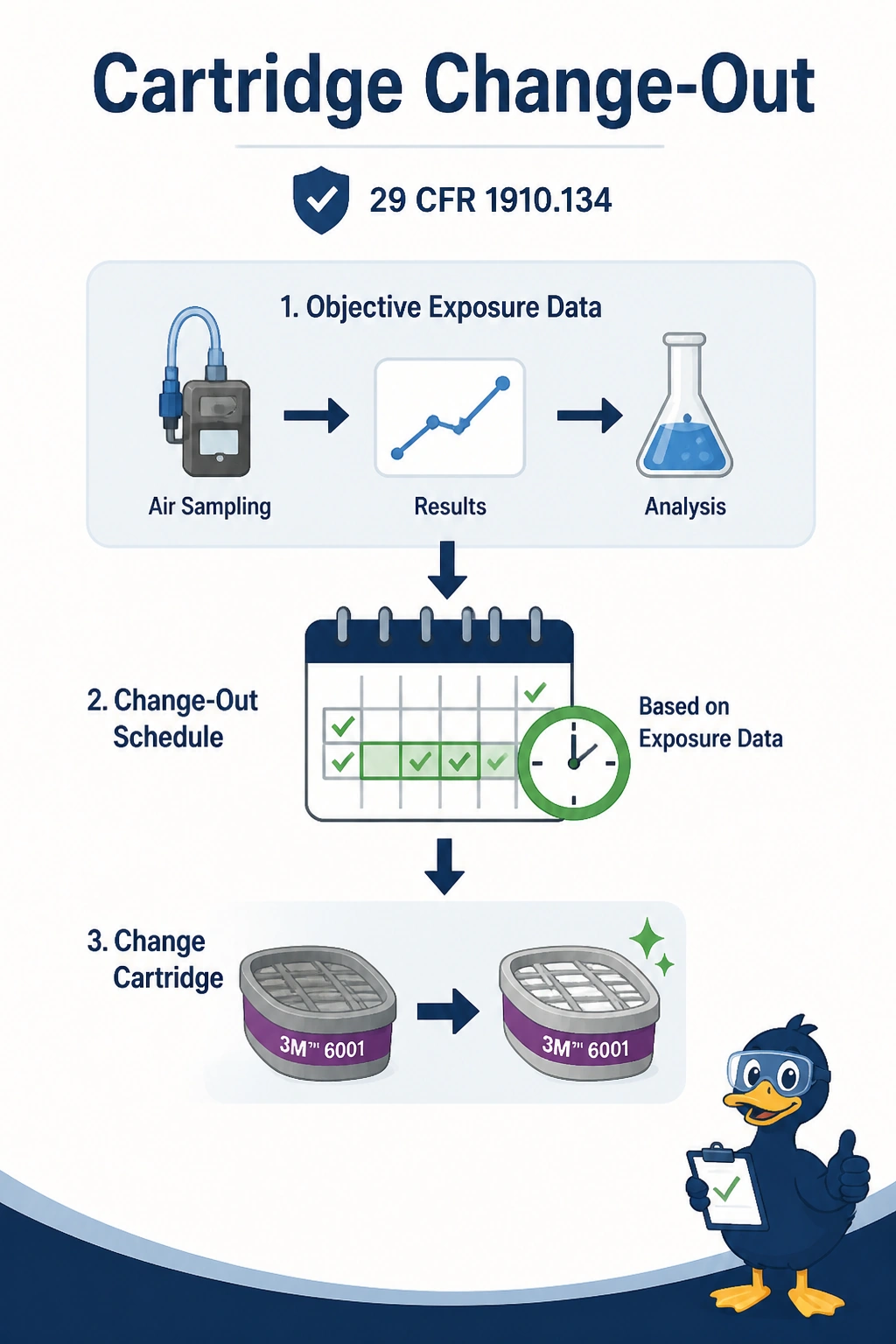
Under OSHA's Respiratory Protection standard (29 CFR 1910.134), when an air-purifying respirator cartridge for gases or vapors has no end-of-service-life indicator, the employer must Implement a change-out schedule based on objective exposure data. This schedule accounts for workplace contaminant concentrations, humidity, temperature, work rate, and cartridge capacity so cartridges are replaced well before chemical breakthrough occurs. Instruct workers to change cartridges only when they smell solvent odor is prohibited because odor thresholds vary widely among individuals, olfactory fatigue masks warning signs, and some chemicals have poor warning properties. Replace cartridges on a fixed annual schedule regardless of shift hours ignores actual vapor loading and can allow cartridge saturation within hours or days of active spraying. Switch to particulate N95 filters when organic vapor cartridges saturate fails because particulate filters only trap aerosols and cannot capture organic solvent vapors. Caveat: the written respiratory protection program must document the exact data and assumptions used to calculate the change-out interval. Operational check: post the required cartridge replacement interval at the respirator storage cabinet and verify workers date-stamp new cartridges upon installation.
Prefer to study offline? Printable PDF study book + test engine ($7.50, unofficial). These questions stay free here.