
A chemical plant assigns painters to wear tight-fitting full-facepiece negative-pressure air-purifying respirators in an atmosphere requiring an Assigned Protection Factor (APF) of 50. Under OSHA 29 CFR 1910.134, what fit testing requirement applies before they use this full-facepiece protection?
Select an answer to reveal the explanation.
Short Explanation
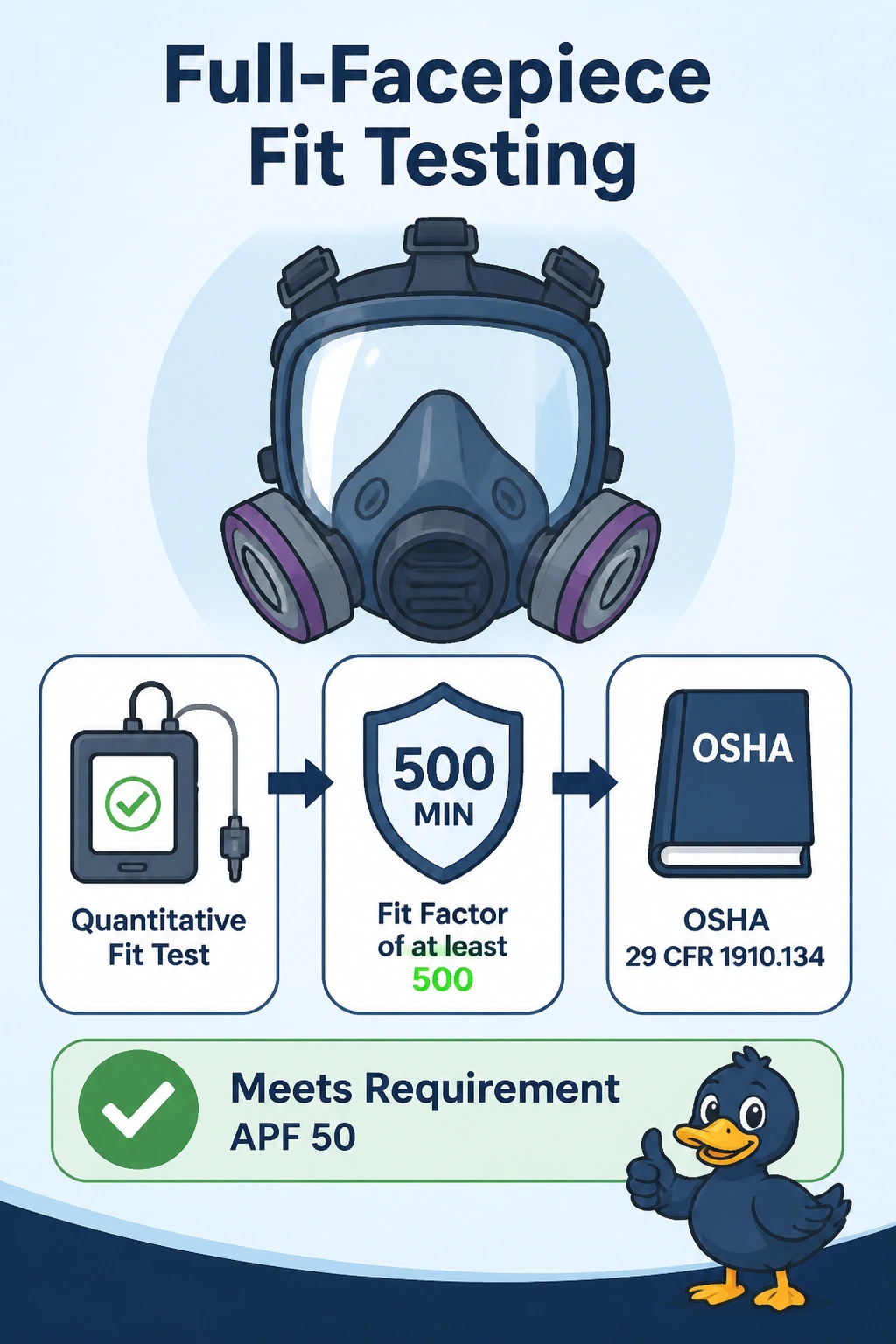
You need a measured fit factor of at least 500 before using this full-facepiece respirator for an APF of 50. Quantitative fit testing verifies that seal; irritant-smoke testing, a user seal check, and visual inspection do not. You can confirm the fit-test record matches the respirator issued to you.
Full Explanation
Under OSHA 29 CFR 1910.134(f)(6) and (f)(7), qualitative fit testing with irritant smoke is limited to tight-fitting respirators that need a fit factor of 100 or less; it cannot verify the fit factor of 500 required for this full-facepiece negative-pressure respirator to be used at an APF of 50. Quantitative fit testing measures the seal and must show a fit factor of at least 500, providing a 10-fold safety factor above the APF. User seal checks performed before entering the spray booth are quick daily checks, not substitutes for formal initial and annual fit testing. Visual inspection of the silicone facepiece seal and head harness straps can identify damage, but cannot measure how well the facepiece seals to an individual’s facial contours during movement and talking. A key caveat is that facial hair, weight change, or dental work that affects the seal requires retesting before use. For a practical check, verify that the annual quantitative fit-test record lists the exact make, model, and size of the full-facepiece respirator issued to each painter.
Prefer to study offline? Printable PDF study book + test engine ($7.50, unofficial). These questions stay free here.