
A radiator repair shop uses lead-solder alloys, and recent personal air sampling shows airborne lead levels below the OSHA Action Level, yet several workers eat snacks at their workbenches without washing their hands. Which industrial hygiene tool best evaluates each worker's total absorbed dose from both inhalation and ingestion?
Select an answer to reveal the explanation.
Short Explanation
Air sampling only tells part of the story when workers can swallow dust from unwashed hands. The trap here is assuming low airborne numbers mean low exposure, when your real goal is measuring what actually entered the body.
Full Explanation
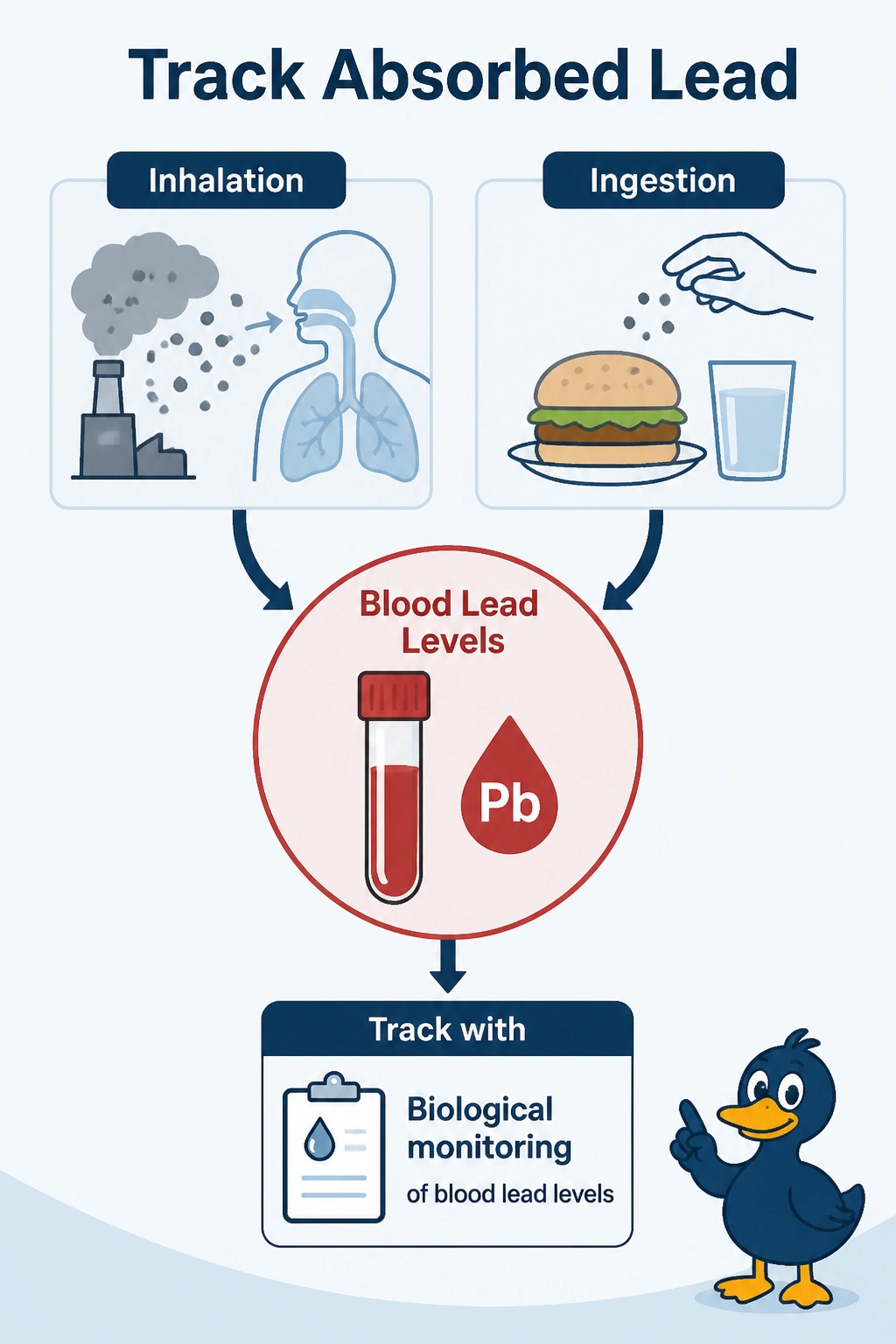
Biological monitoring of blood lead levels directly measures the total internal dose absorbed through inhalation, ingestion, and any minor dermal contact combined, making it the definitive tool when poor hygiene creates an ingestion pathway alongside low air concentrations. Area air sampling with stationary filter cassettes only estimates ambient airborne particulates at fixed room locations and cannot capture personal breathing-zone intake or swallowed dust. Direct-reading photoionization detector screening responds to volatile organic vapors rather than inorganic lead particulates, so it provides no valid data for solder fume or dust. Surface wipe sampling on workbench countertops confirms whether lead residue is present on work surfaces, which helps evaluate housekeeping, but it cannot quantify how much lead actually entered a worker's bloodstream. One important caveat is that blood lead levels reflect cumulative recent absorption and must be interpreted alongside medical surveillance triggers under 29 CFR 1910.1025 rather than replacing air monitoring. As an operational check, review employee hygiene facilities, enforce handwashing before eating or drinking, and verify that food and beverages are prohibited in lead-work areas.
Prefer to study offline? Printable PDF study book + test engine ($7.50, unofficial). These questions stay free here.