
Foundry workers pour molten aluminum near glowing furnaces where humidity is moderate, yet an outdoor-style wall thermometer reading 85 degrees Fahrenheit underestimates their heat strain. Which measurement index accounts for air temperature, humidity, air movement, and radiant heat from the furnaces?
Select an answer to reveal the explanation.
Short Explanation
Standing next to a glowing furnace feels nothing like sitting in an 85-degree shaded office, because radiant heat cooks you even when the air thermometer looks mild. The trap is trusting a standard thermometer when your workers face radiant and humid heat.
Full Explanation
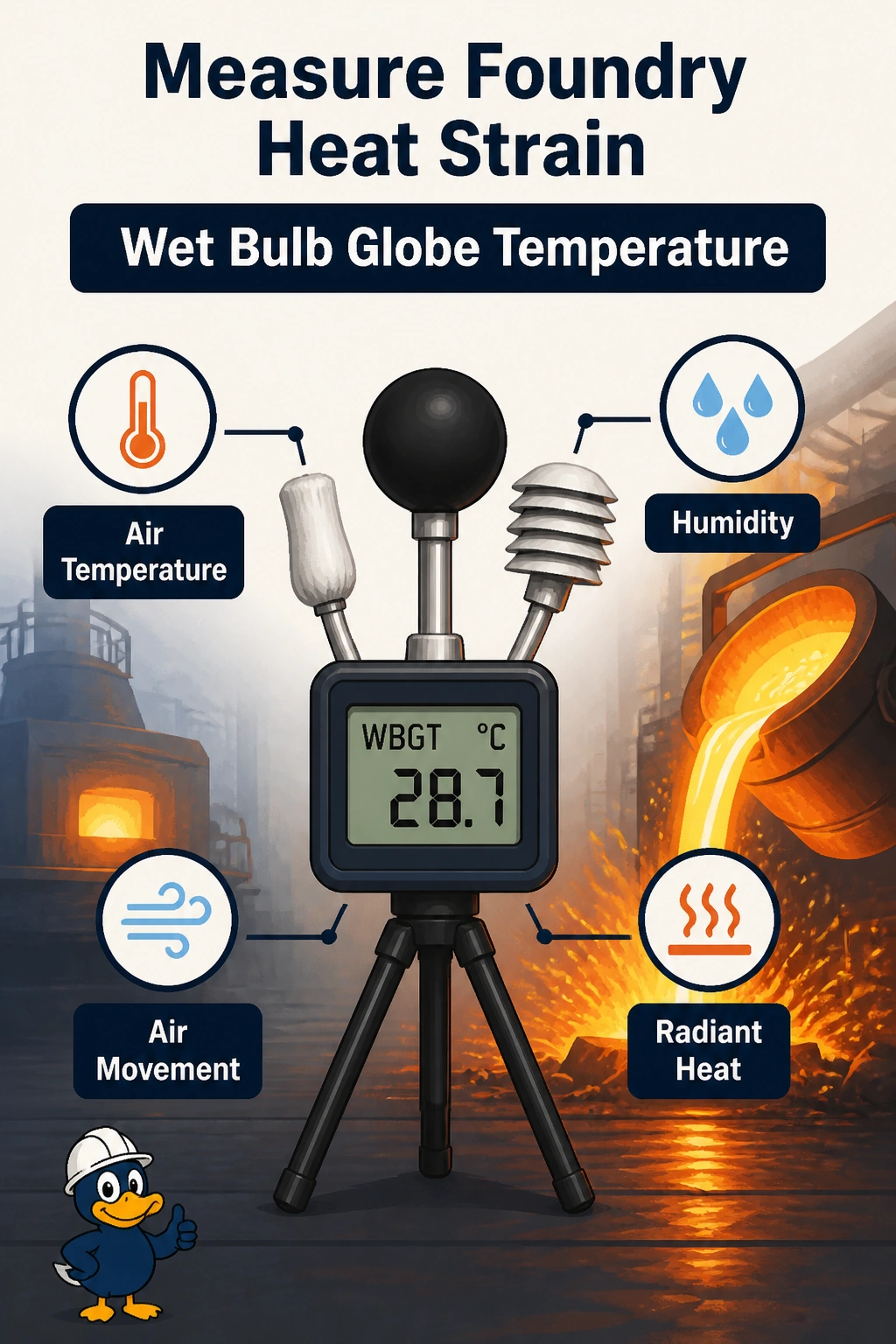
Wet Bulb Globe Temperature is the standard occupational heat-stress index because it combines a natural wet-bulb sensor (reflecting humidity and air movement), a black globe sensor (capturing radiant heat from furnaces), and a shielded dry-bulb thermometer. The Wind chill equivalent index applies only to cold-stress environments where wind accelerates heat loss from exposed skin, making it irrelevant in a hot foundry. A simple Dry-bulb ambient air reading measures only convective air temperature and misses both evaporative cooling limits and intense infrared radiation from molten metal. Relative humidity percentage indicates moisture saturation in the air alone without incorporating air temperature, wind speed, or radiant heat sources. One important caveat is that heat-stress thresholds must also be adjusted for metabolic workload and heavy or impermeable protective clothing such as aluminized foundry gear. As an operational check, position a calibrated WBGT meter at worker chest height near the pouring line during peak furnace cycles and compare readings against ACGIH or OSHA action thresholds for work-rest scheduling.
Prefer to study offline? Printable PDF study book + test engine ($7.50, unofficial). These questions stay free here.