
A precision machine shop machines magnesium alloy housings, and fine metal turnings ignite on a lathe bed after a cutting tool overheats. Which fire suppression action safely extinguishes this fire?
Select an answer to reveal the explanation.
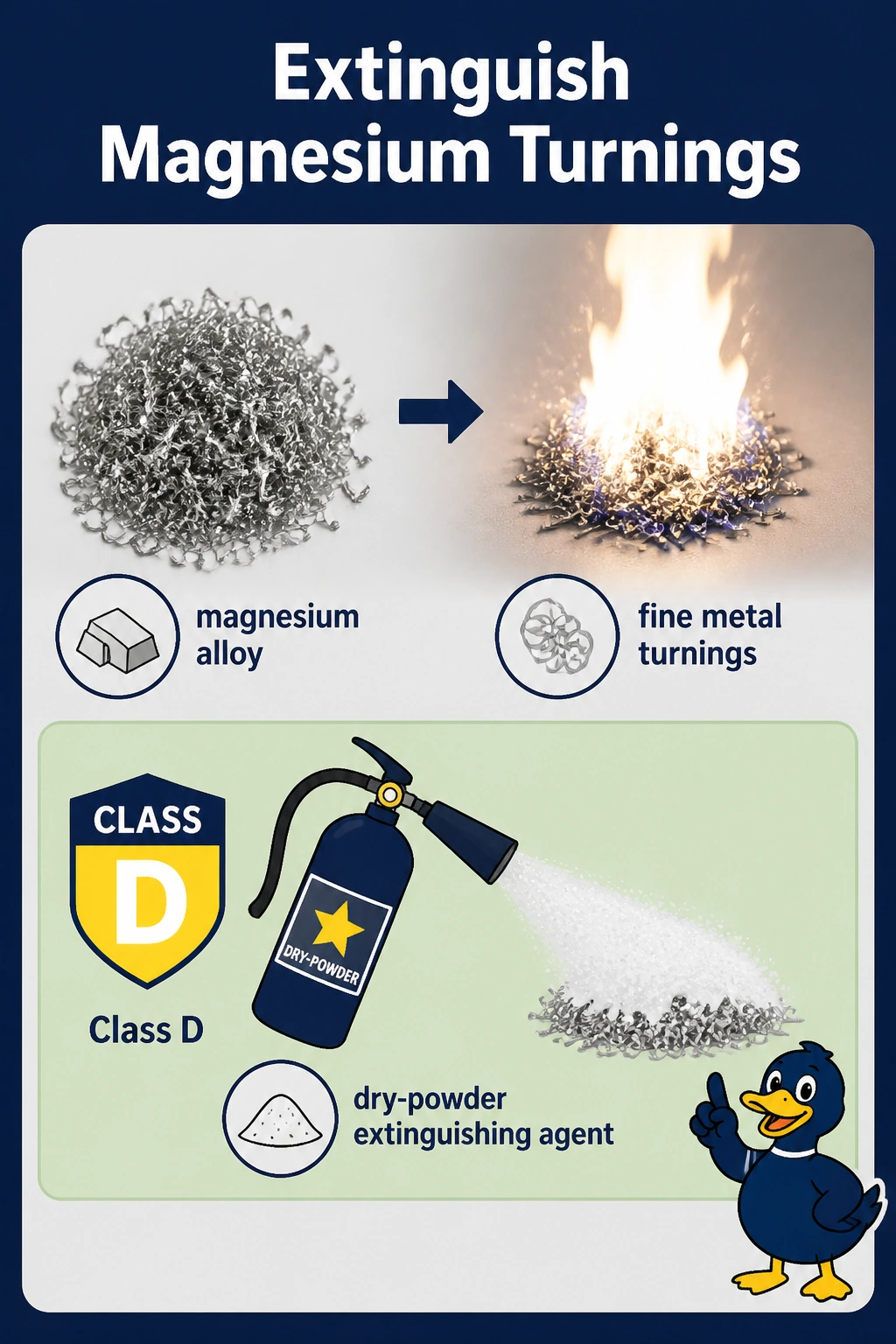
Short Explanation
Throwing water on burning magnesium is like tossing gasoline on a campfire—it reacts violently and makes everything worse! You need to spot the Class D metal hazard and avoid common liquid or gas agents that fuel a chemical reaction.
Full Explanation
Burning magnesium is a Class D combustible metal fire that burns at extremely high temperatures and reacts chemically with water, steam, and several common extinguishing gases. Operators must Apply a Class D dry-powder extinguishing agent, such as specialized sodium chloride or graphite-based powders, which gently smothers the metal, excludes oxygen, and forms a heat-absorbing crust without reacting violently. Attempting to Apply a pressurized water stream to cool the burning metal chips is dangerous because burning magnesium splits water molecules, liberating flammable hydrogen gas and causing explosive spattering. Attempting to Discharge a carbon dioxide extinguisher directly onto the lathe fails because hot magnesium can strip oxygen from carbon dioxide, sustaining or intensifying combustion while blowing light turnings into the air. Similarly, attempting to Use an aqueous film-forming foam extinguisher to blanket the lathe introduces water into the molten metal, triggering the same violent hydrogen-generating reaction. Caveat: Class D agents are often metal-specific, so verify compatibility with magnesium, titanium, or alkali metals on the label. As an operational check, inspect Class D extinguishers and scoopable dry-powder pails near every combustible-metal machining station.
Prefer to study offline? Printable PDF study book + test engine ($7.50, unofficial). These questions stay free here.