
A maintenance shop stores small quantities of gasoline and xylene at workbenches for parts cleaning and wants to replace open plastic buckets with OSHA-compliant safety cans. Which design features must an approved safety can include to control vapor release and prevent flame flashback?
Select an answer to reveal the explanation.
Short Explanation
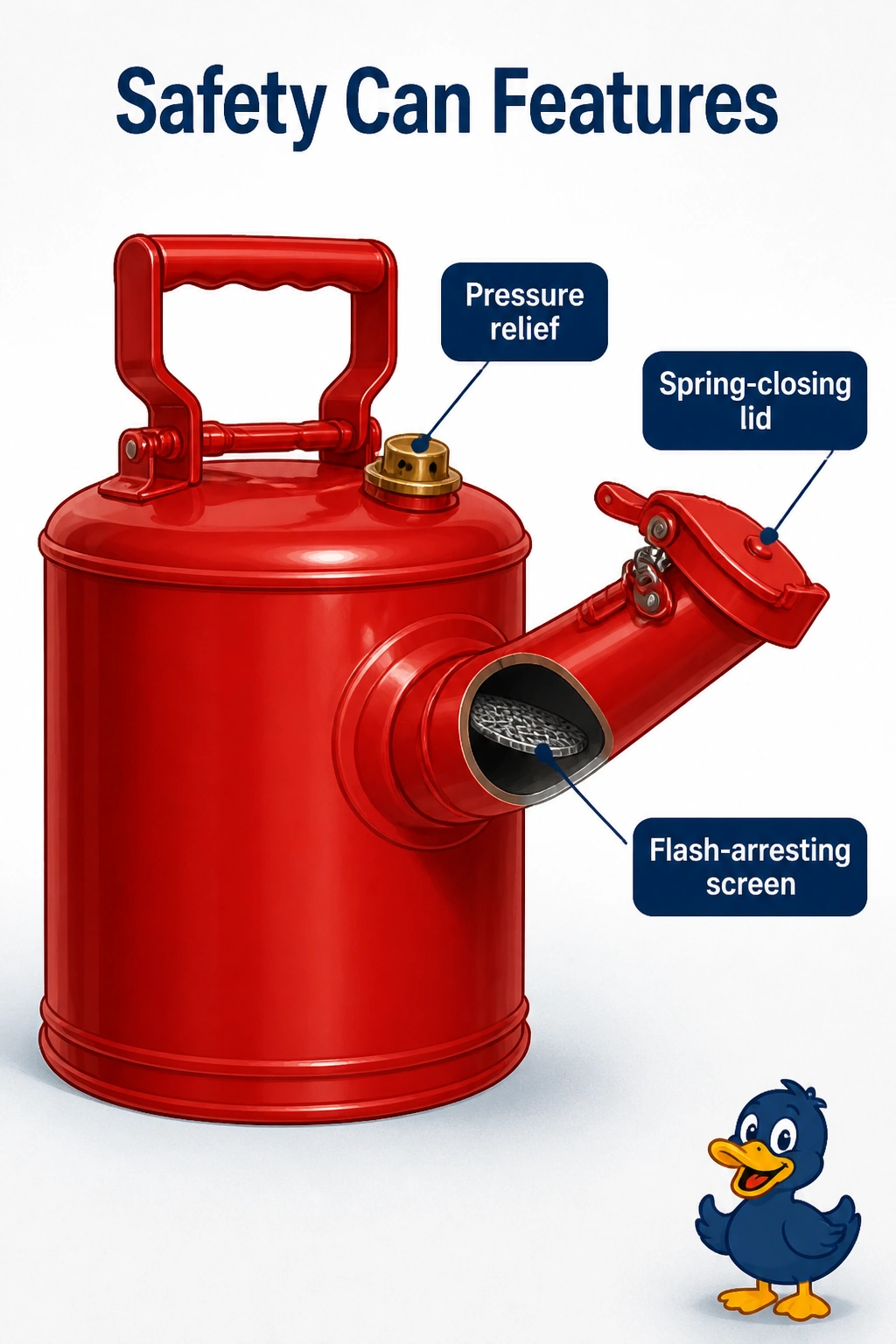
Think of the spring-closing lid as a check valve for fire: it seals vapor when you release it, while the flash-arresting screen helps stop flames from reaching vapors inside and pressure relief controls heat-driven buildup. A screw-top plastic cap, fusible-link drain valve, or manual ball valve lacks that combination of automatic closure, flame arrestment, and pressure relief.
Full Explanation
Under OSHA 29 CFR 1910.106(a)(29), an approved safety can holds no more than 5 gallons and has a spring-closing lid and spout cover to relieve internal pressure in a fire; the flash-arresting screen wording comes from 1926.155(l), and OSHA Instruction STD 03-04-001 treats a missing flame-arrestor screen on an otherwise compliant general-industry safety can as de minimis. The spring-closing lid automatically limits vapor release when you let go, the screen dissipates heat so an external flame cannot ignite internal vapors, and pressure relief vents excess vapor safely if the can is heated. A screw-top plastic cap and grounded metal carrying handle do not provide automatic self-closing protection or safe thermal venting, so vapors can escape or pressure can build. A fusible-link drain valve and internal sight-glass level gauge are features associated with certain bulk drums or tanks rather than portable bench safety cans; the glass gauge also risks breakage. A manual ball-valve spout and double-walled insulated outer jacket can leave the spout open unintentionally and do not provide automatic flame arrestment. Caveat: safety cans must also be listed or labeled by a nationally recognized testing laboratory, and their flame arrestors should not be removed for faster pouring. As a practical check, inspect bench cans monthly to confirm their lids snap shut cleanly and their screens are intact.
Prefer to study offline? Printable PDF study book + test engine ($7.50, unofficial). These questions stay free here.