
A maintenance welder needs to repair a steel mezzanine bracket using an arc welder in a warehouse bay where cardboard cartons and wooden pallets are stacked nearby. Under OSHA 29 CFR 1910.252, what fire prevention step is required before striking an arc?
Select an answer to reveal the explanation.
Short Explanation
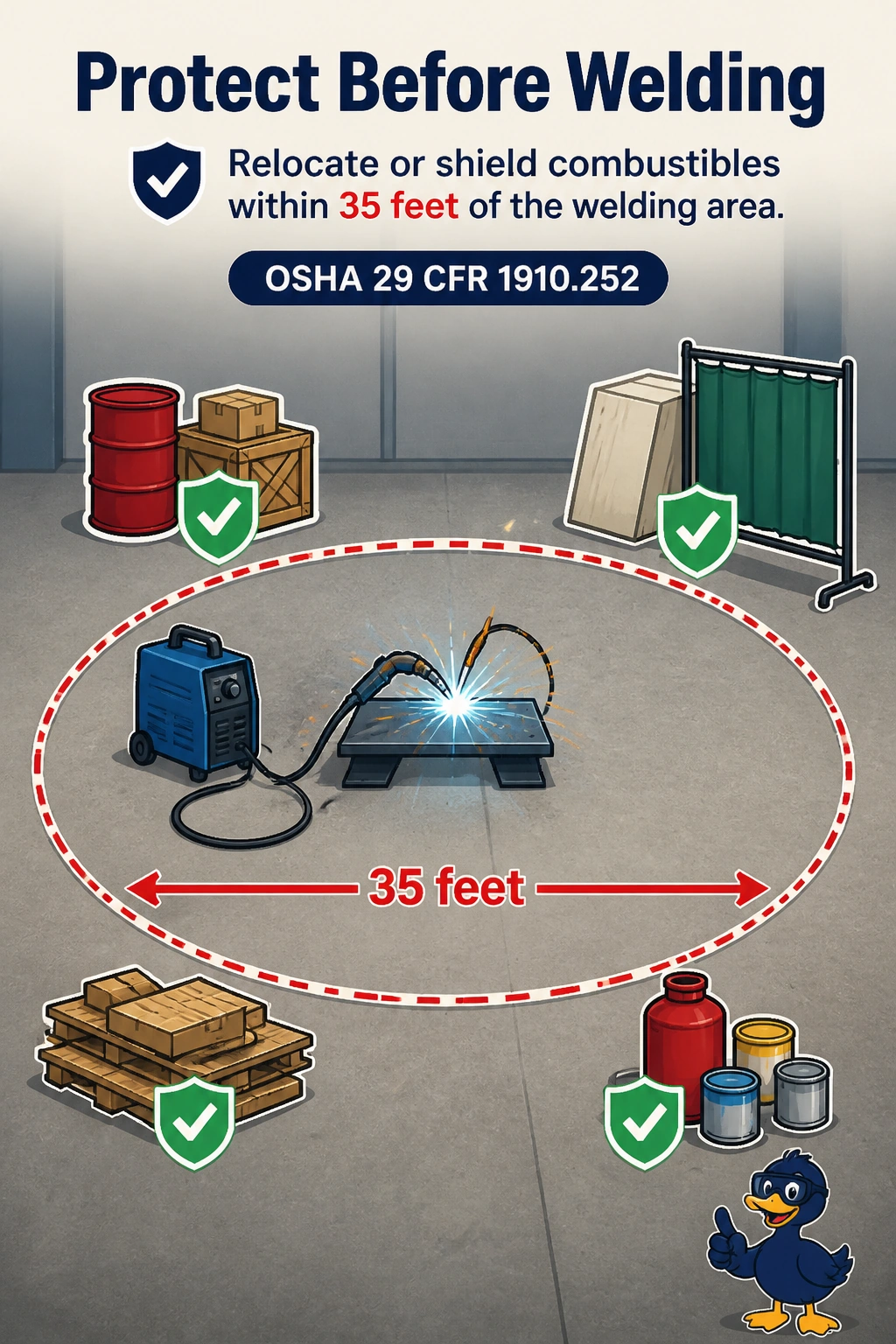
Sparks and slag can bounce, roll, and slip into cracks up to 35 feet away, so before you strike an arc, move or shield every combustible within that radius. Remember that wetting only nearby cardboard leaves uncovered pallets exposed, and a welder grinding overhead cannot serve as the only spark watch.
Full Explanation
Under OSHA 29 CFR 1910.252, hot-work sparks can travel horizontally and bounce off steel beams, so before striking an arc you must relocate or shield all combustibles within 35 feet of the welding area; use fire-resistant blankets or guards when items cannot be moved. Assigning a single welder to watch for sparks while continuing to grind overhead does not provide an adequate watch: a welder wearing a darkened helmet cannot simultaneously monitor for smoldering sparks across the bay, and a dedicated fire watch is required when combustibles are within 35 feet. Wetting cardboard boxes within 10 feet while leaving wooden pallets uncovered falls short of the 35-foot requirement; damp cardboard can dry quickly under radiant heat, and exposed pallets can ignite. Propping open fire-rated corridor doors to clear welding smoke defeats compartmentation and can let smoke and fire spread through the building. One exam caveat is that floor openings, wall cracks, and conveyor pass-throughs within 35 feet must also be covered so sparks cannot drop to lower levels. As a practical check, pace off a 35-foot radius with a tape measure before issuing the hot-work permit and confirm that a charged fire extinguisher is within immediate reach.
Prefer to study offline? Printable PDF study book + test engine ($7.50, unofficial). These questions stay free here.