
During a fire safety walk-through at a manufacturing plant, a safety specialist finds a corridor fire-rated door propped open with a wooden wedge so material carts pass through easily. Which action best restores the door's life-safety function?
Select an answer to reveal the explanation.
Short Explanation
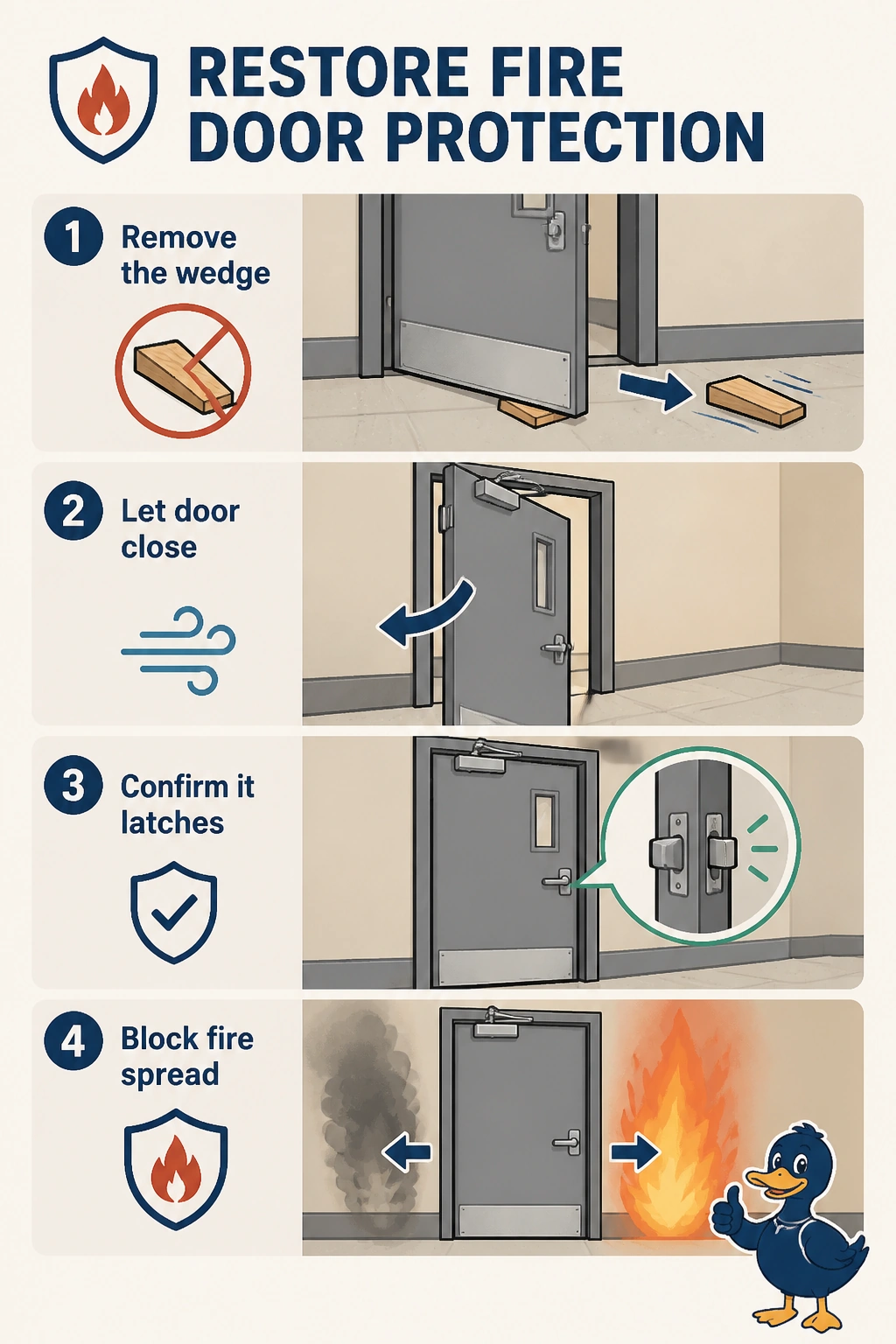
A wooden wedge turns your fire-rated door into an open path for smoke and flames. Remove it so the door can swing shut and latch on its own; that self-closing action does not depend on someone remembering during a chaotic evacuation.
Full Explanation
Fire-rated corridor doors compartmentalize a building, slowing toxic smoke, heat, and flames so occupants have time to reach an exit. Removing the wooden wedge restores this passive fire protection: the closer can swing the door shut, and the positive latch can secure the opening automatically. Replacing the door closer with a manual deadbolt would disable the self-closing action and could create an egress lockup hazard. Installing a fusible-link ceiling damper above the doorway would address HVAC ductwork protection, not the walk-through opening, leaving the corridor vulnerable to smoke migration. Posting a sign asking workers to pull the door shut relies on people remembering during an emergency, when alarms, low visibility, and panic make manual closing unreliable. An exam caveat is that a fire door must not only close but also latch; a door that rests against the frame without engaging its latch may not provide the intended protection. As a practical check, test the door monthly from a fully open position: verify that the closer pulls it completely shut and that the latch engages firmly without binding.
Prefer to study offline? Printable PDF study book + test engine ($7.50, unofficial). These questions stay free here.