
A cold-storage warehouse needs automatic fire sprinkler protection in an unheated loading bay where winter temperatures regularly drop below freezing. Which sprinkler system design prevents water from freezing inside the branch piping?
Select an answer to reveal the explanation.
Short Explanation
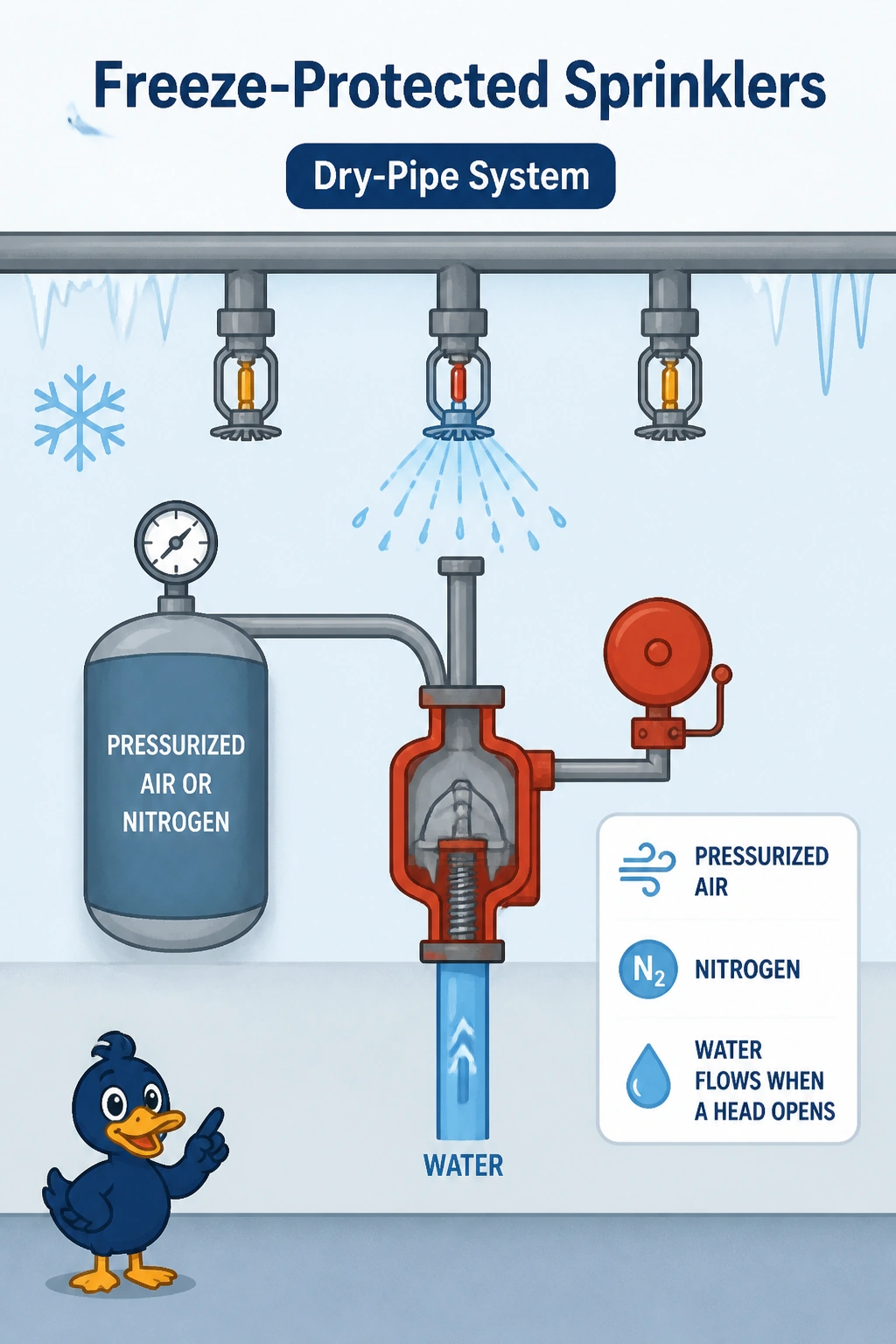
You’re right to avoid leaving water sitting in an unheated branch pipe, where it can freeze and cause damage. A dry-pipe system keeps pressurized gas in the piping until a sprinkler opens, while the other designs listed either keep water-based liquid in the branches or are intended for different discharge needs.
Full Explanation
Protecting an unheated space subject to freezing calls for a dry-pipe system filled with pressurized air or nitrogen until a head opens. Pressurized gas in the branch piping holds the dry-pipe valve closed; when heat opens a sprinkler, air escapes, the valve opens, and water flows into the pipes and discharges over the fire. A standard wet-pipe system charged continuously with water risks ice expansion, cracked fittings, and blocked flow in subfreezing temperatures. A deluge system with open sprinkler heads and no heat fusible links is intended for high-hazard areas needing simultaneous total flooding, not routine freeze protection. A foam-water system that keeps aqueous film-forming foam in every branch still exposes a water-based solution in unheated branches to freezing. As an exam caveat, dry-pipe systems have a slight water-delivery delay while air bleeds down. For a practical check, verify that the valve-room heater operates properly and drain low-point condensation traps before winter.
Prefer to study offline? Printable PDF study book + test engine ($7.50, unofficial). These questions stay free here.