
Wire-harness assemblers repeatedly squeeze smooth, narrow-handled manual crimpers to terminate heavy-gauge connectors, leading to forearm tendonitis and hand fatigue. Which tool-design modification best reduces the forceful exertion required for each crimp?
Select an answer to reveal the explanation.
Short Explanation
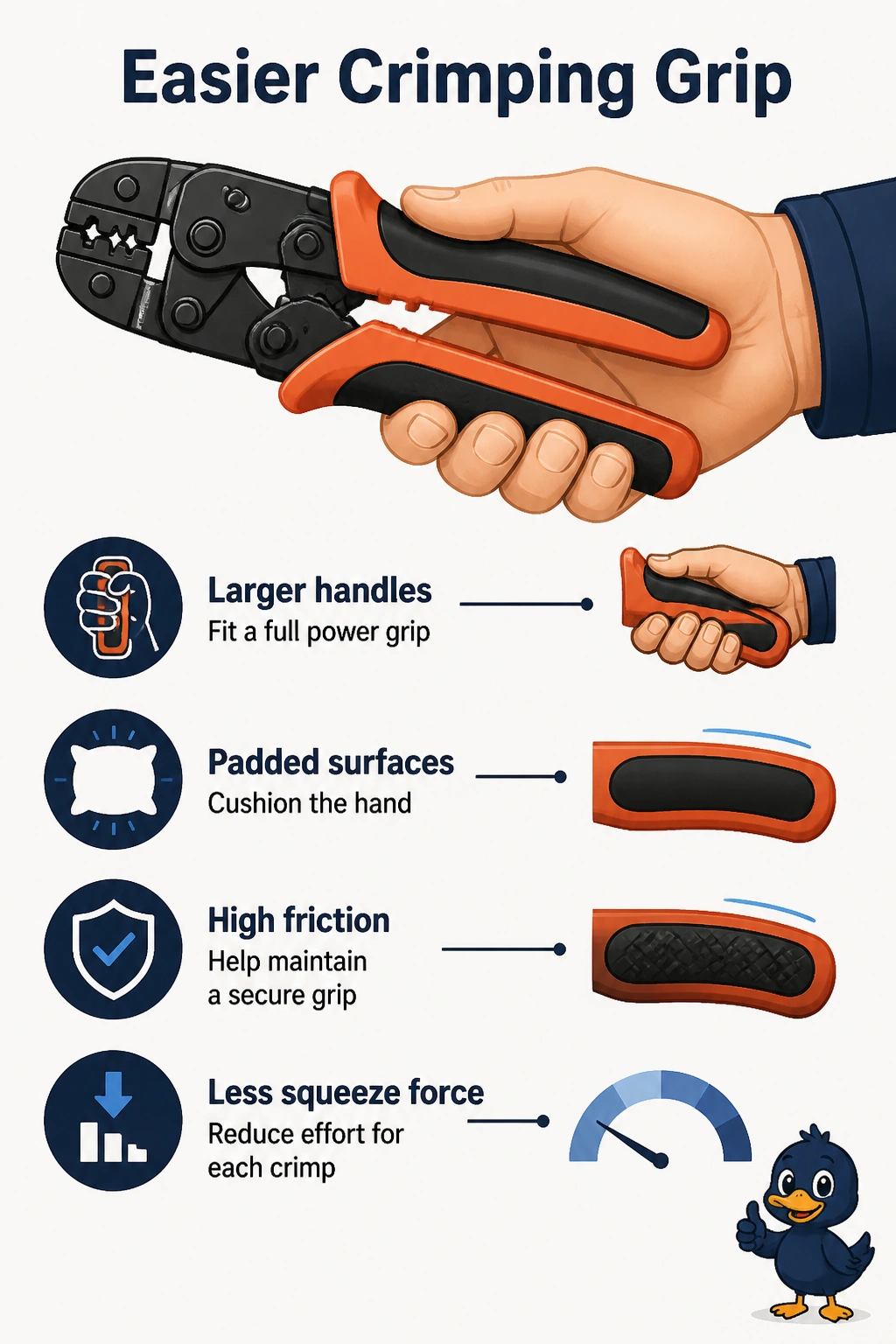
When you squeeze a slick, narrow handle, your forearm muscles work harder to keep the tool from slipping. Larger, padded, high-friction handles let your whole hand share the load and reduce strain; smooth electrical tape, switching hands, or shortening the handles does not reduce the force needed for each crimp.
Full Explanation
Providing larger, padded, high-friction handles that fit a full power grip reduces forceful exertion and contact stress at the source. A properly sized diameter lets the finger flexor tendons work with better mechanical leverage, while a textured, compressible surface increases friction so you need not over-grip to prevent slipping. Wrapping the narrow handles in smooth electrical tape may make them easier to wipe clean, but the lower surface friction can make you squeeze harder to maintain control. Switching between your left and right hands every ten minutes is an administrative workaround: it does not lower the force required for each crimp and may lead to awkward, less-controlled non-dominant-hand postures. Shortening the handles so they fit entirely inside your palm reduces leverage and concentrates mechanical pressure on sensitive mid-palm tissues. One exam caveat: if crimping forces remain high despite improved handles, the handle modification may not be sufficient to address the task’s demands. For a practical check, compare the handle span with workers’ hand sizes and confirm that no handle edges dig into the palm during a full crimp cycle.
Prefer to study offline? Printable PDF study book + test engine ($7.50, unofficial). These questions stay free here.