
A chemical warehouse worker needs to dispense acetone, a flammable liquid, from a 55-gallon metal drum into a smaller metal safety can. Which practice prevents an electrostatic spark from igniting vapors during the transfer?
Select an answer to reveal the explanation.
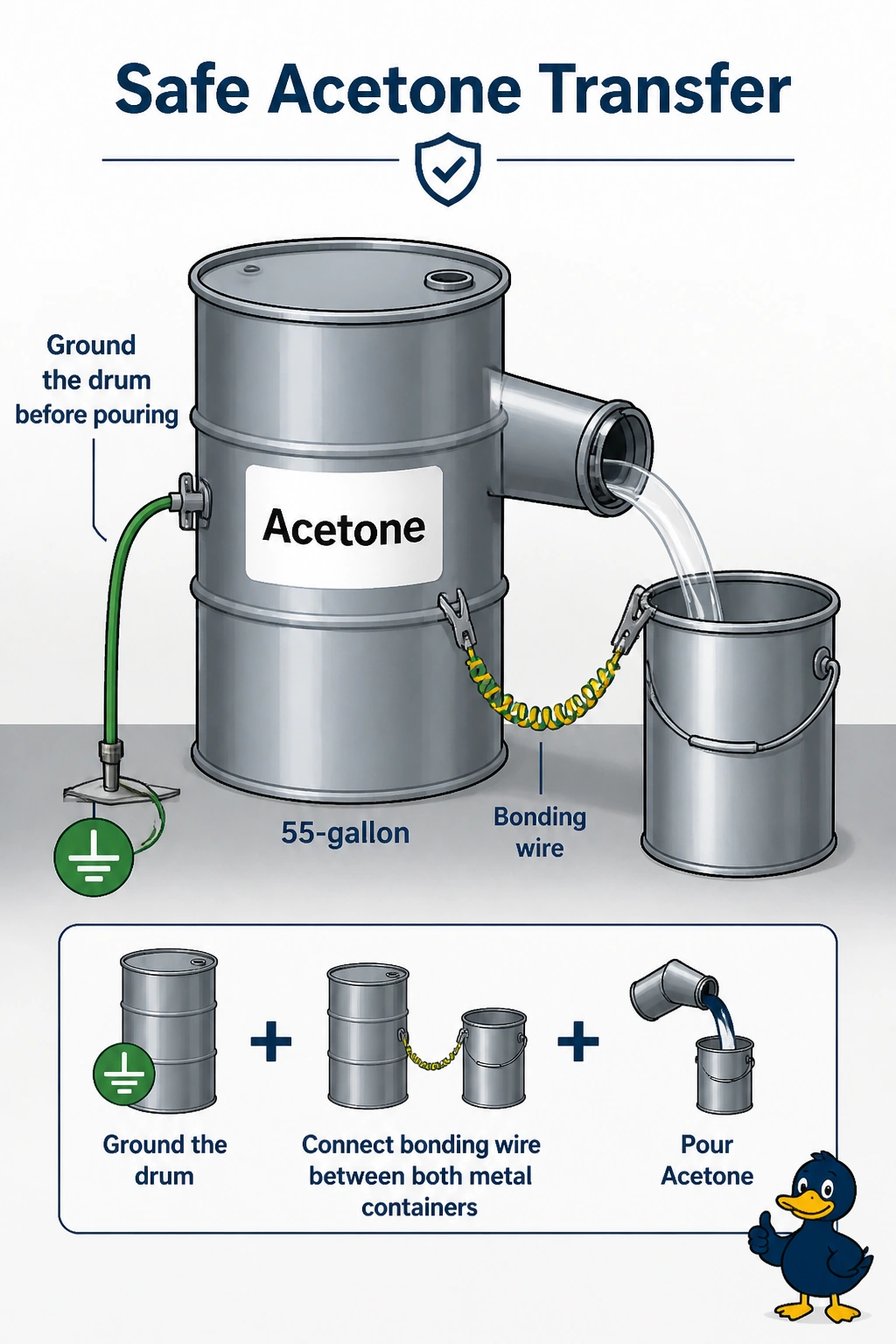
Short Explanation
You prevent a static spark by bonding the two metal containers and grounding the drum before pouring, which equalizes electrical potential and drains charge. A wooden pallet may seem protective, but insulating the drum from the floor can let charge build up instead.
Full Explanation
Flowing flammable liquids can generate static charge through friction, so connect a bonding wire between both metal containers and ground the drum before pouring, as required by OSHA 29 CFR 1910.106(e)(6)(ii). Bonding equalizes electrical potential between the drum and the receiving can, preventing a spark from jumping across the gap; grounding drains accumulated charge safely to earth. Placing the metal drum on a wooden pallet insulates it from the floor and can trap static charge rather than dissipate it. Filling the safety can rapidly through a plastic funnel increases turbulence and static generation, while the nonconductive funnel cannot provide a bonded path. Keeping the drum bung cap tightly sealed while opening the safety can vent addresses neither static equalization nor grounding and can create vacuum lock that leads to splashing. Exam caveat: bonding and grounding clamps must penetrate paint, rust, or dirt to make bare-metal-to-metal contact. Practical check: before opening the drum valve, verify that clamps contact clean metal on both containers and that the drum has continuity to a verified ground rod or building ground bus.
Prefer to study offline? Printable PDF study book + test engine ($7.50, unofficial). These questions stay free here.